The future of communications is strategy, not storytelling
Lavanya Wadgaonkar on communications' next evolution: earning a seat at the table was the first step, the bigger challenge is shaping the agenda.
 by
by
Published: Jul 1, 2026 11:25 AM | 7 min read
 Follow Us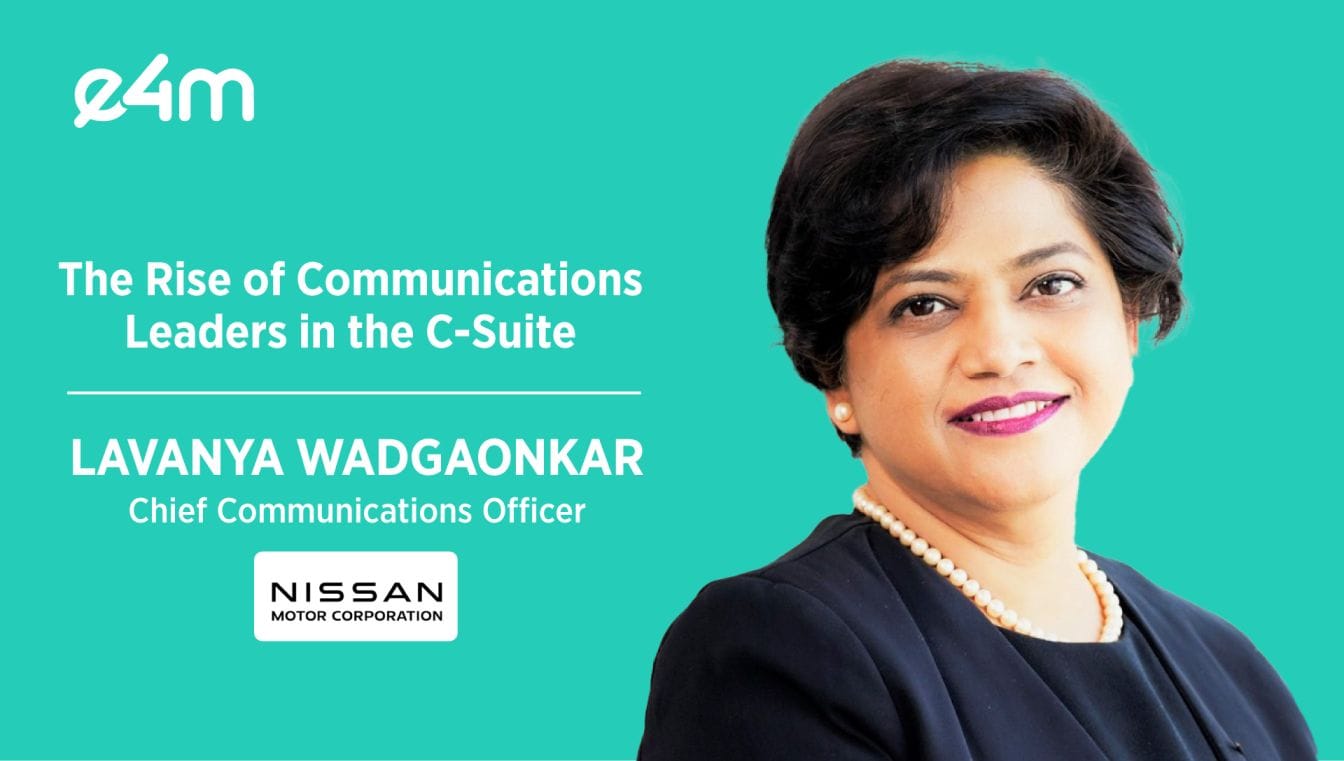

- Communications teams are increasingly involved in strategic decision-making from the outset, reflecting a shift from a reactive role to a core business function amid evolving stakeholder expectations and technological advancements, particularly AI.
- The effectiveness of this shift depends on communications leaders maintaining relevance and proximity to business strategy, ensuring that their influence does not diminish as they risk reverting to execution-focused roles.
- Internal communications is often underappreciated, leading to risks such as fragmented execution and employee disengagement, particularly during AI-driven transformations; organizations are encouraged to prioritize building informed advocates among employees.
- The future of communications is expected to involve deeper integration into business operations, with a focus on continuous engagement and narrative shaping, supported by AI to enhance efficiency and decision-making processes.
Not too long ago, communications teams were often brought in after the big decisions had already been made. Today, many of those leaders are helping shape those decisions from the very beginning. As businesses navigate AI, constant change, rising stakeholder expectations, and an increasingly complex global landscape, communications has become much more than managing reputation, it's becoming a strategic business function and finally having its boardroom moment.
But is this a lasting shift? What does it take for communications leaders to earn and keep a seat at the leadership table? And as AI changes the way organizations connect with employees, customers, and the public, what role will always need a human touch?
In this conversation, Lavanya Wadgaonkar, Chief Communications Officer, Nissan Motor Corporation, shares her perspective on communications' rise to the boardroom, the growing strategic importance of internal communications, greatest opportunities for AI-human collaboration, and what the next chapter of the function could look like.
Excerpts:
What drove communications' shift from being an execution partner to owning boardroom conversations and how sustainable is that shift?
The shift was not a superficial rebranding of communications, it reflects a deeper reality in which decisions now move at narrative speed and where, particularly in conditions of uncertainty, strategy without clarity struggles to hold, requiring communications to step in not for influence but to create coherence at pace.
At the same time, the environment has become far more interconnected, moving beyond static audiences to a system where employees, investors, regulators and AI models interpret and reshape signals simultaneously, making credibility more fragile and more immediate, and elevating communications closer to the core of the business rather than as a downstream function. This is further intensified by the shift from SEO to GEO, where AI-driven sourcing increasingly pulls from earned and owned media, making reputation and authenticity not just important but foundational to visibility itself.
That has materially raised the stakes. Reputation is no longer a lagging outcome but a core business asset, where trust is built or eroded in real time, and where consistency, credibility and intent determine whether a narrative holds across both human and algorithmic interpretation. In that context, authenticity becomes a differentiator.
Whether this shift sustains depends on continued relevance. The position is not structural, it is performance oriented. The moment communications loses proximity to strategy, or slips back into mundane execution, its influence diminishes just as quickly as it has emerged.
What role should communicators play in shaping business strategy itself? What will define the communications leader of the next decade?
Communications should not simply explain strategy after the fact; it needs to shape it, challenge it, and pressure‑test it before it meets the real world, identifying where it may fail in perception, not just execution, and ensuring that decisions are grounded as much in stakeholder belief systems as in business logic. It plays a critical role in forcing clarity when complexity obscures intent, shaping how strategy is sequenced and revealed, influencing priorities based on trust and credibility impact, and translating direction into something that can travel across markets and cultures without losing meaning.
The communications leader of the next decade will therefore operate very differently, bringing a systems view that connects business, society and technology, using data fluently but relying on judgment to interpret rather than simply report, embedding themselves within decision-making rather than reacting from the outside, and navigating cultural nuance with precision across global contexts. The role is moving away from storytelling as an end point toward strategy as the core discipline, where narrative is used deliberately as a tool to create clarity, alignment and sustained action.
Which aspects of communications do you believe will remain uniquely human, and where do you see the greatest opportunities for AI-human collaboration?
The temptation is to say AI will augment everything. It sounds right, but it is not precise enough to guide how we actually operate.
Some parts of communication will remain firmly human, and that is not going to change. Judgment in ambiguity, cultural nuance, emotional calibration, and knowing when not to communicate are not soft skills, they are where risk is managed and credibility is either protected or lost. Trust is built over time through consistency and intent and that cannot be automated.
Where AI changes the equation is elsewhere, in the areas where scale, speed and pattern recognition matter more than interpretation. It enables faster content creation, sharper signal detection through data and listening, more robust scenario modelling and message testing, and a level of workflow efficiency that makes communications feel continuous rather than episodic. The real value is in the ability to make better decisions faster.
The inflection point comes in how the two are combined. As AI becomes embedded into workflows through defined use cases and structured adoption, it starts removing friction from the system, allowing communicators to focus on where they actually add value, which is applying judgment, shaping meaning, and managing credibility across increasingly complex environments.
The shift is not about AI replacing communicators. It is about AI clearing the noise, so communicators can operate where it matters most.
Many communications leaders are investing heavily in external reputation management while employees simultaneously navigate uncertainty around AI and workplace transformation. Do you think internal communications is still underappreciated as a strategic function, and what risks do organizations face when employees are not brought along on the transformation journey?
Yes, but not in theory. In practice, internal communications remains underleveraged, even though most organizations acknowledge that employees matter.
The gap shows up in how consistently that belief is operationalized. If employees do not understand the strategy, execution fragments. If they do not believe in it, advocacy never materializes. Which is why the focus has to move beyond information sharing toward building informed advocates, making strategy visible and tangible, and establishing real feedback loops that allow communication to adapt in real time.
When internal communications is underinvested, the consequences surface quickly, though not always loudly. Strategy begins to drift as interpretations diverge, execution loses consistency, and trust erodes as silence or mixed signals create their own narratives. Over time, what follows is transformation fatigue, where people disengage before the change has a chance to land.
In an AI-led transformation, this becomes sharper. The pace accelerates, uncertainty deepens, and the cost of misalignment increases. Employees rarely push back openly. They disengage quietly, which is harder to detect and significantly harder to recover from.
With limited budgets and expanding expectations, what is one communications investment leaders should aggressively increase and one they should confidently cut?
If I had to prioritize, I would increase investment in team capabilities and upskilling alongside insight and listening. Not vanity metrics, but a deep, continuous understanding of sentiment, behavior and belief, combined with a team that is equipped to interpret it and respond with speed and judgment. Because if you don’t understand how people are interpreting reality, and your teams are not ready to act on that insight, you are not shaping anything.
At the same time, I would confidently reduce fragmented, and duplicative content production. Moving toward a more centralized creative services model brings both efficiency and effectiveness, reducing duplication while improving speed and consistency.
The principle is simple — If it doesn’t increase clarity, speed or impact, it is probably a waste.
If today's communications leaders have earned a seat in the C-suite, what is the next evolution of the function? How do you see the role changing over the next five years?
The next evolution is becoming clearer. Communications shifts from being a function that supports the business to something that is embedded in how the business actually operates.
It moves closer to decision-making, not reacting after the fact but shaping how decisions are understood and sequenced, with narrative shifting from output to input, becoming a core management tool that influences direction rather than simply describing it. At the same time, AI begins to change the rhythm of the function, making communication continuous, always on, and far less dependent on moments or milestones, while the focus expands beyond managing reputation toward shaping belief at scale.
You can already see the early signals of this shift in more integrated global models, follow-the-sun operating rhythms, AI embedded into day-to-day workflows, and a single plan aligning markets with greater consistency and speed.
Read more news about PR and Corporate Communication News, Internet Advertising, Marketing News, Digital Media News, People Movement News
For more updates, be socially connected with us onInstagram, LinkedIn, Twitter, Facebook YouTube & Google News
