Billboards get monsoon makeover: How OOH ads are turning heads in the rain
Brands are making a splash with their hyper-contextual and weatherproof creativity, turning the monsoon season into a unique OOH advertising opportunity
 by
by
Published: Jul 26, 2025 8:48 AM | 3 min read
 Follow Us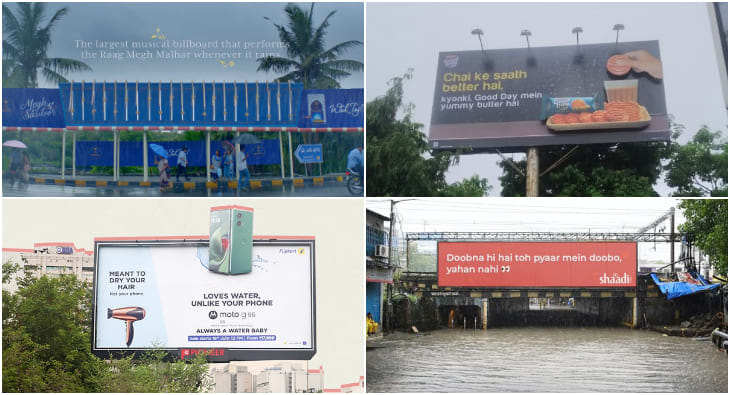

The most memorable ads don’t interrupt your life—they meet you where you are: waiting, scrolling, and looking up in the rain. While most see storm clouds as a hassle, Indian brands are treating them as a creative canvas. This monsoon, the streets aren’t just wet—they’re working overtime. With innovative out-of-home (OOH) strategies, brands are transforming seasonal chaos into a cultural event with waterproof installations and weather-triggered narrative.
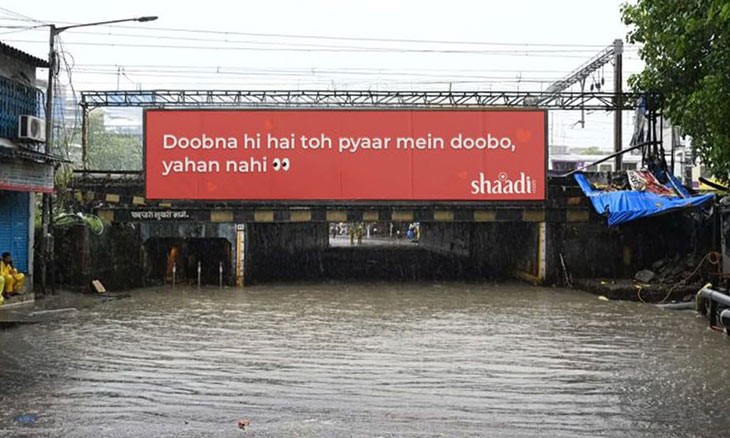
Take Shaadi.com for instance, they turned a waterlogged street into a declaration of love with their cheeky billboard, "Doobna hi hai toh pyaar mein doobo, yahan nahi.” This not only became a crowd favourite, but this type of marketing demonstrated that excellent creative can control the narrative in addition to breaking the clutter.
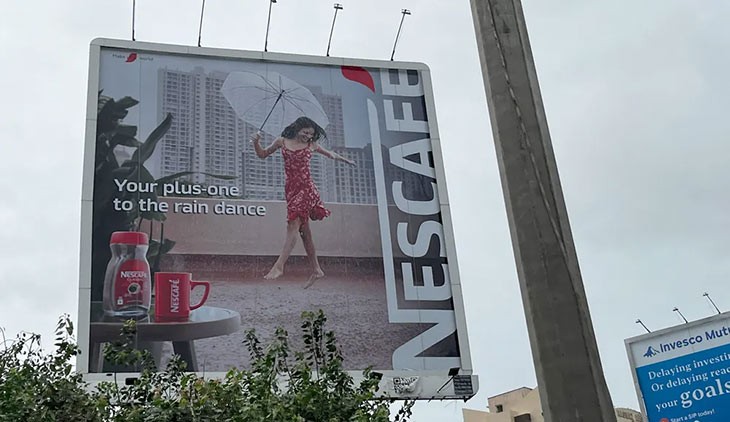
Nescafé opted for a gentler approach. One of their boards read, "The Rhythm of the Rooftop." "Your plus-one to the rain dance" comes next. The brand leaned into the sounds, smells, and sensations of the monsoon season. The taglines weren’t just intriguing; it made the viewers get a sense of belonging and calmness in the halt due to rain.
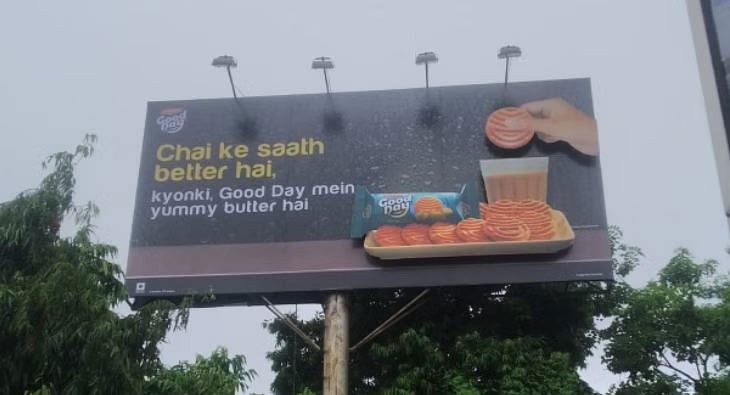
Britannia took the traditional chai-biscuit routine and made it brand-relevant with a simple, relatable message: “Chai ke saath better hai, kyonki Good Day mein yummy butter hai.” There’s no complexity, no jargon—just a snack-friendly approach that resonates. The message let chai-loving public and the brand share a moment together, which does more than just sell.
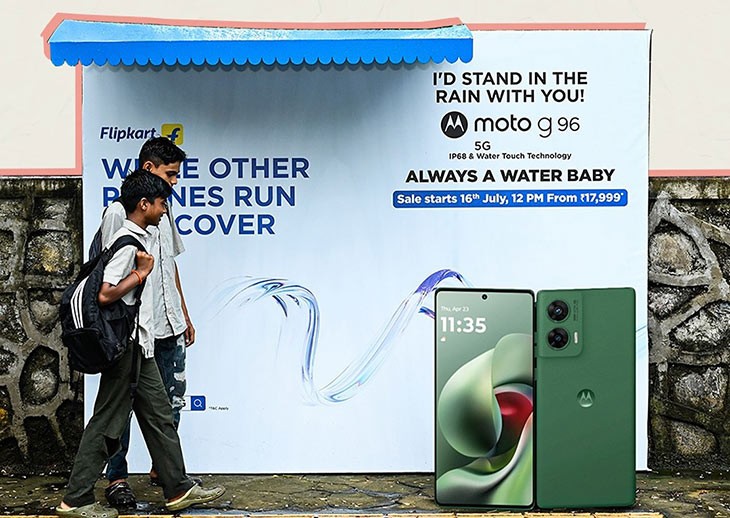
Motorola G96 and Flipkart took things even more literally. They addressed a universal reality: everyone's personal monsoon phone hack. Hair dryers, rice bowls, plastic bags and all others. The campaign declared, "You don't need these hacks anymore." It struck a nerve with the audience, which is why it worked.
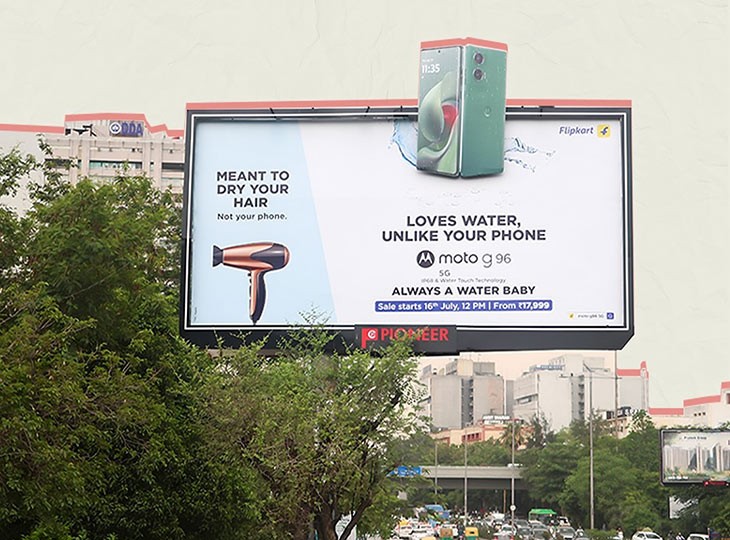
Additionally, they constructed real shelters in strategic areas with signs that read, "I'd stand in the rain for you." Poetry and product features are equal.
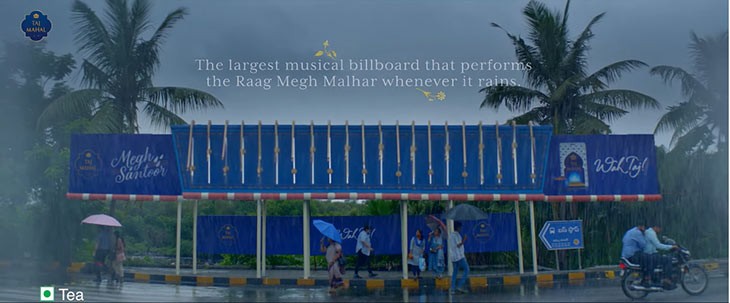
These aren't any experimental antics. In India, monsoon-themed OOH has become a distinct genre in recent years. Megh Santoor, a 150-foot-wide structure strung with wires that played Raag Megh Malhar whenever it rained, was a stunning piece constructed by Brooke Bond Taj Mahal Tea in Andhra Pradesh in 2023. Rainfall triggered a live performance of classical Indian music, not just a billboard.
Thereafter, McCain ran a campaign in 2024 that made equal use of comfort food and the weather. It made no attempt to be witty, just a way to connect with people’s behaviour and craving. Nescafe had already established itself through subtly captivating, sensual, and somewhat supernatural advertising. Sprinklers installed on billboards resembled steaming coffee mugs, drawing attention and halting traffic right away.
All of this is made possible by the sophisticated technology working behind the scenes. In the past, OOH advertising was a guessing game. It is now as sharp as a digital device. Brands now use tools like TAP, GeoIQ, LOCATE, and Mogean to track where people are, how long they stay, and what they're likely to see. Accuracy now ranges from 70 to 85 percent—this isn’t guesswork; it's strategy, guided by a cloud-filled sky.
In a world where everyone is fixated on devices and wants to speak into your pocket, OOH still proves to be effective. Being present is more important than being personal. To make you feel visible, a smart billboard doesn't need to know your name. All it has to do is appear when it rains.
Read more news about Out of Home, Internet Advertising, Marketing, Digital Media, TV Media
For more updates, be socially connected with us onInstagram, LinkedIn, Twitter, Facebook, YouTube & Google News
