#e4mBreaking: Govt to let broadcasters migrate voluntarily to new Telecom Act regime: Ashwini Vaishnaw
The statement provides greater clarity on the government's transition strategy, an issue that has been closely watched by broadcasters after the publication of the draft rules
 by
by
Published: Jul 22, 2026 12:26 PM | 3 min read
 Follow Us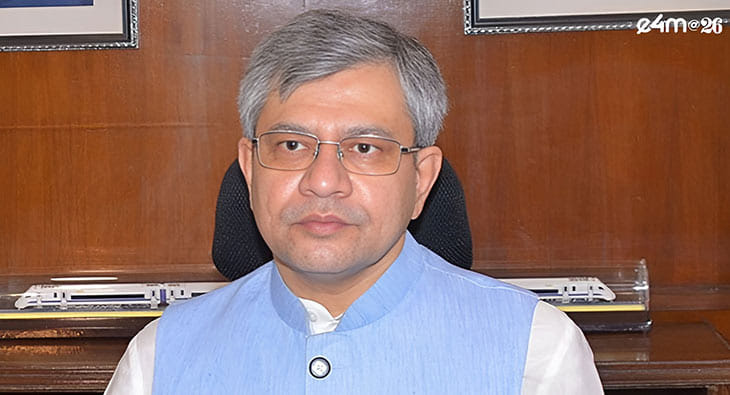

- The Indian government has proposed the Telecommunications (Television, Radio and Associated Services) Rules, 2026, aimed at creating a unified regulatory framework for the broadcasting sector, allowing existing licence holders to voluntarily transition to the new regime.
- Information and Broadcasting Minister Ashwini Vaishnaw stated that the draft rules consolidate multiple existing guidelines into a single regulatory architecture, simplifying compliance and enhancing ease of doing business.
- The proposed framework merges six sets of guidelines covering various broadcasting services, including satellite television, DTH, FM radio, and IPTV, while ensuring that current operators can continue under their existing licences until they choose to migrate.
- The Ministry has invited stakeholder comments on the draft rules until July 27, with plans to finalize the regulations following consultations, as part of broader efforts to operationalize the Telecommunications Act, 2023.
The Centre on Wednesday said its proposed Telecommunications (Television, Radio and Associated Services) Rules, 2026 are aimed at creating a unified regulatory framework for India's broadcasting sector, while assuring existing licence holders that they will be allowed to voluntarily migrate to the new authorisation regime.
The clarification from Information and Broadcasting Minister Ashwini Vaishnaw comes days after the Ministry released the draft rules for public consultation, marking the government's first detailed explanation in Parliament on how the new framework will replace a patchwork of existing broadcasting guidelines under the Telecommunications Act, 2023.
Replying to a starred question in the Lok Sabha, Vaishnaw said the draft rules consolidate multiple policy frameworks governing television and radio broadcasting into a single regulatory architecture designed to simplify compliance and improve ease of doing business.
"The industry will now have a unified and significantly simplified rule book," the minister said, adding that the rules seek to harmonise the existing regulatory regime while bringing it under the ambit of the Telecommunications Act, 2023.
The proposed framework merges six separate sets of guidelines covering satellite television uplinking and downlinking, Direct-to-Home (DTH) services, Headend-in-the-Sky (HITS) platforms, private FM radio, community radio stations and Internet Protocol Television (IPTV) services.
The statement provides greater clarity on the government's transition strategy, an issue that has been closely watched by broadcasters after the publication of the draft rules.
According to Vaishnaw, existing broadcasters and service providers will not be required to immediately shift to the new regime. Instead, the draft rules provide for voluntary migration, allowing current licence holders either to transition to the new authorisation framework or continue operating under their existing licences until they choose to migrate.
The transition mechanism is expected to ease concerns among television broadcasters, DTH operators, FM radio companies and IPTV providers over business continuity during the regulatory overhaul.
The minister also said the proposed rules are intended to improve the availability of television and radio services—including community radio—across the country, with a particular focus on expanding access in remote and rural areas. Responding to questions relating to Madhya Pradesh, he said the framework contains provisions that would improve broadcasting services in districts such as Chhindwara.
The Ministry has invited comments from stakeholders on the draft rules until July 27, after which it is expected to finalise the regulations following consultations with industry participants.
The parliamentary statement comes amid broader efforts by the government to operationalise the Telecommunications Act, 2023, which replaced the colonial-era Indian Telegraph Act and seeks to establish a common regulatory framework across telecommunications and broadcasting services. The proposed broadcasting rules are among the first major sector-specific regulations to be framed under the new law.
Why this matters
The government's clarification is significant because it addresses one of the key questions raised after the draft rules were published—how existing licence holders would transition to the new regime. By opting for voluntary migration rather than mandatory relicensing, the Centre has signalled a phased implementation strategy that seeks to minimise disruption while moving the broadcasting industry towards a single, technology-neutral regulatory framework.
Read more news about Television Media, Digital Media, Advertising India, Marketing News, PR and Corporate Communication News
For more updates, be socially connected with us onInstagram, LinkedIn, Twitter, Facebook YouTube & Google News