India’s leap in accessible cinema
Guest Column: Brij Kothari, Adjunct Professor, IIT-Delhi, School of Public Policy, writes key aspect of films born accessible is that the features are inalienable elements of Digital Content Package
 by
by
Published: Aug 19, 2026 12:21 PM | 4 min read
 Follow Us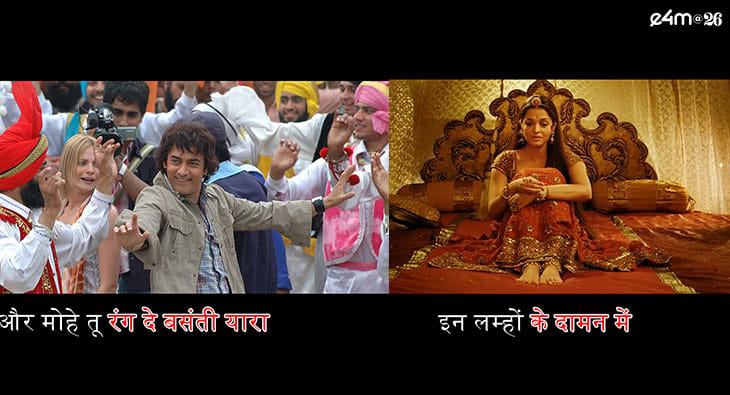

- The Ministry of Information & Broadcasting (MIB) in India has introduced the "Cinematograph (Certification) Rules, 2024," mandating that all film producers submit Same Language Captions (SLC) for the hearing impaired and Audio Description (AD) for the visually impaired starting March 2026.
- The Central Board of Film Certification (CBFC) is responsible for ensuring that films are "born" accessible, but currently only checks for compliance rather than the quality of accessibility features.
- Smart glasses technology is highlighted as a potential solution for enhancing in-theater accessibility, allowing viewers to customize subtitles and audio tracks in real-time.
- MIB aims to ensure that accessibility features are permanently included in a film's Digital Content Package (DCP) for consistent availability across all platforms, positioning India as a leader in accessible cinema amidst its diverse language landscape.
Surely, no one can disagree that a person with hearing or visual impairment should have an equal opportunity to enjoy a film in a theatre with family, friends, even strangers, and why not, popcorn! Many of us take this experience for granted.
The Ministry of Information & Broadcasting (MIB), to its credit, has framed a pathbreaking policy in India, “The Cinematograph (Certification) Rules, 2024.” Since March 2026, all film producers are required to submit two additional files for certification – Same Language Captions (SLC) for the hearing impaired and Audio Description (AD) for the visually impaired.
As with any good policy, quality implementation is key. MIB needs to ensure that mandated accessibility features become an integral part of a film and should be accessible seamlessly in a theatre. Viewers should be able to customize these accessibility features for their individual needs and the features should remain portable across all the devices on which the film will be consumed.
Born Accessible
The Central Board of Film Certification (CBFC) is already ensuring that all films are ‘born’ accessible with SLC and AD. While CBFC performs a thorough review of a film’s contents and quality, it merely performs a compliance check of the availability of SLC and AD. The quality of accessibility on films is therefore patchy. To fix this, CBFC will need to check for the quality of SLC and AD. Assuming minimum standards are met, CBFC will then need to publicly inform on their website and commercial ticketing platforms of the available access features in different shows. While quality checking of accessibility may seem onerous, AI tools have matured sufficiently to automate this task, with gradually tapering human intervention.
In-Theater Accessibility
Ideally, every viewer in a film theater should be able to select from any number of language-subtitles and audio tracks and integrate the selected elements into a seamless film experience. This is possible today with smart glasses.
Today’s smart glasses can overlay sharp text in any script onto the theater screen. They come with built-in audio streaming to plug in or bone conducting headphones. To keep the audio and subtitles aligned, smart glasses already sync to the movie audio in real time via acoustic fingerprinting. Theoretically, even sign language videos when available can be added as picture-in-picture.
In many countries theatres loan smart glasses to viewers who ask for them. Pricey smart glasses have hit the consumer market globally, including in India. As the price drops, we can expect mass smart glass adoption for an enhanced movie experience for those who need subtitle-language and audio track options.
Portability
A key aspect of all films born accessible is that the accessibility features become inalienable elements of a film’s Digital Content Package (DCP) of files. These features must then travel with the film. When the film is licensed to TV or OTT, it must be licensed and distributed inclusive of all the accessibility elements. MIB, as the content regulator, must ensure that accessibility features remain permanently bound to any content’s digital package. This will guarantee that the barrier-free experience extends from content creation to content distribution, hosting and consumption on any screen.
India’s Promise
Despite the last mile kinks that need to be resolved, India is rapidly emerging as a global leader in providing an accessible cinema experience. Countries that historically did well on cinema accessibility are the US, UK, Sweden and Australia. However, their in-theatre technologies tend to be costly even though they are solving for one or two languages. India’s commitment to delivering accessibility is in a context of unparalleled and rich language diversity. The world can now expect novel and affordable ways to bring the cinematic experience to all.
(Photo Credit: Copyright: Ashutosh Gowarikar Productions Private Limited and UTV Software Communications Limited)
Disclaimer: The views expressed here are solely those of the author and do not in any way represent the views of exchange4media.com.
Read more news about Digital Media, Television Media, Out of Home Advertising, Print Media, Latest Advertising India
For more updates, be socially connected with us onInstagram, LinkedIn, Twitter, Facebook, YouTube & Google News
