Why India Gate chose influencer content over celebs: Marketing Head Kunal Sharma answers
Kunal Sharma, Head - Marketing & Business (Modern Trade & E-comm), India Gate, shares the brand’s strategy for expanding the category, targeted discounting & bundled offers
 by
by
Published: Jul 10, 2025 8:23 AM | 4 min read
 Follow Us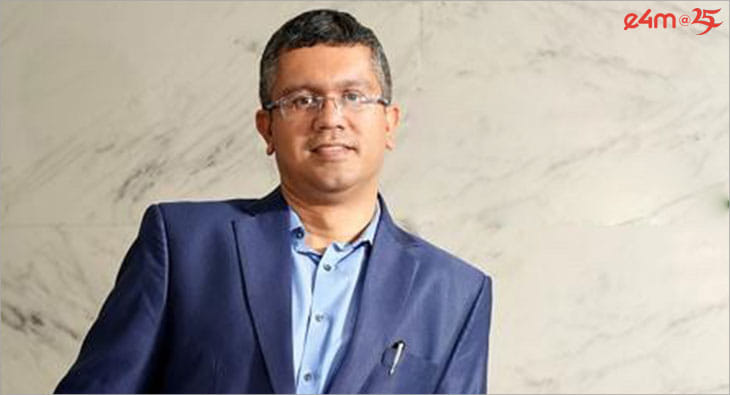

India Gate Foods has made a sharp pivot from its basmati rice stronghold into the premium edible oil segment. The product has been positioned at the intersection of health, digital-first marketing, and category expansion, and is expected to contribute Rs 40 - Rs 50 crore in topline revenue in its initial phase.
The brand’s entry point is not accidental. The premium blended edible oil category, which includes 2-oil blends, is growing at a robust 21 per cent CAGR, with a market size of 1.1 million metric tonnes (MMT), according to Nielsen data (Oct '23). Within this, India Gate’s current play stands at 1.1 MT, with plans to scale to 2 MT by year-end, and 8-10 MT eventually. For context, the broader refined edible oils market in India is a 243 lakh MT behemoth, and within that, rice bran oil, another health-forward option, only clocks 2.6 lakh MT with a modest 1.5per cent growth rate, highlighting the niche but fast-growing opportunity in blended health oils.
“We’re not going up against the market leader. We’re here to expand the category through a differentiated proposition,” said Kunal Sharma, Head - Marketing & Business (Modern Trade & E-commerce), India Gate.
The brand is allocating 15 per cent of its overall spends to marketing, with a clear tilt toward digital-first platforms, influencer-led advocacy, and e-commerce media. While traditional staples like rice often limit marketing innovation, India Gate’s previous investments in its rice portfolio have increased its confidence in going full-throttle digitally.
“Most of our investments will be directed towards digital media, influencer content, and more around quick commerce and e-commerce media,” Sharma said. “The role of digital is going to be predominant, from awareness to interest to action. We’ll also see an always-on influencer content strategy around this.”
India Gate is deliberately avoiding celebrity-led razzmatazz and instead focusing on credible micro and nano influencers, especially from the health, nutrition, and fitness space. The goal is brand-message credibility, not just visibility, Sharma shared.
Despite a premium price point of Rs 190-199, the brand is not aiming for mass affordability through pricing. Instead, it is banking on targeted discounting and bundled offers to justify value. For instance, combi-packs with rice and oil priced between Rs 120-Rs 140 are expected to act as tactical triggers for acquisition.
“If I give a discount coupon to someone searching for gut-health content, that’s a better consumer acquisition than dropping the price for everyone,” Sharma explained.
This price strategy is guided by a fundamental distinction: India Gate is not an oil brand trying to compete on price, but a health proposition brand playing in the oil category. This helps justify the pricing, and shift the category narrative away from heart-health dominated players like Saffola.
One of the biggest business challenges for India Gate has long been the commoditisation of rice in the Indian market. By linking oil and rice through bundling, and targeting young, nuclear families aged 25-40 with an eye on gut health, the brand is attempting to reposition both products under the “Uplife” wellness platform.
In terms of repeat purchase, internal targets expect 10-15 per cent return buyers, which the company plans to nurture through data-backed performance marketing and conversion tracking via CPS (Cost per Sale) campaigns.
For now, direct-to-consumer (D2C) is not on the roadmap. The product will be distributed primarily through modern trade (MT), e-commerce, and general trade (GT), with MT expected to see the fastest traction owing to in-store visibility and on-ground promoter activity. Quick commerce is listed, but not prioritized, as its short discovery window makes it less suitable for new category introductions.
The projected channel mix is 50 per cent modern trade and e-commerce, and 50 per cent general trade, covering both physical and digital points of sale.
From a regional lens, the initial focus is on Delhi NCR, Mumbai, and Bangalore, but with the potential to scale across Tier 1 and Tier 2 markets. While 95 per cent of India Gate’s current rice portfolio is Basmati-heavy, the oil segment opens doors to newer SKUs and regional customizations.
Packaging includes a QR code linked to a WhatsApp chatbot that lets consumers take a short quiz to determine their “Gut Score”. Based on results, users receive wellness tips, further pushing the brand’s positioning away from product-selling and towards lifestyle advocacy.
While large-scale sustainable supply chains take time to build, Sharma acknowledged increasing consumer sensitivity toward ethical sourcing, environmental impact, and brand responsibility. The oil launch leans on cold-pressed, recycled packaging, and gut-focused innovation to speak to a more conscious urban buyer.
Read more news about Marketing News, Advertising News, PR and Corporate Communication News, Digital News, People Movement News
For more updates, be socially connected with us onInstagram, LinkedIn, Twitter, Facebook, YouTube & Google News