What Spider-Man’s record campaign reveals about film partnerships
From billion-dollar campaigns to decades-long brand associations, brand experts decode why some collaborations outlast the movies that spawned them
 by
by
Published: Aug 3, 2026 9:03 AM | 7 min read
 Follow Us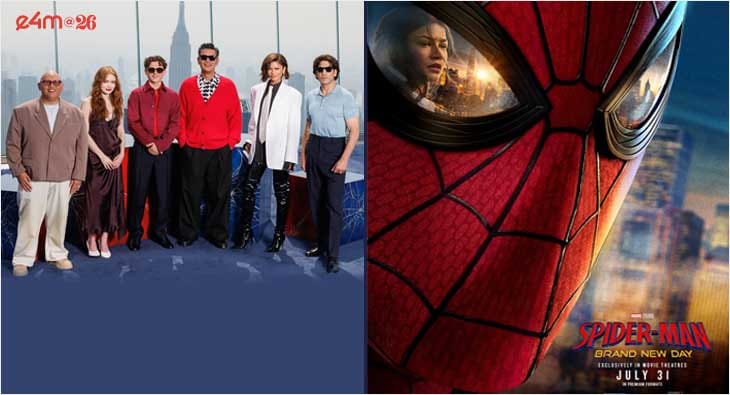

- The release of *Spider-Man: Brand New Day* featured an extensive promotional campaign with brands like BMW, Samsung, and McDonald's, generating an estimated $309 million in media value, marking a significant evolution in studio-brand collaborations.
- Long-standing partnerships, such as those seen in the James Bond franchise, illustrate the potential for brands to build enduring cultural equity through film placements, although success measurement remains complex and often reliant on word-of-mouth.
- Recent Hollywood films, including *Wicked* and *Barbie*, have embraced broader and more sophisticated brand partnerships, integrating sponsors into narratives and reporting metrics like media value and impressions to showcase commercial impact.
- In the Indian market, global films are increasingly localizing brand stories, enhancing engagement and effectiveness of placements, while experts emphasize that successful integration of brands into film narratives is crucial for maximizing impact.
When Spider-Man: Brand New Day swung into theatres, it didn't come alone. BMW, Samsung, McDonald's, Little Caesars and Liquid I.V. rode along, turning the release into Hollywood's biggest promotional partner campaign on record, with an estimated $309 million in media value, as per reports.
The scale of the campaign reflects how studio-brand collaborations have evolved beyond traditional product placement into multi-platform marketing programmes.
The Bond blueprint
Among long-running film partnerships, the James Bond franchise remains one of the most cited examples. BMW's stint as 007's carmaker in the 1990s, Aston Martin's decades-long association with the franchise, alongside brands such as Omega and Heineken, are frequently referenced as examples of enduring entertainment marketing partnerships.
Dr. Sandeep Goyal, Managing Director at Rediffusion, frames the appeal and its limits bluntly. "It is a tried-and-tested formula. Seldom fails. But not something most brands can do as it requires very deep pockets to fund such adventures. The blockbusters give a dopamine high to the brand and its loyalists but that high is difficult to sustain. As far as ROI is concerned it is a high-stakes investment - and for it to benefit the brand long-term, sustained investments are necessary."
Harish Bijoor, Founder, Harish Bijoor Consults Inc., pointed out that none of this is new. "Product placements, digital activations, and limited-time merchandise within movies is old hat. It has been around for the last 50 years. I do believe that with every passing year and with every passing movie, there is a wee bit of refinement. But the basic thought remains solid. If you are seen within an iconic piece of cinema, you must be an iconic brand yourself. To that extent, there is a good degree of resonance with the brand," he said.
He called Bond "the classic example that has carried this to great limits," while cautioning that "measurement of success is quite an amorphous item when it comes to blockbuster entertainment. Typically, it is word of mouth and word of the movie that grows. What gets embedded are the iconic scenes that use iconic brands, and the action within the movie builds the chemistry with the brand."
Nisha Sampath, Founder, Bright Angles Consulting, said legacy film franchises continue to create value well beyond a film's release window. "Partnerships with legacy film franchises offer huge and enduring value to brands. They are not merely renting eyeballs; they are building enduring cultural equity. Aston Martin has been reaping the benefit of association with Bond's legendary mystique for decades, and it stays alive through re-runs, streaming, fan-created edits and more. Through association with a character who is loved by audiences, the brand inherits values and emotional equity, and not just impressions. Compare that with a regular sponsorship, which is time bound by the release window."
Why premium brands chase film placements
Ashish Mishra, CEO, Interbrand India & South Asia, breaks down why the format continues to draw premium brands even now, in 2026. The first reason, he said, is aspirational transfer. "Film heroes are the ideal self. If SRK drinks that whiskey, the audience wants that whiskey."
The second is that film placement escapes the clutter that ads have to fight through. "Ads are skippable. Film placement is woven into the story. You can't fast-forward the hero's car. Can you?"
The third is global credibility. "One placement in a Netflix or YRF film is seen in 190 countries. Premium brands need a global halo."
And the fourth is longevity. "An ad dies in 30 days. A film lives 10-plus years on OTT. The other day, while watching a re-run of 3 Idiots, I saw a Ray-Ban placement that still sells," Mishra said.
Bigger campaigns, broader ecosystems
Recent Hollywood releases suggest that studios are expanding both the scale and sophistication of brand partnerships. Wicked (2024) signed more than 450 brand partners and generated an estimated $350 million in media value and 25 billion impressions, according to industry estimates. Its sequel, Wicked: For Good (2025), followed with over 400 partners and an estimated $330 million in media value despite a smaller $90 million marketing budget.
F1: The Movie (2025) adopted a different approach by integrating sponsors directly into the fictional APXGP Formula One team. Apple and Jerry Bruckheimer reportedly secured around $40 million in sponsorships from brands including Tommy Hilfiger, Expensify, Mercedes-Benz, IWC Schaffhausen and EA Sports.
Barbie (2023) featured more than 100 brand collaborations, from Airbnb and Xbox to Crocs and Gap, backed by a reported $150 million marketing budget.
Deadpool & Wolverine (2024) pursued fewer but closely aligned partnerships with Heinz, Heineken and Jack in the Box, while A Minecraft Movie (2025) partnered with roughly 45 brands including McDonald's, Adidas, NYX and Samsung.
Sampath sees this evolution less as replacement and more as expansion. "More than replacing sponsorships, entertainment IP is emerging as a content platform for brands. In fact, brand placements in films still need the expanded visibility that traditional campaigns give. Hence Samsung and BMW did not just rely on appearing in Spider-Man but also ran extensive campaigns around it. Sponsorships offer unmatched viewership and guaranteed visibility, which film placement does not. Film placement is still dependent on the film clicking with audiences; hence, it's a bit of a gamble. I would say that sponsorships and brand campaigns build awareness, while film placements build cultural relevance and equity. Brands need both."
Measuring impact
Studios increasingly report metrics such as media value, impressions and earned media alongside box office performance. Campaigns for Wicked, F1: The Movie and Barbie have all been accompanied by publicly reported marketing metrics intended to demonstrate the commercial impact of brand collaborations.
However, Sampath cautioned against treating these metrics as definitive measures of effectiveness: "Brands no longer look purely for eyeballs as a metric, but also measure shifts in brand equity, brand associations with desired image attributes and purchase intent. However, there is a caveat, we cannot directly attribute these shifts to placement. Brands can see a pattern that indicates a positive impact rather than any direct result."
Bijoor offered a similar perspective, arguing that success continues to be shaped largely through "word of mouth and word of the movie," with memorable scenes helping embed brands in popular culture.
The India angle
For the Indian market, experts point to increasing localisation around global entertainment properties. "What is interesting in the Indian market is that global films now integrate India-specific brand stories rather than just importing global ones. For Brand New Day you had Fevicol MR running Spider-Man packs with QR-code craft tutorials, McDonald's India bundling a limited-edition bucket hat, and a playable Spider-Man inside BGMI. Global franchises are localising into India-specific brand stories, which increases the bang for the buck from earned media by driving engagement," Sampath noted.
Mishra pointed to a parallel shift driven by streaming and regional cinema. "With the OTT and regional cinema boom in recent times, it's not just Bollywood anymore. A placement in Kota Factory or Pushpa reaches tier 2/3 and NRI audiences."
He also argued that the format only delivers when the brand is built into the story rather than bolted on. "It works best when brands create a strong story integration, the product solves a problem in the scene, not just a logo on the table. This needs integration at a story level, thinking of the brand as part of the film, not as an afterthought."
Rather than suggesting that film partnerships are replacing traditional sponsorships, the experts describe the two as complementary marketing approaches. While sponsorships provide predictable reach and visibility, entertainment partnerships can contribute to longer-term cultural relevance when supported by sustained investment.
As Goyal puts it, the formula "seldom fails" provided brands are prepared to view it as a long-term investment rather than a one-off campaign.
For premium brands specifically, Mishra sums up the appeal in one line: "Ads tell. Films show. And premium sells better when it's shown as part of a desirable life."
Read more news about Marketing News, Advertising News, PR and Corporate Communication News, Digital News, People Movement News
For more updates, be socially connected with us onInstagram, LinkedIn, Twitter, Facebook, YouTube & Google News