From Hutch to Vi: The advertising journey of a telecom brand
Guest Column: Ganapathy Viswanathan, Independent Communication Consultant & Author, tracks the brand journey that culminated in Vi
 by
by
Published: Sep 16, 2026 10:59 AM | 6 min read
 Follow Us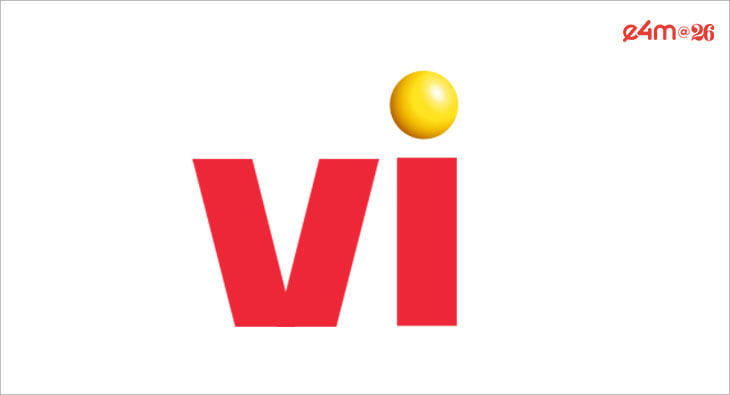

- The Indian telecom brand has undergone multiple identity changes, transitioning from Max Touch to Orange, Hutch, Vodafone, and now Vi, with advertising playing a crucial role in each transformation.
- Hutch's advertising, particularly the pug campaign, successfully built an emotional connection with consumers, while Vodafone's ZooZoos created a culturally memorable identity.
- Vi's recent campaign, featuring Shah Rukh Khan, aims to establish its new identity following the merger of Vodafone and Idea, using humor to engage consumers and emphasize a shift in brand perception.
- The challenge for Vi lies in developing a distinctive brand memory akin to its predecessors, requiring consistent and innovative communication beyond mere product features.
Few brands in Indian telecom have travelled through as many avatars as this one. From Max Touch to Orange, Hutch and Vodafone, and finally to Vi, the brand has repeatedly changed its identity as the market around it evolved. But what makes the journey particularly interesting is the role advertising has played in making each transformation visible and relevant to consumers.
The brand has rarely allowed a change in identity to remain just a corporate announcement. Each phase has tried to create a communication moment around it. And some of those moments have gone on to become among the most memorable pieces of telecom advertising in India.
When Hutch Had a Personality
The Hutch years remain perhaps the strongest example of a telecom brand building a personality through advertising. At a time when most telecom communication was dominated by tariffs, call rates and network propositions, Hutch found a much more emotional way of speaking to consumers.
The pug campaign changed the conversation. The little dog following a young girl became a simple metaphor for the network being there wherever you went. There was very little complexity in the idea, but that was precisely its strength. It was warm, easy to understand and extremely memorable.
The pug became so strongly associated with Hutch that the advertising was doing more than selling a telecom service. It was creating a distinctive brand memory.
That is difficult to achieve in any category, and particularly difficult in telecom, where products and propositions can quickly become similar.
Vodafone Raised the Bar
When Hutch became Vodafone, the brand had a major challenge. It had to introduce a new identity without losing the familiarity it had created.
It managed that transition with another advertising property that became hugely recognisable — the ZooZoos.
The strange, white characters with their distinctive expressions and mannerisms gave Vodafone a completely different communication language. The campaigns were quirky, humorous and visually distinctive, and consumers began looking forward to them as entertainment rather than simply advertising.
The ZooZoos also demonstrated the power of creating a world around a brand. They were not just characters appearing in one advertisement. They became a Vodafone property.
The pug had made Hutch emotionally memorable. ZooZoos made Vodafone culturally memorable.
And Then Came Vi
The next major transformation was considerably more complicated. Vodafone and Idea came together and the new entity eventually became Vi.
Once again, communication had to explain a new identity and establish it in the consumer's mind. The launch communication around Vi was therefore important in helping the brand move from being seen as Vodafone Idea to being recognised as a new brand in its own right.
But the market had also changed considerably by then.
Telecom advertising had become much more digital and performance-driven. Offers, pricing, data, 4G and 5G, plans and features increasingly dominated the communication. There was far greater pressure on brands to generate immediate response rather than simply build long-term memory.
For Vi, as for most telecom brands, digital became an important place to communicate these propositions.
But there is a difference between telling consumers what a brand is offering and giving them a reason to remember the brand.
Making Vi Visible Again
The latest campaign appears to be an attempt to bring that larger brand conversation back.
Vi has made a relatively small change to its visual identity, playing with the dot over the 'i'. On its own, it is not the sort of change that is likely to make consumers stop and take notice.
So, the brand has turned it into an advertising story.
And who better to do that than Shah Rukh Khan?
The new film uses Khan's personality and humour to question whether Vi has really changed. His driver gets into the discussion, followed by another member of his entourage, who even raises the question of how the brand should be pronounced. Khan, naturally, insists on "Vi" and then delivers the punchline that the brand has changed because he is now on the network.
The humour is uncomplicated, but the strategic thought behind it is interesting. The campaign is taking a small visual change and giving it a larger meaning.
The voiceover then turns the joke around, saying that irrespective of what Shah Rukh Khan thinks, Vi is in a new avatar — one where every customer on the network is treated like a VIP.
From Features Back to the Brand
This is perhaps what makes the latest communication worth looking at beyond the celebrity association.
For several years, telecom brands have had to fight for attention through product propositions. More data, better speeds, more benefits, better prices and newer technology have become the language of the category.
But functional communication has a limitation. Competitors can match an offer, improve a price or introduce another feature. It is much harder to replicate a distinctive brand memory.
The pug could not simply be copied because it had become Hutch. ZooZoos could not simply be separated from Vodafone because they had become part of the brand's identity.
Vi now needs to find its own equivalent.
The Bigger Challenge for Vi
The Shah Rukh Khan campaign certainly gives Vi visibility and injects some personality back into the brand. But the real challenge is bigger than this campaign.
Can Vi build a communication property that consumers begin to associate with the brand in the same way they associated the pug with Hutch or ZooZoos with Vodafone?
That will take more than one film or one change to a logo. It will require consistency, distinctive thinking and communication that goes beyond what the network is selling at any particular moment.
The brand has travelled a long distance — Max Touch, Orange, Hutch, Vodafone and now Vi. Names have changed, ownership has changed and the telecom market has changed dramatically.
Yet one lesson from that journey remains constant: the strongest brands are not remembered because of what they sell. They are remembered because of how they make people feel and what they make people remember.
Vi has changed its avatar once again. Now it has to make that avatar memorable.
Disclaimer: The views expressed here are solely those of the author and do not in any way represent the views of exchange4media.com.
Read more news about Marketing News, Advertising News, PR and Corporate Communication News, Digital News, People Movement News
For more updates, be socially connected with us onInstagram, LinkedIn, Twitter, Facebook, YouTube & Google News