Redefining performance in a platform-first world
Taboola partnered with exchange4media to host a roundtable with focus on reimagining performance in today’s platform-first world
 by
by
Published: Jun 3, 2025 11:39 AM | 6 min read
 Follow Us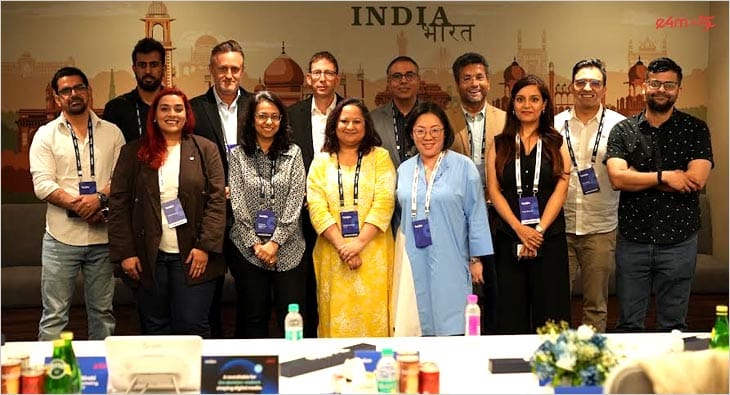

In a digital economy increasingly shaped by shifting consumer behavior, AI-led disruption, and the growing fatigue with walled garden ecosystems, the definition of “performance” in marketing is up for debate. Once synonymous with clicks, conversions, and attribution models, the term now grapples with a more complex reality—one where storytelling, context, and curiosity matter just as much as metrics.
With this backdrop, Taboola, a global leader in performance advertising on the open web, partnered with exchange4media to host a roundtable focused on reimagining performance in today’s platform-first world.
Held on May 27 at Taboola’s newly inaugurated Gurugram office, the discussion brought together a mix of marketing leaders, agency heads, and digital strategists to interrogate what performance truly means in 2025—and how brands can evolve their media strategies to keep pace.
Featuring voices from companies like Max Life, Sleepwell, Zenith, Innocean, Lyxel & Flamingo, Agilus, Omnicom Media Group, VaynerMedia and Livguard, alongside Taboola’s global leadership, the conversation was grounded in real-world shifts and forward-looking perspectives.
Sameer Jain, CVP and Head of D2C at Max Life, set the tone early by questioning traditional intent signals. “Search intent is down, but category growth is up. That tells you discovery is happening elsewhere.” The comment was met with nods across the room. The group acknowledged that while search and social still command the majority of digital spends, their dominance is increasingly being challenged by fragmented consumer behavior and diminishing returns.
Rashmi Sehgal, Chief Digital and Transformation Lead at Zenith, addressed the obsession with short-term metrics. “We’re building long-term brand love and visibility, but we’re still only measuring what converts in the moment,” she said. For many on the panel, the issue wasn’t just attribution—it was expectation. Brands and boards alike continue to equate digital performance with direct response, even when campaigns are designed for upper-funnel impact.
Archana Aggarwal, Head of Media, Digital, PR and Insights, Sheelafoam, pointed out how this short-termism manifests in creative strategy. “If everyone is jumping on the same trends, your distinctiveness disappears,” she said, referring to the moment marketing that dominates timelines but dilutes brand identity.
As the conversation turned to platforms, panelists explored how their media mixes are evolving. Vishaldeep Bhardwaj, Head of Digital at Omnicom Media Group, spoke about how luxury brands often find mainstream platforms like Google and Meta too blunt for their targeting needs. “You can’t find the right audience for an ultra-premium product on mass platforms. Context is everything,” he said.
Piyush Jain, Chief Marketing Officer & Chief Digital Officer, Agilus Diagnostics, added that while smaller brands may rely on the safety of the duopoly, performance often lies beyond it. “Brands with small budgets may default to Meta and Google, but for real context and relevance, OpenWeb and niche platforms offer unmatched value.”
The conversation moved toward the increasing complexity of audience targeting, particularly in environments like OTT. With subscription models becoming the norm, a significant share of premium audiences is now ad-free. “My wife uses full subscriptions on Disney+ and SonyLIV,” one panelist said. “To reach her, you have to go through programmatic OTT. She’s invisible otherwise.”
It was around this point that Vibhor Mehrotra, Managing Partner at Innocean, offered a larger philosophical shift: “The platform no longer matters. The narrative does. And AI is helping shape it faster than ever before.” He emphasized that while AI can replicate formats and optimize delivery, the emotional intelligence to ensure message relevance remains a human strength. “AI plus human intelligence is where the magic happens.”
The practical applications of AI were a highlight of the discussion. Dev Batra, CEO of Lyxel & Flamingo, described a project in which his team used generative AI to analyze a wide spectrum of competitor campaigns. “We fed in campaign data across our network and asked it to reverse-engineer competitor strategies... no human team could have done that at this speed,” he said.
Kristy S., Chief People Officer at Taboola, cautioned against relying on automation alone. “The AI can summarize and automate. But if you don’t have critical thinking — if you can’t ask the right questions or take responsibility — you’ll be obsolete.” Her point underscored a growing sentiment in the industry: while AI can boost efficiency, it cannot replace judgment, creativity, or curiosity.
Creative testing was another area where panelists shared real-world shifts. Mehul Suri, Media Director at VaynerMedia, described a reverse funnel approach. “We test creative organically on social. If it performs, only then do we amplify it through media.” This earned-owned-paid model reflects a growing preference for audience-validated storytelling over budget-driven amplification.
Eldad Maniv, President and COO at Taboola, offered a global perspective, comparing trends in India to other markets. “India is unique... CTV here is already a walled garden. And quick commerce platforms are becoming performance channels themselves,” he said.
He also touched on advertiser fatigue with traditional search and social investments. “Your first dollar of search is gold. Your tenth? Not so much.” Maniv noted that many advertisers are now exploring open web channels and content discovery platforms to diversify risk and reach.
Maniv went on to highlight how India is embracing AI in a more hands-on way than some western markets. “We’re seeing more hands-on use of GenAI in India than in the U.S.—not just talk, but real experimentation.”
Before wrapping up, the discussion circled back to a persistent industry pain point: last-click attribution. Despite its widespread use, many in the room agreed it offers an oversimplified view of performance that ignores the complexity of modern consumer journeys.
Panelists argued that such models fail to account for the influence of brand building, content discovery, or even offline nudges that may eventually lead to a digital conversion. The takeaway was clear: performance must be evaluated across the full funnel, not just at the point of transaction.
As the conversation drew to a close, several themes stood out. Context and creativity now sit at the heart of high-performing campaigns. AI is rapidly transforming everything from audience targeting to creative production, but human insight remains critical. And most importantly, performance in a platform-first world isn’t just about optimization—it’s about evolution. As Kristy S. aptly put it, “Performance isn’t about clicks anymore. It’s about curiosity, context and creativity.”
That sentiment lingered as attendees mingled over coffee, sharing notes on experimentation, new tools, and fresh challenges. In a media world increasingly defined by platforms, the real performance, it seems, lies in the ability to adapt without losing purpose.
Read more news about Marketing News, Advertising News, PR and Corporate Communication News, Digital News, People Movement News
For more updates, be socially connected with us onInstagram, LinkedIn, Twitter, Facebook, YouTube & Google News