From FAANG to MANGOS: Why Indian marketers must prepare for age of AI-Generated choice
Guest Column: Senior Brand, Growth and Media leader Ketan K Bharati explains why the shift from FAANG to MANGOS is not a change in tech leadership but how consumers discover, evaluate and choose
 by
by
Published: Jun 11, 2026 8:59 PM | 6 min read
 Follow Us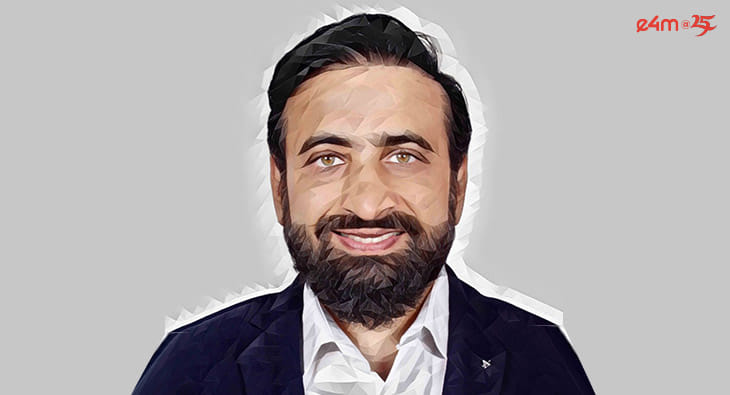

- The transition from FAANG (Facebook, Amazon, Apple, Netflix, Google) to MANGOS (Meta, Anthropic, NVIDIA, Google, OpenAI, SpaceX) signifies a shift in marketing focus from attracting consumer attention to influencing decision-making through AI technologies.
- As AI evolves from content generation to decision influence, marketers will need to compete for inclusion in AI-generated recommendations rather than just visibility, marking a move from an attention economy to an intelligence economy.
- The future of marketing is expected to shift from traditional campaign-based strategies to integrated operating systems that leverage AI for real-time optimization and decision-making, emphasizing the importance of credibility over mere visibility.
- The rise of AI agents, which can autonomously complete tasks such as purchasing, presents new challenges for brands, requiring them to influence both consumers and the AI agents acting on their behalf, while also highlighting the need for credible content in an increasingly crowded digital landscape.
FAANG was out. MANGOS was in.
For much of the digital era, FAANG—Facebook, Amazon, Apple, Netflix and Google—defined where consumers spent time, discovered information, consumed content and shopped. Entire marketing playbooks were built around these platforms.
MANGOS—Meta, Anthropic, NVIDIA, Google, OpenAI and SpaceX—represents something different. These companies are not just competing for attention; they are building the intelligence infrastructure that increasingly shapes decisions.
For marketers, that distinction matters.
For two decades, brands fought for attention.
Over the next decade, they may need to fight for something far more important: inclusion in the decisions made by AI.
That, in my view, is the real story behind the shift from FAANG to MANGOS. Not a change in technology leadership, but a change in how consumers discover, evaluate and choose.
The marketing industry has successfully adapted to every major platform shift—from television to search, social media and smartphones.
AI feels different.
Not because it introduces another platform, but because it has the potential to sit between consumers and the decisions they make.
The Shift Nobody Is Talking About
Most discussions around AI focus on content creation.
The more significant shift is that AI is moving from generating content to influencing choice.
Consider a consumer looking for the best family health insurance plan.
A few years ago, the journey would begin on a search engine. They would compare websites, read reviews and evaluate options before making a decision.
Today, that same consumer is increasingly likely to ask an AI assistant.
The assistant synthesises information, compares alternatives and recommends a handful of options.
No search result page.
No ten blue links.
Sometimes, no click at all.
For years, marketers competed for visibility. Increasingly, they will compete for inclusion in the recommendation itself.
The next battle for brands will not be for clicks. It will be for choice.
From Attention Economy to Intelligence Economy
The FAANG era created an attention economy.
The marketing playbook was straightforward: attract attention, convert attention and measure attention.
The emerging AI era operates differently.
The systems being built today help consumers navigate complexity and make decisions. As a result, marketing is moving from attention-led growth to intelligence-led growth.
Historically, success depended on reaching the right audience.
Increasingly, success may depend on becoming the most credible answer.
Algorithms can generate content at scale. Credibility cannot.
In a world flooded with information, brands that are consistently recommended, referenced and remembered will have an advantage over those that simply spend more.
From Campaigns to Marketing Operating Systems
The bigger implication of AI is not creative automation.
It is organisational transformation.
For decades, marketing has operated through campaigns. Teams created a brief, launched media, measured performance and moved on to the next cycle.
That model is beginning to show its age.
Today's CMOs are asking different questions:
Can planning be automated?
Can optimisation happen in real time?
Can customer journeys adapt dynamically?
Can AI improve decisions faster than traditional campaign cycles allow?
The future of marketing is unlikely to be built around isolated campaigns.
It will be built around connected operating systems that continuously learn, optimise and improve.
The organisations that win will not necessarily have the biggest budgets. They will be the ones that best connect creativity, data, technology and commercial outcomes.
The question is not whether AI will replace marketers.
It is whether organisations will continue operating with structures built for a pre-AI world.
Execution will increasingly be automated.
Judgement, integration and strategic decision-making will become more valuable.
Why AI Agents Change the Game
The next wave of disruption is not AI assistants.
It is AI agents.
Assistants answer questions.
Agents complete tasks.
Today, consumers ask AI what to buy.
Tomorrow, they may ask AI to buy it.
Imagine an AI agent comparing prices, evaluating reviews, selecting products and completing transactions on behalf of a consumer.
This creates a completely new challenge.
What happens when the next customer isn't a consumer, but an AI agent acting on their behalf?
Traditional advertising was built to influence people.
The next decade may require brands to influence both people and the digital agents acting on their behalf.
What This Means for Media
Every technology cycle creates new gatekeepers.
Television networks were gatekeepers.
Search engines became gatekeepers.
Social platforms followed.
AI assistants and AI agents may become the next generation of gatekeepers.
For publishers, the challenge is obvious: fewer clicks and changing traffic patterns.
The opportunity is equally significant.
As synthetic content floods the internet, original reporting, expert analysis and research-backed content become more valuable.
The winners may not be those producing the most content.
They may be those producing the most credible content.
For agencies, the shift is equally profound.
The future agency will increasingly connect data, technology, creativity and AI into an integrated growth system.
Execution will become cheaper.
Judgement will become more valuable.
India's Opportunity Is Different
India's AI opportunity may not lie in building the next OpenAI.
It may lie in solving uniquely Indian problems where language, scale and accessibility intersect.
Healthcare guidance in regional languages.
Agricultural advisory services.
Financial education for first-time investors.
Personalised learning.
Small-business enablement.
At the same time, some of the most significant AI-led changes may not happen inside chat interfaces at all. They may happen where discovery, commerce and transaction converge. Marketplaces, retail media networks and quick-commerce platforms are increasingly becoming decision engines rather than just distribution channels. As AI becomes embedded into these ecosystems, the distance between recommendation and purchase could shrink dramatically.
India does not need to replicate Silicon Valley to win.
It needs to solve Indian problems at Indian scale.
The Contrarian View: AI Will Make Brands More Important
Much of the discussion around AI assumes technology will weaken the role of brands.
I believe the opposite.
As AI-generated content becomes abundant, differentiation becomes harder.
Consumers may increasingly rely on AI recommendations. But they will continue to validate those recommendations through brands they recognise and feel confident choosing.
In a world overflowing with information, familiarity and credibility become valuable assets.
The strongest brands of the next decade will combine technological capability with cultural relevance.
Neither alone will be sufficient.
What Marketing Leaders Should Do Next
Marketing leaders should start by asking a simple question:
If a consumer—or an AI agent acting on behalf of a consumer—asks about our category today, does our brand appear in the answer?
Most organisations do not know.
That is a problem worth solving.
Invest in direct customer relationships. Build stronger first-party data capabilities. Break down silos between marketing, analytics, technology and customer experience.
Most importantly, continue investing in brand building.
The FAANG era rewarded brands that mastered attention.
The MANGOS era will reward brands that earn recommendation.
Because in the age of AI-generated choice, being seen is no longer enough.
Brands will need to be chosen.
Read more news about Marketing News, Advertising News, PR and Corporate Communication News, Digital News, People Movement News
For more updates, be socially connected with us onInstagram, LinkedIn, Twitter, Facebook, YouTube & Google News