Enso Group’s Vaibhav Maloo on driving growth & diversification in B2B sectors
In an in-depth conversation, Vaibhav Maloo, Managing Director of Enso Group, spoke about the company's growth journey, diversification vision, and unique marketing strategies
 by
by
Published: Nov 8, 2024 11:19 AM | 9 min read
 Follow Us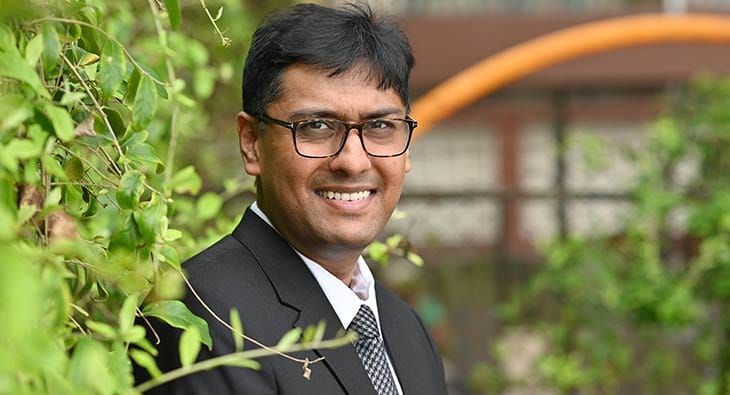

Vaibhav Maloo, Managing Director of Enso Group sat down for a detailed conversation with e4m on the company's growth journey, diversification vision, and unique marketing strategies designed to address non-consumer-facing industries.
Maloo reflected on Enso’s journey, which began in 2005 with an infrastructure project that set the stage for Enso's future endeavours. “Starting with infrastructure allowed us to establish credibility early on, managing complex projects and building a reputation that would support our expansion,” he explained.
Today, Enso’s holdings span multiple sectors, with each business unit contributing holistically to the group’s growth. This expansion reflects Enso's strategy of tackling high-impact areas with a sustainable approach.
Maloo spoke about the group’s unique businesses, marketing strategies, growth, expansion plans and more.
Edited excerpts:
If you could tell us a little bit about the journey of your company, when did you all start, and what has the journey been like so far?
We had a diversified enrollment that started in 2005. We were always intending to be diversified and not focused on just one industry. This provides sectorial hedging.
The main reason my father left his previous company and started this one was that he wanted to be involved in multiple businesses, which was not possible in the telecom business he was in prior to this. When I joined in 2005 as a trainee and a young business development manager, I was given the challenge to actually synergise the businesses, package them, brand them, and structure the organisation in a way that made it look unified and synergised.
Over time, we have completed a few big projects, such as the Delhi-Gurgaon Metro, which we initiated as the Enso Group along with a couple of other partners. We have stepped away from that project now, but it still operates as a successful example of our work.
That was a significant project for us. We were then selected by the Russian Direct Investment Fund to manufacture the Sputnik V and Light vaccines during the COVID-19 pandemic. That was a major milestone for us because being recognised as COVID warriors was a huge honour and opportunity.
Although we didn't make much money in that business, we took it on. We undertook the technology transfer to India and helped Indian manufacturers start production. However, the Indian sales were not as high as we had hoped; we encountered some costs there. Nevertheless, it was a prestigious opportunity for us.
After that, we also had other opportunities, such as the distribution of petroleum products like base oils, bitumen, lubricants and LNG. This particular business is linked to the oil and gas industry, which is the primary sector we entered into in 2005 when we started the group.
Is that still your primary focus, or is it the biggest holding company?
That is what we're known for. Basically, we led the way for Indian companies to go global in that business.
Before us, there were very few private sector companies and only a handful of small players present in the market. At that point, we looked up to the biggest companies like Shell, Chevron, and others. Inspired by them, we aimed to create a natural resource in a sustainable manner. Today, we have a gas block with approximately 1.30 trillion cubic feet of proven reserves, and we are actively looking for more opportunities. That's where we are.
The offerings and services you provide are not glamorous in nature. How is the marketing for your offerings different from the traditional marketing we see for more popular products advertised on TV or social media platforms like Instagram? What unique challenges do you face in promoting these less conventional products?
We entered two B2C businesses. One is my personal startup in Enso Group, under a company called Enso Webworks, which is called InfoProfile. It is a visiting card exchange platform with which I intend to replace physical visiting cards in the world. We facilitate exchanges of visiting cards so people have downloadable contact details. This is done through QR codes, Bluetooth, or by directly adding information like name, mobile number, and email ID. There are multiple ways to exchange visiting cards on that platform, and the product includes a GPS locators and different advanced search tools for social media.
This took off early this year. We just started marketing that product in Africa, beginning with Kenya, and we are starting with Nigeria, Ethiopia, South Africa, and Egypt, targeting the English-speaking high-income, smartphone penetration countries of Africa. At some point, we will expand to different languages and countries such as Russia, European countries, and South America, with the USA and UK being advanced and saturated markets. We aim to enter those markets with a substantial user base later.
Lubricants are a niche market and how they differ from daily goods is that these goods are superior in quality compared to what is available in India. However, the problem is that there are many available products in India, and these are usually bought by industry experts or automobile experts, not by consumers directly, unlike in other countries where individuals often perform their own oil changes.
In keeping that in mind, we have to target a different kind of crowd and build recall with everyone else. When the product quality is good, it’s not a problem. However, the product quality is comparable to a few others available in the market, and pricing is challenging.
For InfoProfile, where we have a product with very good quality, we face incumbency issues with existing sites having a strong user-base. To build a niche and demonstrate our usability, we need to put in significant effort. It's challenging, but we are tracking our conversion ratios, expenditures, and other parameters, and we know our marketing budget to reach an optimal user base.
Since you mentioned that you are entering some markets, can you provide us with some numbers regarding the marketing budget you have envisioned for the next two years? Where do you plan to spend it?
Enso Group has just begun B2B businesses, so we're going to start marketing aggressively. So far, we've been leveraging a lot of PR activities for our group and our leadership, including mine and the Chairman’s. This is to have recall in the eyes of people and people around the world. And when they search for us on the Internet, there's enough information and content about us. When people know us, and they have information about us, it's easier to work with them, and they want to work with you.
In the case of the marketing budget, we have spent about Rs 5 - Rs 6 crore only in the last 2 years. In the coming few years, we're going to have a healthy budget for both these businesses as we are encouraged by market support. We will top it up as long as it's giving a return. Return on Marketing Budget (ROMB) will basically make sure that the conversion ratio is according to that. We will definitely check.
Is there a percentage that you have assigned that this part of your revenue will go towards marketing activities and results?
As part of setting up a business, it's just been one and a half years. The next few years are going to be crucial in deciding and spending the budget. In the next few months, around 3 to 4 months, we'll be building a marketing plan for next year’s activities.
For any modern-day marketer, sustainability is a significant topic. Everyone is discussing it, regardless of their offerings. How substantial is sustainability as a conversation for your brand? Specifically, considering that you are involved in lubricants and similar products, how important is sustainability in your overall brand strategy?
Sustainability, I think, as a concept I became aware of after taking our CMU’s business school courses as an undergrad and a specialized online course. I learned the nuances of ESG and sustainability and the real meaning of it only after that course. Before that, my only knowledge about charity was CSR.
Initially, I thought it was just a technical term that we had to comply with in marketing and with our image in mind. But we realized after that that we were not bad on sustainability without knowing what we were doing. We sponsored a lot of people's education and sponsored green events such as cycling and associated with credible partners.
We are a patriotic bunch of promoters. My dad and I are very patriotic. We love our country, and we look for different ways to contribute to our GDP and GNP. In sort of taking a name forward, we have actually lobbied for a lot of business development from Russia to India and vice versa, which has borne fruit now into something much bigger for the two countries.
Looking forward, where do you see your company in the next five years? If you were to identify three focus areas for your company, what would they be?
I have a lot of bright ideas that I believe will do well in India. They all require a lot of funding, and given that, I can implement a lot of new business in India. Right now, we're focusing on a trading business where we are trading with precious metals and diamonds. We are one of the largest suppliers of diamonds to India at this point.
We run a company called Enso Global Trading for commodity trading. Dubai is sort of the optimum place for this kind of business. Obviously, taxation is one primary reason.
That’s one business my father is keeping an eye on and he stays in Dubai. I, myself, am overlooking, along with my father's guidance, the lubricants business, which is going to be our next unicorn from Enso Group, I feel. I have high hopes from InfoProfile as well, which is an Enso Webworks asset.
Read more news about Marketing News, Advertising News, PR and Corporate Communication News, Digital News, People Movement News
For more updates, be socially connected with us onInstagram, LinkedIn, Twitter, Facebook, YouTube & Google News
