Agility defines the CMO of tomorrow: Ashwin Ballal, Deloitte India
Ashwin Ballal, Partner, Deloitte India, on the evolution of the CMO role, the role of AI and data and much more
 by
by
Published: Aug 28, 2025 1:03 PM | 5 min read
 Follow Us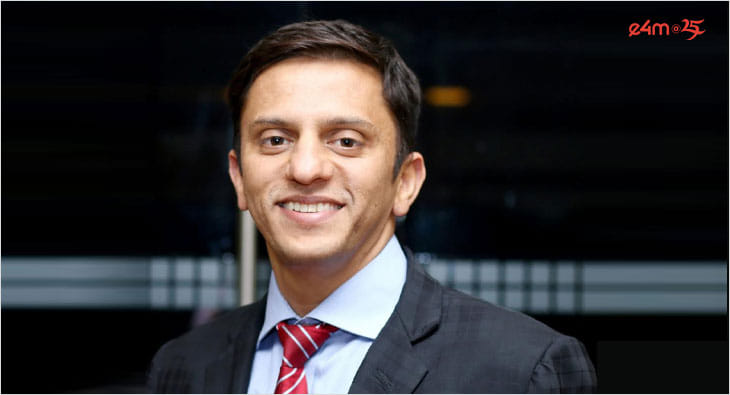

Marketing is no longer about catchy campaigns or splashy ads. As businesses navigate rapid technological shifts and changing consumer expectations, the function has emerged as a critical engine of growth.
A report Reimagining Marketing for 2025 and Beyond by Deloitte India underscores this transition, emphasising how empathy, hyper personalisation, and customer first strategies are redefining the future of the discipline.
Ashwin Ballal, Partner, Deloitte India, who has seen the CMO’s journey evolve closely, frames it succinctly: “Historically, CMOs were brand custodians or managed product and pricing. But the way information and entertainment are consumed has completely changed. Earlier, families gathered around one television or one newspaper; today, every individual consumes content on their own device. This shift has demanded that CMOs move from broad communication to deeply personalised engagement.”
From custodians to growth officers
The report highlights how modern marketing has transcended transactional tactics, demanding authenticity and continuous engagement. CMOs now carry direct responsibility for growth outcomes.
“Today, CMOs are not just communication heads. They are growth officers and, in many cases, digital officers. Their responsibility directly impacts revenue generation, not indirectly as before. It has become far more measurable,” Ballal explains.
Artificial intelligence and data analytics have made this measurability sharper than ever. CMOs can track campaigns in real time, from impressions to conversions. “Earlier, you invested in television ads and relied on surveys to assess impact. Today, you can measure outcomes instantly. From smarter targeting to calculating customer lifetime value, CMOs can directly link marketing activity to business growth,” says Ballal.
The report echoes this shift, noting that 90 per cent of CEOs now expect marketing to drive revenue growth, while 82 per cent seek clearer performance metrics. In a resource constrained environment, where more than 40 per cent of budgets are consumed by content creation, this accountability has become non negotiable.
The continuous customer lifecycle
One of the most profound changes is the way marketers now view the customer journey. The traditional funnel has given way to a cyclical model, with retention valued as highly as acquisition. From attracting interest to nurturing loyalty, the cycle is continuous, built around delivering seamless omnichannel experiences.
“Micro segmentation, enabled by AI and data, makes it easier to understand and respond to customer demands at a granular level,” Ballal points out. This has real business impact: the report finds that organisations focusing on customer lifetime value see up to a 25 percent boost in profitability.
Yet, challenges remain. Nearly 74 percent of customers express frustration when content is not tailored to them, while 80 percent are more likely to buy from brands that deliver personalised experiences. With 73 percent of marketers exploring generative AI to bridge this gap, the pressure to “do more with less” has never been greater.
Agility in an age of ambiguity
But technology alone does not define success. The pace of competition, the shrinking life cycles of products, and the emergence of substitutes, even from unrelated industries, demand agility.
Ballal illustrates: “The lifetime of products has come down, and entry barriers are lower. Substitutes often compete indirectly. For instance, telecommunications competes with automobiles, because connectivity reduces the need to commute. In this environment, retaining customer attention becomes even harder.”
For CMOs, agility means adapting strategies in real time. “It’s less about work stress and more about ambiguity. Businesses must constantly adapt strategy in response to changing circumstances, and agility is what helps CMOs thrive,” Ballal explains.
Skills for the next generation
As the next wave of marketers step into leadership roles, the skill set they bring will define their impact. Historically, creative storytelling was paramount. Today, data literacy sits at the centre.
“It’s not just about creativity. It is also about data driven decision making. You need to use data to drive your creative campaigns and deliver your campaigns to the individuals,” Ballal stresses. The balance, however, lies in combining statistical skills with creativity. Tomorrow’s CMOs must be equally comfortable analysing customer cohorts as they are in designing compelling brand narratives.
On whether marketers should be jack of all trades or specialists, Ballal advocates for balance: “You need to be a master of something, but you need to understand every aspect of the organization as well. You probably need to understand it well enough to know how it impacts your domain. Large companies have always followed this principle, future leaders spend time across the value chain, including with customers, to build holistic understanding.”
Marketing as an ecosystem play
The evolution of marketing, Ballal adds, is also about building ecosystems rather than operating in silos. Drawing an analogy from telecom’s role in enabling education, he explains:
“Telecom companies gave the SIM, IT firms built platforms, educators created the content. Together, they transformed learning for students in remote areas. It was not the telecom company alone, it was an ecosystem. Similarly, the CMO’s role is to bring together the right set of people within the organisation to enhance customer experiences.”
This idea of marketing as an ecosystem ties back to the report’s emphasis on collaboration, cross functional, technological, and human. As Deloitte frames it, the goal is not just customer experience, but human experience.
The road ahead
Marketing in 2025 and beyond will be defined by its ability to stay relevant in a fragmented, fast changing world. The function must embrace empathy, data, and agility, all while orchestrating seamless experiences that align with consumer values.
As Ballal sums it up, the CMO of the future is not just a storyteller or strategist, they are ecosystem builders, growth leaders, and custodians of human experience. The transformation is clear: marketing has moved from the margins to the core of business strategy, powering growth in ways that are both measurable and meaningful.
Read more news about Marketing News, Advertising News, PR and Corporate Communication News, Digital News, People Movement News
For more updates, be socially connected with us onInstagram, LinkedIn, Twitter, Facebook, YouTube & Google News