2026’s spiritual marketing kickstarts with nearly Rs 75 cr brand outlay at Magh Mela
At Prayagraj’s Magh Mela, brands are tapping into the high footfall with activations; many moving beyond symbolic presence to on-ground experiences, high-visibility signage & BTL activations
 by
by
Published: Feb 16, 2026 9:22 AM | 6 min read
 Follow Us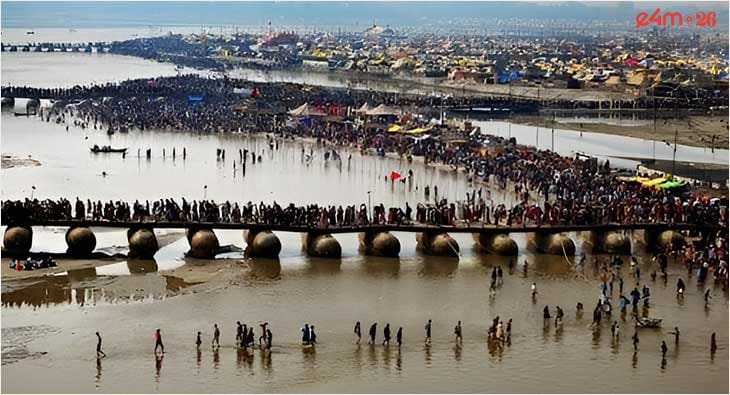

As millions gathered at the Sangam for the annual Magh Mela this year, another congregation quietly took shape alongside the spiritual one, that of brands, marketers and agencies sensing the next big frontier: spiritual marketing.
Unlike the once-in-12-years scale of the Kumbh Mela, the Magh Mela has traditionally been viewed as a relatively low-key annual affair. But in 2026, it emerged as a testing ground for a new advertising narrative, one that blends faith, community and commerce with greater strategic intent.
Total advertising and on-ground activation spends around the Magh Mela this year are estimated to be upwards of Rs 75 crore, more than doubling compared to the previous edition. While the outlay remains well below the extraordinary Rs 4,500+ crore scale of the Maha Kumbh Mela, Magh Mela 2026 has clearly moved into the tens-of-crores bracket, marking a significant jump from routine annual fairs. Over the past five to 10 years, the event has evolved into a serious advertising and consumer engagement platform, aided by stronger infrastructure, digital amplification and more structured administrative support.
The shift in brand confidence has coincided with an unprecedented surge in footfall. Nearly 10 crore devotees have attended so far, with projections touching 15 crore by Mahashivratri on February 15. Every major ‘snan day’ has drawn between 16 lakh and over one crore participants, with peak days nearing two crore, a sharp departure from the earlier post-Kumbh trend where footfall typically remained around one crore. The scale has materially altered advertiser calculations.
Brands today are moving beyond symbolic presence to full-scale on-ground experiences, with high-visibility signage, immersive BTL activations, stalls and sampling zones executed at scale.
At Prayagraj’s Magh Mela, brands are tapping into high footfall with purpose-led activations. Iodex has set up “Active Zones” across the mela grounds, offering quick massages, product sampling and pain relief awareness to pilgrims navigating long distances, positioning itself as a companion during physically demanding journeys. Meanwhile, HDFC Asset Management Company Ltd., investment manager to HDFC Mutual Fund, is running an investor awareness drive under its BarniSeAzadi initiative, encouraging women to move from traditional cash savings towards SIP-based mutual fund investing through on-ground engagement formats such as a large Barni installation, nukkad nataks and interactive experiences aligned with peak footfall days.
Navneet Munot, Managing Director and Chief Executive Officer, HDFC Asset Management Company Ltd., said, “True financial freedom begins with awareness and small, disciplined steps. Women have traditionally been the custodians of household savings, and through our BarniSeAzadi initiative, we are encouraging a shift from idle savings to purposeful investing. By taking investor education to community platforms like the Magh Mela, we hope to meet people where they are, using familiar symbols and simple ideas to convey the power of long-term, goal-based investing. Financial inclusion is not just about access to products, but about building confidence, trust, and understanding.”
Advertiser ticket size & category mix
Experts noted that FMCG brands led the charge at the Magh Mela, with detergents, personal care, wellness and other daily-use categories dominating on-ground visibility due to their natural alignment with hygiene and mass consumption. At the same time, telecom, BFSI, healthcare and agribusiness players are steadily scaling up their presence, using the platform to drive awareness, sales and lead generation in one integrated push. However, categories such as cement, steel, consumer durables and other infrastructure-linked brands, which were active during the Maha Kumbh, remained relatively muted at the Magh Mela despite comparable footfall and improved infrastructure readiness.
Sumit Guha, Co-Founder and Director, Mindshaft Media, noted that brands are no longer merely present at the Mela but are creating full-scale on-ground experiences, combining high-visibility signage with immersive BTL activations, stalls, sampling zones and large-scale experiential campaigns.
“Led by FMCG players with around 35% of spend continues robust investments, although tempered post-Kumbh. Digital channels now account for a growing share of marketing spend, rivalling traditional OOH as brands adapt strategies to an expected record crowd,” he said. “For 2026, FMCG brands remain the most aggressive spenders, investing heavily in on-ground visibility, sampling, and stalls. Average advertiser ticket sizes range widely—from Rs 5–10 lakh for basic inventory to multiple crores for large experiential activations, reflecting a clear shift from simple hoardings to service-led marketing.”
Rajesh Radhakrishnan, Founder and CMO, Mindwave Media, explained that post the Maha Kumbh, the Uttar Pradesh government has played a more proactive role in organising and promoting the Magh Mela, both digitally and on-ground, significantly improving crowd management and execution ease for advertisers. Advertising and activation spends are estimated at upwards of Rs 75 crore, more than doubling versus the previous edition, driven by higher footfall, improved infrastructure, clearer media inventory and greater brand confidence in executing large-scale experiential campaigns.
“This year saw participation from over 100 brands, with advertiser budgets more than doubling compared to earlier editions of the Magh Mela. While earlier spends were largely experimental and conservative, advertisers are now allocating more serious budgets, recognising the scale, dwell time, and repeated exposure that the event offers,” Radhakrishnan said, adding that the average ticket size per advertiser has increased significantly, reflecting higher confidence in execution, better ROI visibility, and improved measurement of impact through footfall data and engagement metrics.
OOH opportunity
Experts highlighted a clear shift in format preference at the Magh Mela, with hoardings and gantries emerging as the most sought-after OOH assets, particularly at welcome gates and key entry points where dense, repeated footfall ensures maximum visibility and recall. Mobile LED vans are gaining traction for their ability to move with crowds, while tent branding is seeing rising demand as brands sponsor pilgrim accommodations for sustained presence. At the same time, immersive installations, including AR-led experiences and large replicas, signal an experiential turn, though advertisers continue to prioritise formats that combine scale with proximity to the devotee journey over purely experimental executions.
“OOH formats located at welcome gates, key entry points, and high-density movement corridors continue to see the strongest demand due to unavoidable and repeated exposure,” said Guha.
Spiritual calendar 2026
The Magh Mela’s performance has also widened the lens for advertisers looking at the broader spiritual calendar.
Experts said that beyond the Magh Mela, brands are actively evaluating high-footfall spiritual and cultural gatherings such as Khatu Shyam Ji Mela, Lathmar Holi, Pandharpur Yatra, Rath Yatra in Puri, Chitrakoot Mela, the Shravan Kanwar Yatra and pan-India Navratri and Durga Puja celebrations. Events that combine mass footfall, multi-day dwell time and predictable media inventory remain top priorities, including Amarnath Yatra, Rath Yatra, Navratri and Durga Puja, Ganesh Chaturthi, Chhath Puja and the Sabarimala season, with categories ranging from FMCG and beverages to BFSI, telecom, mobility and consumer durables. Region-specific melas are also increasingly being assessed by national advertisers for targeted visibility and on-ground activation.
“These events offer massive congregations, strong emotional engagement, and a culturally receptive audience, making them increasingly attractive platforms for large-scale brand visibility and activation,” concluded Radhakrishnan.
Read more news about Marketing News, Advertising News, PR and Corporate Communication News, Digital News, People Movement News
For more updates, be socially connected with us onInstagram, LinkedIn, Twitter, Facebook, YouTube & Google News