Louis Vuitton’s iconic flower motif spotted ‘carved in stone' at 12th cent K'taka temple
The viral clip has sparked conversation over whether the 12th-century temple carving could have inspired the luxury brand’s iconic monogram
.png) by
by
Published: Feb 24, 2026 2:59 PM | 2 min read
 Follow Us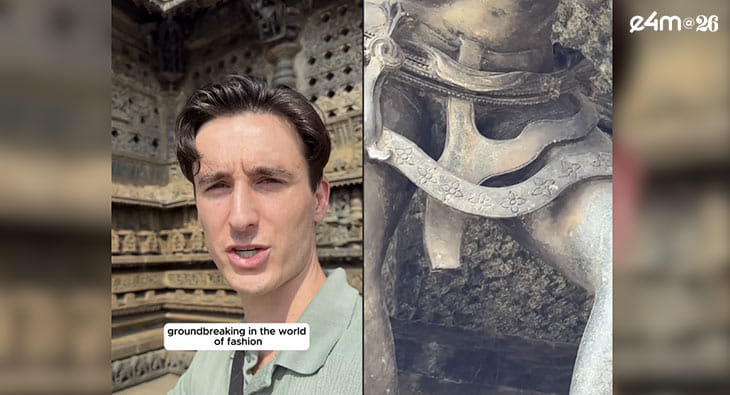

You’ve seen Louis Vuitton’s four-petal monogram on luxury bags and trunks for decades, it’s instantly recognisable. But a viral video from Karnataka’s Chennakeshava Temple in Belur has set the internet talking: an Australian travel influencer claims that the famous LV flower motif appears in stone carvings there, centuries before the fashion house ever existed.
The influencer, Liam Richards, posted a clip from his visit to the 12th century temple, known for its exquisite soapstone carvings. As he explored the site, he drew attention to a floral design sculpted into the artwork, pointing out that it closely resembles the iconic four-petal flower used by Louis Vuitton in its signature monogram pattern. “I’ve made a great discovery, groundbreaking in the world of fashion,” he says in the video, claiming the design in stone reminds him of what appears on LV belts and bags.
“I found where Louis Vuitton gets their little flower symbol from, except they don’t credit the ancient Indians. It’s carved here in stone, the original Louis Vuitton belt, a thousand years ago," he said in the clip.
View this post on Instagram
L
ouis Vuitton itself traces its monogram back to 1896, when Georges Vuitton combined geometric floral elements and the “LV” initials as a tribute to his father, inspired by Art Nouveau, Japonism and Gothic heraldic art.
Social Media Reacts
Online reactions ranged from shocked to analytical. “Indian art has been influencing fashion long before global brands existed,” one user wrote, while another commented, “So LV was doing temple core before it was cool.”
A user write, “That's Incredible india forya.”
Some were more cautious, saying, “It’s a flower. Similar designs can exist independently,” and “Not everything is a conspiracy - patterns repeat across cultures.” A few users leaned into the humour, posting, “Hoysala dynasty walking so Louis Vuitton could run,” and “Ancient artisans: the original luxury designers.”
The tone across platforms remained largely light-hearted, with the resemblance becoming more of a cultural conversation starter than accusatory.
Whether the similarity is purely coincidental or simply an example of recurring geometric and floral patterns across civilizations, the video has once again spotlighted the visual richness of India’s temple architecture. In a single frame, centuries-old stone craftsmanship and modern luxury branding unexpectedly collided, and the internet, as always, had plenty to say.
Read more news about Industry Briefing, Internet Advertising, Marketing, PR & Corporate Communication, Television Media
For more updates, be socially connected with us onInstagram, LinkedIn, Twitter, Facebook YouTube & Google News