Why are global content creators seeking India’s validation for brand launches?
India's robust digital community is an irresistible draw for creators like MrBeast and Logan Paul who were recently in India to promote their respective products 'Feastables' and 'Prime Hydration'
 by
by
Published: Nov 18, 2024 9:13 AM | 5 min read
 Follow Us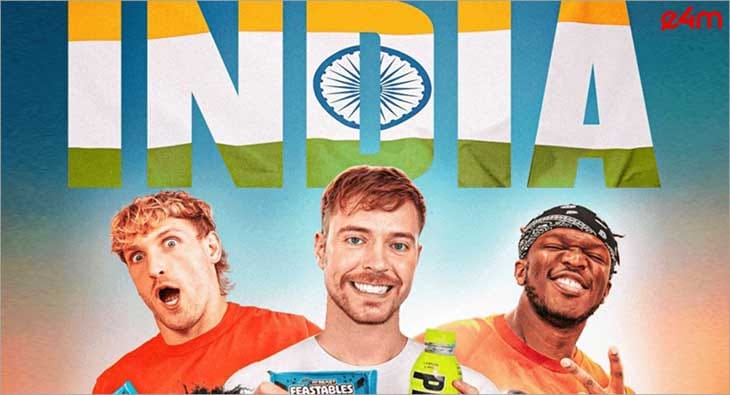

Two of the world’s most prominent content creators, MrBeast and Logan Paul have recently launched their consumer brands in India. MrBeast, the YouTube giant with over 329 million subscribers, introduced his chocolate brand Feastables, while Logan Paul launched his Prime Hydration energy drink brand in collaboration with creators KSI and IShowSpeed.
But what really drives these internet giants to enter the Indian market? It’s not just about a ‘hello’ and a few selfies. India’s youth is one of the world’s largest, most engaged digital communities, so for influencers like MrBeast and Logan, India isn’t just a pit stop – it’s prime real estate in influencer terms. MrBeast counts a solid 10.78% engagement on his YouTube channel from India alone, while Logan Paul’s fitness brand Prime enjoys a 12.05% engagement rate in India on Instagram, according to Qoruz data. With this fanbase, he tapped into an enthusiastic market for Feastables, introducing the brand at ₹499 for 60 grams, a premium pricing strategy that targets affluent urban consumers. Similarly, Prime Hydration, priced at ₹399, arrives in India with a lower price point than before, when it was imported and sold at as much as ₹900.
View this post on Instagram
Viren Vesuwala, Lead of Strategic Partnerships and Alliances at White Rivers Media, sees influencer market interest as a logical progression, noting, “The Indian digital landscape isn’t just another frontier—it’s an ecosystem all its own. Successful international brands blend their global identity with local relevance, launching campaigns that balance best practices with on-the-ground understanding.”
The creator economy in India is booming, with projections by FICCI-EY estimating growth from ₹19 billion in 2023 to ₹34 billion by 2026. Indian influencers like Bhuvan Bam (Youthiapa) and Ashish Chanchlani (OG Beauty) are leading the charge, using their cultural insights and relatability to create brands that speak directly to their audiences.
View this post on Instagram
Sectors of Interest: Lifestyle, Beauty, and Wellness Most global influencers entering India focus on sectors such as lifestyle, beauty, and wellness—categories that resonate with India’s growing consumer culture. Drew Barrymore’s Flower Beauty is a notable example, entering India through a strategic partnership with beauty giant Nykaa. By collaborating with Nykaa, Flower Beauty efficiently reached urban and semi-urban consumers across India’s digital and physical retail spaces.
Moreover, the brand tailored its offerings to Indian beauty needs, including products and shades suitable for Indian skin tones. By leveraging local influencers, Flower Beauty built trust among consumers seeking relatable, high-quality content.
View this post on Instagram
This success story highlights the power of working with established local brands and influencers. As Krisneil Peres, Co-Founder of Fame Keeda puts it, “Local partnerships offer an instant foothold, and when combined with influencer support, it enables foreign brands to quickly integrate into India’s consumer landscape.”
Krisneil explains the importance of balancing a global brand image with cultural appeal, he says, “In India, the audience appreciates international quality but also expects brands to align with local tastes, sensibilities, and culture. Influencers like MrBeast and Logan Paul are strategically maintaining their global brand image while incorporating Indian cultural touchpoints.” This dual focus allows global influencers to stand out while connecting meaningfully with Indian consumers.
Marketing strategy: Localization beyond language
Entering India’s market goes beyond translating ads or adapting taglines—it requires a deep cultural understanding. “Global creators are collaborating with regional influencers to build familiarity and credibility. This includes partnerships with popular Indian content creators like CarryMinati and Samay Raina, whose hyper-local content styles resonate with Indian audiences.
For influencers launching premium-priced products in a price-sensitive market, strategic partnerships with local personalities provide authenticity. Krisneil Peres remarks, “Building a brand in India means not only catering to local tastes but embodying values like authenticity, community, and family, which resonate deeply with Indian audiences.”
How global brands can increase sales in India
To succeed in India’s dynamic market, global influencer brands must prioritize creating authentic experiences and building meaningful connections with local audiences.
One key strategy is price competitiveness. While premium-priced products can find success in India, offering smaller, more affordable SKUs (Stock Keeping Units) can significantly broaden accessibility. This approach allows a larger section of the population to engage with the brand, making it more inclusive.
Another crucial element is influencer partnerships. Collaborating with local creators can greatly enhance a brand’s credibility. Indian consumers tend to trust products endorsed by homegrown influencers who share a genuine connection with their followers. These partnerships build authenticity and foster loyalty among the audience.
Additionally, cultural resonance is essential. Brands must tailor their content to align with India’s rich and diverse cultural landscape. As Viren Vesuwala from White Rivers Media puts it, “Authenticity in India takes on a distinct dimension…credibility here is built on community involvement and regional partnerships.” Understanding local customs, traditions, and values is crucial to building trust and emotional engagement.
Lastly, targeted digital campaigns are a must. Leveraging platforms like Instagram and YouTube, combined with ads on Indian social media platforms like Moj and Josh, ensures that brands reach audiences across various regions. This targeted approach helps connect with consumers on both a national and local level, driving more meaningful interactions with the brand.
Read more news about Digital Media, Internet Advertising, Marketing News, Television Media, Radio Media
For more updates, be socially connected with us onInstagram, LinkedIn, Twitter, Facebook, YouTube & Google News
