From transactions to testing grounds: How Q-Comm is reshaping product launches in India
As WPP Media unveils ‘From Concept to Scale’ playbook, Sairam Ranganathan discusses how changing shopper behaviour, faster experimentation, AI-led discovery are pushing brands to rethink launch models
 by
by
Published: Sep 30, 2026 12:05 PM | 5 min read
 Follow Us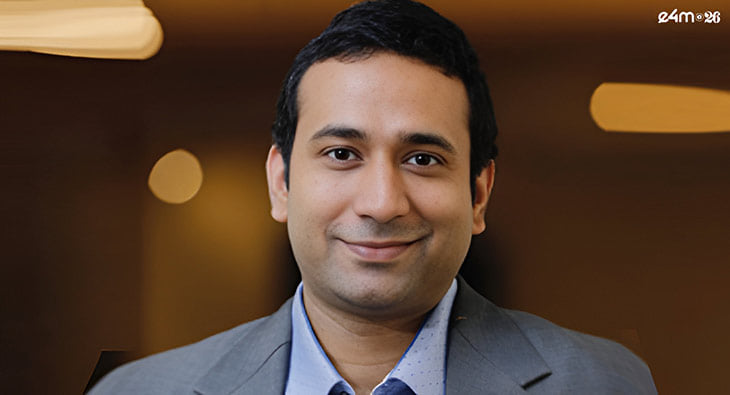

India's rapidly evolving commerce ecosystem is changing more than how consumers shop. With quick commerce, marketplaces and digital-first platforms increasingly influencing product discovery and purchase decisions, brands have an opportunity to rethink how they identify demand, test new propositions and determine which products deserve to scale.
This shift forms the central premise of WPP Media India's new playbook, From Concept to Scale: The Commerce-First Launch Playbook for India, which positions commerce not merely as a distribution channel but as an innovation and growth system.
Speaking about the changing landscape, Sairam Ranganathan, Head of Commerce. WPP Media, pointed to the transformation of everyday shopping habits, particularly in urban India, where quick commerce has reduced consumers' dependence on planned monthly purchases and traditional shopping lists.
"Today, consumers are looking at marketplaces and quick commerce as platforms where they don't just convert existing demand or treat it as a sales channel," he said, explaining that these environments are increasingly facilitating product discovery.
A consumer searching for ice cream, for instance, could discover an unfamiliar chocolate brand through the same shopping journey. Similarly, festival-specific collections on quick-commerce applications can introduce shoppers to products they had not originally intended to purchase.
According to Ranganathan, this expanding role has implications for marketing investments and how brands approach commerce platforms.
"Today, brands can use any of the retail or commerce platforms as a full-funnel mechanism," he said. "On the back of some of the marketing mix analytics we have done, we also know that today these platforms have a role to play in creating awareness and consideration also, and not just converting."
Quick commerce as a testing ground
Beyond its impact on discovery, quick commerce is also changing the economics of launching and validating products.
The WPP Media playbook cites Bain & Company and Flipkart's How India Shops Online 2026 report, noting that quick commerce accounted for 16–17% of India's e-commerce gross merchandise value in 2025. Its growing influence is creating opportunities for brands to experiment with products, pack sizes and propositions in specific markets before committing to wider distribution.
"I think the big change is that the ability to build something specifically keeping in mind either quick commerce or a marketplace, and try it and scale it, is one of the big advantages that we see," Ranganathan said.
Compared with eight to ten years ago, he added, the time required to launch a brand and understand whether its proposition is working has shrunk significantly.
"I think the advent of quick commerce has transformed marketing in a completely different way."
One of the playbook's proposed approaches involves simulated product listings, where brands can test a concept in a realistic digital shopping environment even before manufacturing the product.
The framework allows businesses to study shopper behaviour, including clicks, engagement and attempted add-to-cart actions. The simulation is disclosed when a consumer attempts to add the mock product to their cart, and no transaction is completed.
Ranganathan, however, cautioned against viewing simulation as the only route to validation.
"There is a way in which you can pick and choose certain markets and certain pin codes and do a limited production, 1,000 units, 10,000 units, and do it in a real environment. The cost of experimentation has come down significantly," he explained.
Both simulated testing and limited-market pilots have their merits and limitations, he said, arguing that brands must become more adaptable in how they conduct consumer research.
Marketing for humans and AI agents
Looking ahead, Ranganathan identified AI-mediated discovery as another development that will reshape commerce marketing.
While consumers are already using AI systems to compare products and receive recommendations, the next challenge for brands will be ensuring their products remain discoverable when purchasing journeys are increasingly mediated by intelligent agents.
"Historically, all marketing has been only for human beings. Whether any communication that is designed has always been designed keeping in mind human beings," he said.
"Now, today every brand has two audiences: the human beings and the agents."
This distinction, he explained, requires brands to reconsider their content and discoverability strategies.
"It is important that you are discoverable by both."
Ranganathan said WPP Media is working with technology partners to understand how brands appear within large language model environments and how their discoverability can be strengthened through content, citations, credibility signals and organic and paid approaches.
Unlike conventional marketplace or search-engine queries, AI-led interactions introduce different forms of consumer intent, requiring marketers to examine whether their brands surface during relevant recommendation moments and how competing products are represented.
Connecting commerce intelligence across channels
An equally important challenge is integrating learnings from an increasingly fragmented commerce ecosystem.
Ranganathan explained that WPP Media's approach involves cross-pollinating insights across direct-to-consumer websites, marketplaces and quick-commerce platforms instead of treating their performance independently.
For example, strong demand for a particular SKU on a D2C platform in specific markets can inform experimentation on marketplaces and quick-commerce applications, helping teams determine whether the same product, geography and messaging combination produces similar results elsewhere.
"I think the biggest differentiator is going to be someone who looks at this in an integrated, holistic way, joins the dots and looks at the overall growth of the brand, and not just growth from a D2C standpoint, not just growth from a quick-commerce or marketplace standpoint," he said.
With general trade and modern trade continuing to play significant roles in India, the ambition is to connect digital evidence with broader distribution decisions.
"We are in the business of driving growth for our clients. It doesn't matter whether it is growth in modern trade, general trade or in any other digital channel," Ranganathan said.
As new commerce environments emerge, the challenge for marketers will be to balance established sales channels with emerging discovery and purchasing behaviours, while allowing evidence from actual shopper activity to inform where brands invest, experiment and scale.
Read more news about Digital Media, Internet Advertising, Marketing News, Television Media, Radio Media
For more updates, be socially connected with us onInstagram, LinkedIn, Twitter, Facebook, YouTube & Google News
