Chanel CEO Leena Nair asks: Why can’t AI imagine women in leadership?
Nair called out ChatGPT after it generated an all-male image in response to her prompt to generate a picture depicting "a senior leadership team from Chanel visiting Microsoft
 by
by
Published: Oct 31, 2025 7:05 PM | 3 min read
 Follow Us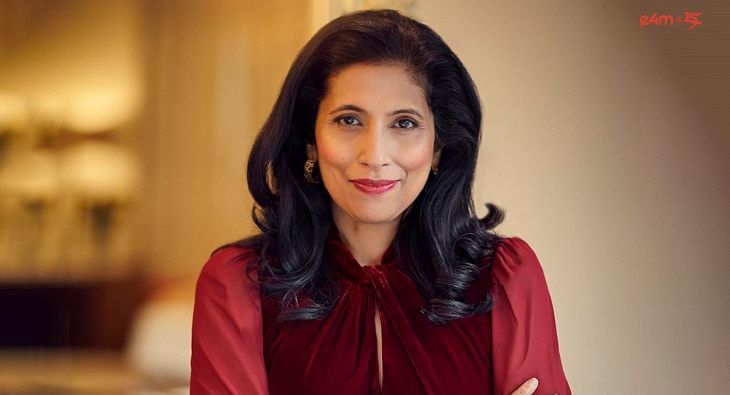

A simple AI prompt turned into a powerful wake-up call for Chanel CEO Leena Nair on the hidden biases shaping technology and brand image.
The incident, which Nair recounted during an interview with the Stanford Graduate School of Business, has transcended a simple tech glitch, evolving into a critical lesson on brand reputation and the necessity of ethical marketing in the age of artificial intelligence. Nair had asked OpenAI's ChatGPT to generate an image of "a senior leadership team from Chanel visiting Microsoft," and was stunned when it was a 100 percent male team, not even in fashionable clothes-underscoring a major risk for brands that rely on or feature AI.
Brand Risk in the AI Era: Bias in the Code
For a luxury powerhouse like Chanel, which meticulously crafts its image around inclusivity, empowerment, and modernity, the AI's biased output presented a stark, if accidental, threat to its brand narrative.
Leena Nair, one of the most visible female leaders in the global luxury market, recognized the immediate marketing danger. By publicly correcting ChatGPT, she executed a brilliant, defensive marketing move:
- Reinforcing Brand Values: Nair's response immediately signalled to consumers and that Chanel's reality—a diverse leadership team—is aligned with the values of gender diversity and contemporary leadership.
- Controlling the Narrative: She prevented the biased AI output from becoming a silently accepted "fact" online, reclaiming the accuracy of Chanel's corporate identity.
- The Power of the Authentic Leader: Her personal intervention amplified the message, linking the brand's commitment to diversity directly to its CEO's voice.
The incident highlights a core lesson for all brands: AI models can be brand assassins if their outputs are left unchecked, potentially spreading misinformation that undermines carefully constructed messages.
OpenAI’s Swift Acknowledgement and Response
The spotlight now shifts to companies like OpenAI. For them, this controversy isn't just a technical challenge; it’s a critical marketing hurdle. Their product is only as valuable as the trust users place in its objectivity and accuracy.
OpenAI’s swift acknowledgment through an official statement provided to media outlets, of the "systemic bias" and its promise of corrective action are essential steps in damage control. The company must now market its commitment to ‘Fair AI’ as a key feature, not a necessary fix.
The core challenge for tech companies is to market the 'black box' of AI responsibly. They must sell not just speed and efficiency, but ethical training data and unbiased outputs. If consumers and corporate clients cannot trust the accuracy of the AI, the product is fundamentally devalued."
A Catalyst for Change
Leena Nair’s public challenge has transformed a personal observation into a critical global discussion, compelling the tech sector to re-examine the ethical framework of AI development. The episode serves as a powerful reminder that while AI promises transformative efficiency, its outputs must be continually scrutinized for fairness. The ongoing challenge for AI developers is to ensure that the future of intelligent technology is built on data that accurately reflects the diversity of the world it is designed to serve.
Read more news about Digital Media, Internet Advertising, Marketing News, Television Media, Radio Media
For more updates, be socially connected with us onInstagram, LinkedIn, Twitter, Facebook, YouTube & Google News