Boundaries Crossed: India’s digital content reckoning, but at what social cost?
Guest Column: Abhay Ojha, Group CEO of ITV Network, shares his take on the recent OTT crackdown, the magnitude of the industry and more
 by
by
Published: Jul 28, 2025 9:01 AM | 4 min read
 Follow Us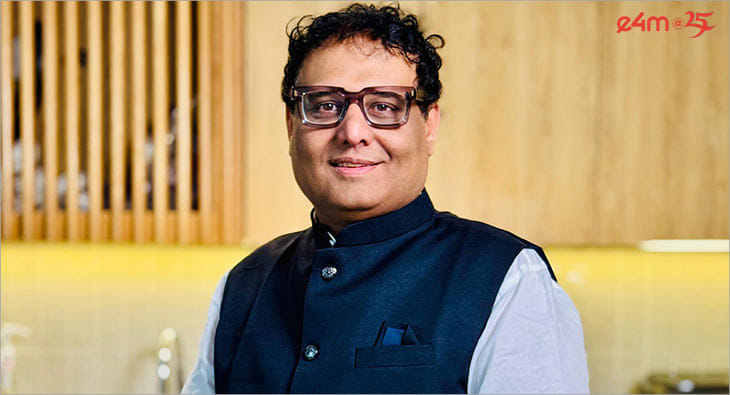

The Ministry of Information & Broadcasting (I&B) recently undertook a sweeping crackdown on 18 OTT platforms accused of disseminating obscene, vulgar, and, in certain cases, pornographic content.
This decisive move came after repeated warnings by the Union Ministry and followed continued legal violations by these platforms, igniting widespread debate within India’s dynamic digital entertainment landscape.
Magnitude of the Crackdown
The government’s action was comprehensive:
- Platforms Blocked -18, including Dreams Films, Voovi, Yessma, Uncut Adda, Tri Flicks, X Prime, Neon X VIP, Besharams, Hunters, Rabbit, Xtramood, Nuefliks, MoodX, Mojflix, Hot Shots VIP, Fugi, Chikooflix, and Prime Play.
- Assets Disabled:19 associated websites, 10 mobile apps (7 from Google Play Store, 3 from Apple App Store), and 57 social media handles.
- Digital Reach: One OTT app surpassed 1 crore (10 million) downloads; two others each exceeded 5 million downloads. The 57 blocked social media accounts collectively amassed over 3.2 million followers.
- Social Platform | Blocked Accounts |
Facebook 12 ,Instagram,17 X (Twitter),16 YouTube,12
Legal grounds cited included Sections 67 & 67A of the Information Technology Act, Section 292 of the Indian Penal Code, and Section 4 of the Indecent Representation of Women (Prohibition) Act, 1986.
India’s OTT Industry: Scale and Momentum
The crackdown unfolded against a staggering backdrop of OTT expansion:
- Market Value: As of FY2024–25, India’s OTT market is valued at approximately ₹37,940 crore ($4.5B), growing at a rapid double-digit pace.
- Massive Reach: Over 547 million OTT users in 2024, with projections pushing past 630 million by 2029—nearly half the nation’s population.
- Content Consumption: Regional content, localized programming, and affordable internet (with 800 million+ connected Indians) have driven exponential growth.
- Revenue Drivers: AVoD (Advertising Video on Demand) now outpaces SVoD (Subscription Video on Demand), due to India’s price sensitivity. There are over 100 million paid OTT subscribers, but the ad-supported audience grew by 21% year-on-year.
- Future Growth: India’s OTT sector is forecast to reach up to $27.2B by 2030, with a CAGR of 13–19.7%.
What Went Wrong: A Matter of Privacy and Public Decency
Sex and intimacy are globally recognized as deeply personal issues from centuries —an ethos that pervades Indian or any structured society. Public discussion or explicit portrayal of intimacy has never been normalised or appreciated; boundaries around such content are longstanding and widely respected. This is the essence of “intimacy” — meant for privacy, not open, indiscriminate consumption.
OTT platforms, in pursuit of larger audiences, disregarded this essential boundary. While mature themes have a place in modern media, responsible platforms carefully calibrate presentation, narrative, and access.
The issue here went beyond suggestive visuals, while visual sensuality may sometimes be tolerated in balance, egregious language and explicit dialogue can cut deeper, doing more harm to social values than images alone. When content crosses the threshold from private fantasy to public indecency, it ceases to respect both individual sensibility and the law.
OTT platforms are eager to maximise viewership, ignoring the delicate ethical fabric that underpins Indian society.
Monetization: The Missed Opportunity
India’s young, digitally savvy population demands diverse content, including mature themes. Globally, responsible OTTs position explicit content behind robust paywalls, accessible only to consenting adults and super premium. This not only aligns with regulatory and cultural expectations but also delivers higher revenues, stronger ARPU, and premium brand positioning.
Rather than mirroring this model, the banned platforms pursued a mass-access approach, diluting both exclusivity and value. The result: regulatory censure, lost trust, and a missed opportunity to monetise valuable IP in a manner that legitimises mature content within India’s legislative and social frameworks.
Regulatory Balance and Industry Implications
The government’s approach is not anti-OTT; evidence suggests sustained efforts to foster industry growth—through initiatives like the OTT Award for Web Series at the International Film Festival of India, ongoing engagement with self-regulatory bodies, and “light touch” rules under the IT Act 2021.
Importantly, India’s broader entertainment sector will reach Rs 345,000 crore by 2028, with OTT’s share climbing from about 9% today to over 20% by 2030. Responsible content strategies will be central to this expansion.
Handled wisely, India’s OTT sector will continue to thrive, capturing growth and mindshare—without overstepping the boundaries that bind society together.
Disclaimer: The views expressed here are solely those of the author and do not in any way represent the views of exchange4media.com.
Read more news about Digital Media, Internet Advertising, Marketing News, Television Media, Radio Media
For more updates, be socially connected with us onInstagram, LinkedIn, Twitter, Facebook, YouTube & Google News