Scale only matters if it is intelligently applied: Tony Harradine, Omnicom Media
Tony Harradine, CEO of Omnicom Media Asia Pacific, discusses integration, client trust, AI, talent economics, and India’s role with Dr. Annurag Batra of BW Businessworld Group and e4m Group
 by
by
Published: Mar 26, 2026 4:58 PM | 6 min read
 Follow Us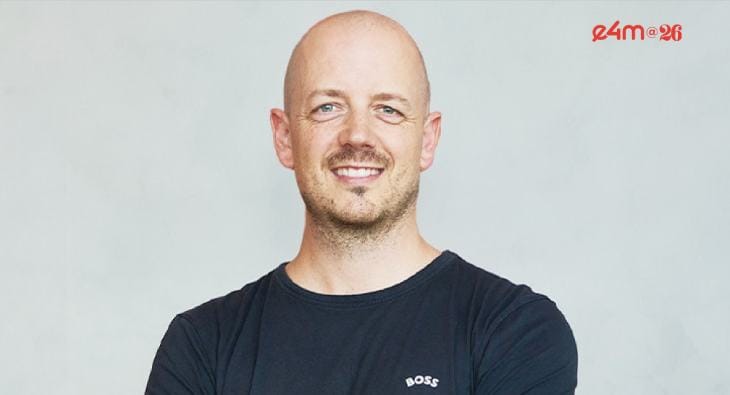

Tony Harradine, CEO of Omnicom Media Asia Pacific, in conversation with Dr. Annurag Batra, Chairman and Editor-in-Chief of BW Businessworld Group and Founder & Editor-in-Chief of the e4m Group, on a range of topics including integration, client trust, artificial intelligence, talent economics, and India’s role within the global network.
Excerpts:
It has been over 90 days since the Omnicom–IPG merger. What has worked better than expected, and what has it taught you as a leader?
A great deal has happened in a short period. This is arguably the most significant structural shift our industry has seen in recent times, so there was always going to be complexity. What has stood out positively is the level of collaboration that has emerged almost immediately. Within days of the merger, teams across markets were already working together to define the future operating model.
From a leadership standpoint, it reinforces a fundamental truth -- you are only as good as the team around you. The scale and pace of integration require deep trust in leadership layers and clarity in execution. Equally important is communication. In a merger of this magnitude, there is naturally anxiety, internally and externally. There is also a lot of speculation, not all of it grounded in reality. It becomes critical to provide clarity on roles, direction and intent, while ensuring that teams remain focused on delivery.
Culture is the next phase. That takes longer, but early signs -- shared learning, openness and cross-team support -- are encouraging.
How have clients responded to the merger, and what tangible value are you now bringing to them?
The first and most important task was to reassure clients that it is business as usual. That is why our agency brands, including OMD, PHD, Hearts & Science, Initiative, UM and Mediahub, continue to operate as the front-end interface. At the same time, the real transformation is happening behind the scenes. We are building connected capability ecosystems, bringing together strategy, commerce, data, influencer and measurement in a more integrated way. The objective is not just efficiency, but to create a more powerful and flexible system that agencies can orchestrate for clients.
From a client perspective, the value is twofold. First, access to a significantly larger and more diverse talent pool. Second, the coming together of technology capabilities, particularly the evolution of Omni into a more comprehensive, end-to-end marketing orchestration platform, supported by strong data assets such as Acxiom. However, the most important part is articulation. Clients are rightly asking - what does this mean for me? Our focus has been on translating structural change into clear, outcome-driven value.
In a competitive market like India, what truly differentiates your offering?
The industry often speaks in similar terms -- technology, data, scale. The differentiation lies in application. Scale, in itself, is not an advantage unless it is intelligently deployed. For us, the differentiator is how we connect data, technology and talent into a cohesive system, and how effectively our teams collaborate across disciplines. Both Omnicom and IPG historically had strong collaborative cultures. Bringing those together allows us to build something more integrated and agile.
We have often operated with a challenger mindset in many markets. Now, combining that mindset with scale gives us a stronger competitive edge, provided we use it with precision.
Are clients moving towards integrated models again, and how are you adapting?
The industry has always been cyclical, integrated, then specialised, then integrated again. We are currently seeing a shift where some large clients are looking for more consolidated, enterprise-level partnerships. At the same time, many clients still prefer a multi-agency model with what I would call ‘healthy tension’. Both approaches will continue to exist. The same applies to in-housing, where some functions move in, others move back out.
Our responsibility is to be structured in a way that supports both models seamlessly. Whether a client wants a single partner or a set of specialised capabilities, we should be able to deliver with equal strength.
There is increasing conversation around outcome-based remuneration. Is the industry ready for that shift?
We are moving in that direction, but it will be gradual. With AI and automation taking on more operational tasks, traditional compensation models, based on headcount or commission, will inevitably evolve. Outcome-based models make sense in principle, but they are complex in execution. Multiple external variables influence business outcomes, many of which are outside the agency’s control.
For such models to work effectively, there needs to be a deeper level of partnership and trust. Clients must be willing to rely more on agency expertise, and agencies must demonstrate the capability, data and seniority required to justify that trust.
Given current fee pressures, can agencies attract and retain top talent?
It depends on how we redefine value. Certain traditional services have become commoditised, and that is unlikely to reverse. However, there is a significant opportunity in higher-value areas -- consultative thinking, advanced analytics, technology platforms and specialised capabilities. We also need to rethink our operating models. Automation can take over repeatable tasks, allowing us to invest more in strategic and creative talent. Over time, this shift should enable more sustainable commercial models.
How do you view competition from consulting firms?
There is some overlap, but the key difference is execution. Consultants often operate at a strategic level. Our strength lies in connecting strategy with implementation, taking ideas into the market, testing them, learning from them and refining them continuously. That feedback loop, strategy to execution to optimisation, is a core differentiator for agencies.
How does India compare with other APAC markets?
India is one of the most dynamic and exciting markets in the region. What makes it unique is the combination of scale and innovation. It is not just about adopting global trends but actively shaping them. The digital ecosystem here is highly diverse, and innovation, from areas like quick commerce, is happening at scale. It is entrepreneurial, but with the depth and size that make it globally significant.
What should we expect from Omnicom Media in India over the next 12 months?
Greater clarity on our operating model will emerge in the near term. Alongside that, there will be continued investment in technology, particularly around Omni, and its localisation for markets like India. We will also focus on strengthening capabilities where needed. Integration is not just about combining existing strengths, but also identifying gaps and addressing them systematically.
Finally, how would you define the culture you want to build?
Entrepreneurial, collaborative and curious. We want to remain agile despite our scale. Curiosity drives innovation, and collaboration ensures that ideas translate into impact. If we can create an environment where talent feels empowered to learn, grow and experiment, that will ultimately define our success.
Read more news about Internet Advertising India, Marketing News, PR and Corporate Communication News, Digital Media News, Television Media News
For more updates, be socially connected with us onInstagram, LinkedIn, Twitter, Facebook YouTube & Google News