Kolhapuri in Milan: When Prada slipped into a culture storm
The incident reignited debate on how global brands can respect cultural origins while elevating traditional designs
 by
by
Published: Jun 30, 2025 9:49 AM | 4 min read
 Follow Us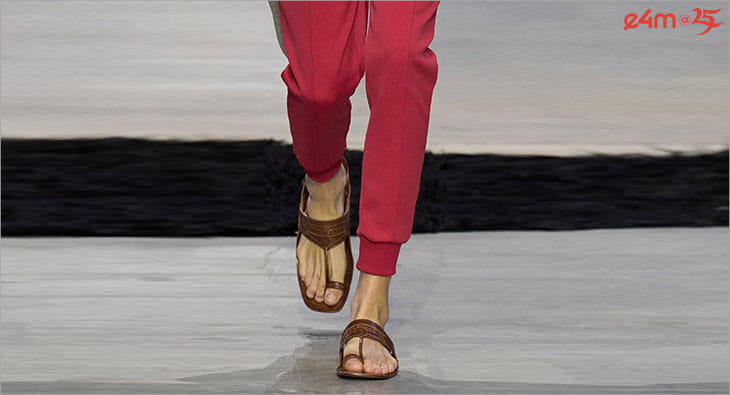

When Prada debuted a pair of leather sandals during its Spring/Summer 2026 show in Milan, it probably didn’t expect to become a lesson in Indian geography, history, and humility. Social media users were quick to spot the striking resemblance to India’s iconic Kolhapuri chappals, triggering fierce debate around appropriation, attribution, and fashion ethics.
Though Prada has since updated the product description to acknowledge its inspiration, the conversation around what global brands owe to their source communities is far from over. Is it theft? Tribute? Or something in between?
The words cultural misappropriation were thrown around liberally in online commentary. But is that truly the right framing? “Much of it is over-reaction, really,” said Sandeep Goyal, Chairman of Rediffusion.“Yes, Prada should have acknowledged the product origins as at least Indian, if not specifically Kolhapuri. But I don't think there was any serious attempt to cheat, steal or mislead. Cultural misappropriation is too strong a term to describe the misdemeanour.”
Lloyd Mathias, business leader and strategist, offered a broader perspective, “Global fashion brands have always drawn inspiration from local traditions, whether it’s the dhoti, the lungi, or the Jodhpuri. That doesn’t mean they’re erasing culture; if anything, they’re elevating it on a global platform.”
Rather than a trigger for indignation, Goyal believes such cross-cultural usage should be embraced, “Prada using Kolhapuris should be seen as a symbol of progression, not a trigger of indignation.”
For many, the frustration wasn’t with the design itself, but with the lack of timely acknowledgment. “While Prada has now acknowledged the Kolhapuri chappals’ lineage, a late acknowledgment though, it does throw up questions of cultural and design appropriation,” said Sanjay Trehan, digital and new media advisor. “While getting inspired is alright, not acknowledging the original source can smack of arrogance and intellectual dishonesty.”
According to Trehan, recognising a cultural source doesn’t dilute luxury, it strengthens it. “When you build a bridge to the source, you actually draw from its cultural lineage and add credibility and inclusive design sensibility to the brand. It can be a win-win situation.”
Luxury has never been just about the product, it's about perception, narrative, and value. But should that come at the cost of transparency? “Of course, pricing in luxury isn’t about material cost, it’s about perception and positioning,” said Lloyd Mathias. “But when these products originate from humble labour and traditional craftsmanship, there’s a strong ethical responsibility on brands to give back. They must ensure artisans aren’t just invisible links in a premium chain.”
Mathias added that brands like Prada or Gucci have an obligation to be “ultra-sensitive to where they source from, not just whom they sell to. “Cultural sensitivity and ethical sourcing aren’t optional, they’re the cornerstone of responsible business.”
Design borrowing is hardly new in the fashion world. But as Trehan points out, we now live in a world where originality is rare, and visibility is high. “We are living in a copy-cat world and truly original designs are few and far between,” he said. “Glad Prada has yet to commercialise the production of these ‘leather sandals’ and has responded responsibly.”
The Kolhapuri chappal, crafted for generations in Maharashtra, is more than a sandal. It carries stories of artisanship, regional identity, and cultural pride. When such a design crosses over into Milanese runways, it can either become a moment of global celebration, or one of tone-deafness.
This time, it was a little of both. But as all three experts highlight, the takeaway is clear: global brands must do better, not just in who they sell to, but in how they honor where their stories begin. Because walking the talk doesn’t just apply to runway models. It applies to the brands too.
Read more news about Internet Advertising India, Marketing News, PR and Corporate Communication News, Digital Media News, Television Media News
For more updates, be socially connected with us onInstagram, LinkedIn, Twitter, Facebook YouTube & Google News