Yuvraj Mehta: From corporate leader to founder shaping strategic comms & policy
In today’s In the Spotlight feature, we highlight the journey of Yuvraj Mehta, Founder and CEO of StrateRise Consulting, as a visionary communicator and thought leader
 by
by
Published: Feb 5, 2026 1:48 PM | 11 min read
 Follow Us
From the heart of Bihar to India's largest corporations, Yuvraj Mehta is an acclaimed communicator with over 25 years of experience spanning branding, reputation management, crisis communication, and ESG. He has built a reputation as one of India’s most respected communication strategists, someone who not only identified industry gaps but also chose to act on them.
After spearheading communication and branding functions for industry giants such as L&T, Reliance, Samsung, and GMR, Mehta took a decisive leap, walking away from a stable corporate career to build something distinctly Indian. Through his entrepreneurial vision, he founded StrateRise Consulting, India’s only company offering an integrated communication and policy advocacy solution, aimed at improving business growth and elevating the role of communications in corporate decision-making.
Mehta’s work in perception and reputation management has been documented as case studies at institutions such as Harvard Business School and IIM Ahmedabad, while his campaigns have earned global recognition. Moreover, beyond communications, he continues to shape the next generation of leaders as a mentor, guest faculty member at top management institutes, and advisor to governments, start-ups, and C-suite executives navigating moments of transformation.
In this edition of In the Spotlight, we explore Yuvraj Mehta’s journey as a visionary communicator and thought leader, how he found his footing in the communications industry, the challenges that shaped his choices, his move from corporate leadership to entrepreneurship, and his perspective on crisis and reputation management in today’s fast-changing world, along with the skills communication professionals must learn and unlearn to stay relevant, and more.
.jpg)
Excerpts:
Can you tell us how you first stepped into the communications world?
There are two aspects to how I entered the communications world. One was something I realised much later, that since childhood, certain elements were already there in me. I was unknowingly involved in a lot of events, networking programs, and local community development activities. I also wrote extensively across various mediums, from journals to newspapers, purely out of interest.
Over time, I began to realise that this was my natural area of inclination, especially when I pursued my MBA in marketing. However, in the early 90s, PR and corporate communications were not mature or well-defined subjects. The focus then was largely on marketing and advertising. I initially tried to learn advertising by working with an agency, picking up bits and pieces along the way. I also continued writing, which remained a strong personal interest. Gradually, I saw a clear transformation from advertising to communications. My first official professional role in corporate communications was with RasGas, Qatar.
From advertising, I slowly shifted to communications because I realised that this space allowed deeper perception management and framing stronger narratives. That’s how the journey began about 25 years ago, starting from advertising and gradually shifting into communications and reputation management.
You began your journey nearly 25 years ago, and the PR and communications industry has transformed significantly since then. What are some of the biggest changes you have observed over the years?
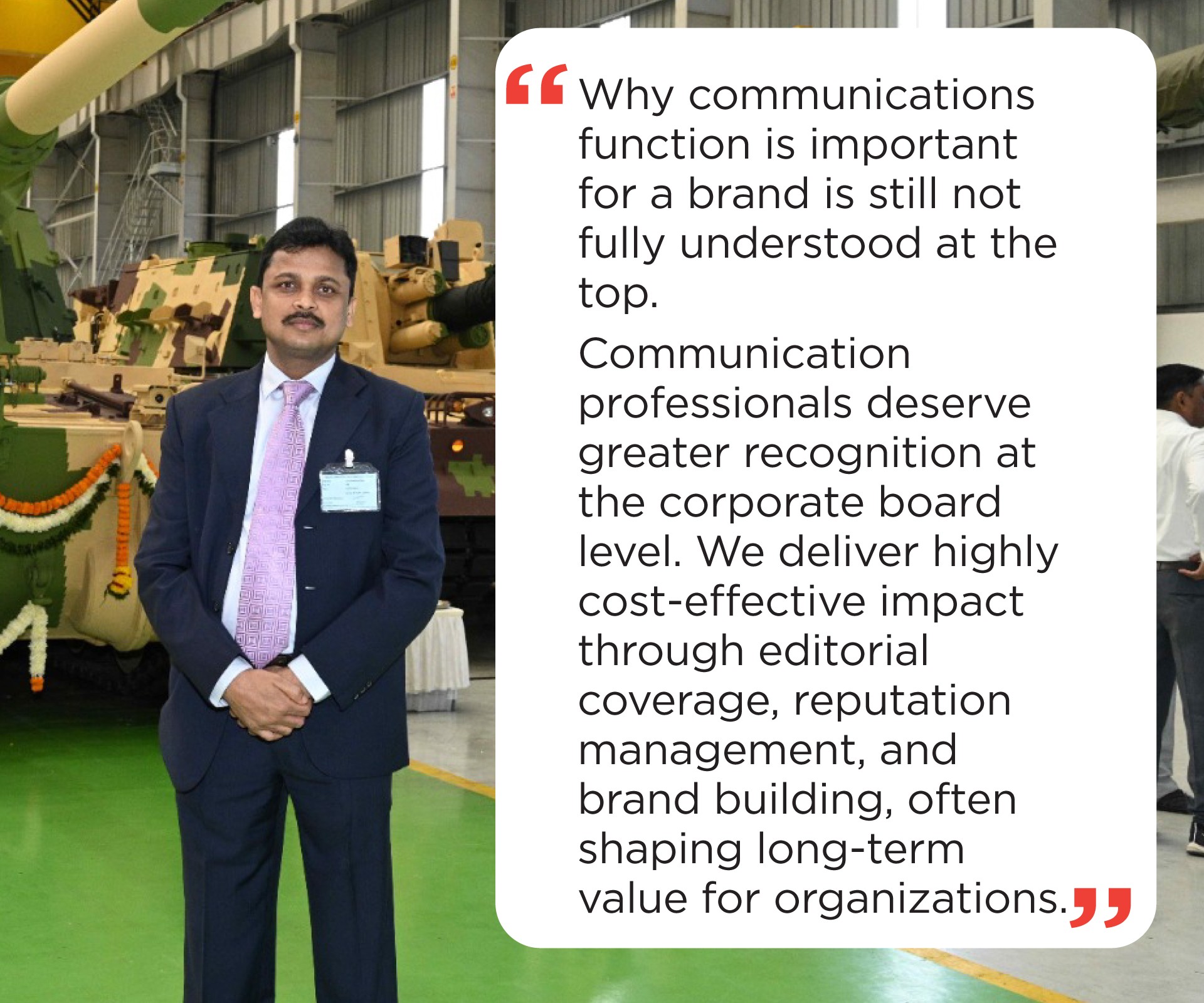
“Why communication is so critical for a brand's survival is still not fully understood by the senior management of many companies.”
When I started, there was a strong emphasis on understanding journalists and the media. Media relations were the core of PR at that time. Over the last 25 years, however, I’ve seen a major shift from media management to reputation management. The media still plays an important role, but beyond that, there are now multiple stakeholders who have a voice.
The media ecosystem has become far more democratised due to social media and evolving technologies. Communication today is also much more data- and technology-driven. One of the biggest challenges that has emerged alongside this transformation is the speed of disinformation, enabled by technology.
Communication as a function has often been treated as a support step. Marketing communications, on the other hand, have evolved much more strongly, and I genuinely appreciate how marketing teams have done their job. Corporate communication, however, has not been able to clearly establish its importance in the minds of CEOs and boardrooms.
Overall, the key transformations have been around reputation management, digital communication, technology adoption, and brand activism.
Another very important shift is the emergence of machines as a key stakeholder. Beyond humans, we now have algorithms, meta tags, and platforms influencing communication. As communicators, we need to understand how to engage with these systems. This is still at a very early stage, but it will be extremely important going forward.
After a successful stint with several leading organisations, you stepped away from corporate life in 2022 and entered the entrepreneurial space in 2023 by founding StrateRise Consulting. What inspired this transition?
Over the last 25 years, while working with organisations like Reliance, Samsung, L&T, and GMR, I began to notice a significant gap and growth opportunity in the communications market.
One, the market is expanding very rapidly, especially in the area of reputation and crisis management. Today, almost every company is facing some form of crisis, but most organisations are not prepared for it. While PR agencies and social media agencies in India are fairly mature, when you look closely, there is still a lack of integrated reputation management and policy advocacy solutions that are customised to Indian needs.
There are very few Indian firms that can understand the company, media, and the socio-economic and political landscape of the country, and therefore provide holistic strategies that are implementable, measurable, and linked to business outcomes.
Having been on the boards of several companies during mergers, acquisitions, and IPOs, I also observed that many members are still not fully aware of the importance of corporate communication and reputation management. That is why you rarely see corporate communications leaders represented at the board level in India, unlike in many multinational organisations.
All of this pointed to a large and growing gap in the ecosystem. The market was also growing exponentially. Encouragement from industry leaders, combined with the clear market need, ultimately led me to start my entrepreneurial journey with StrateRise Consulting.
How do you define strategic sustainable communication, and how do you leverage it through your services to benefit stakeholders?
StrateRise Consulting is a leading company in India that offers an integrated, sustainable solution in the space of reputation management, crisis communication, and policy advocacy.
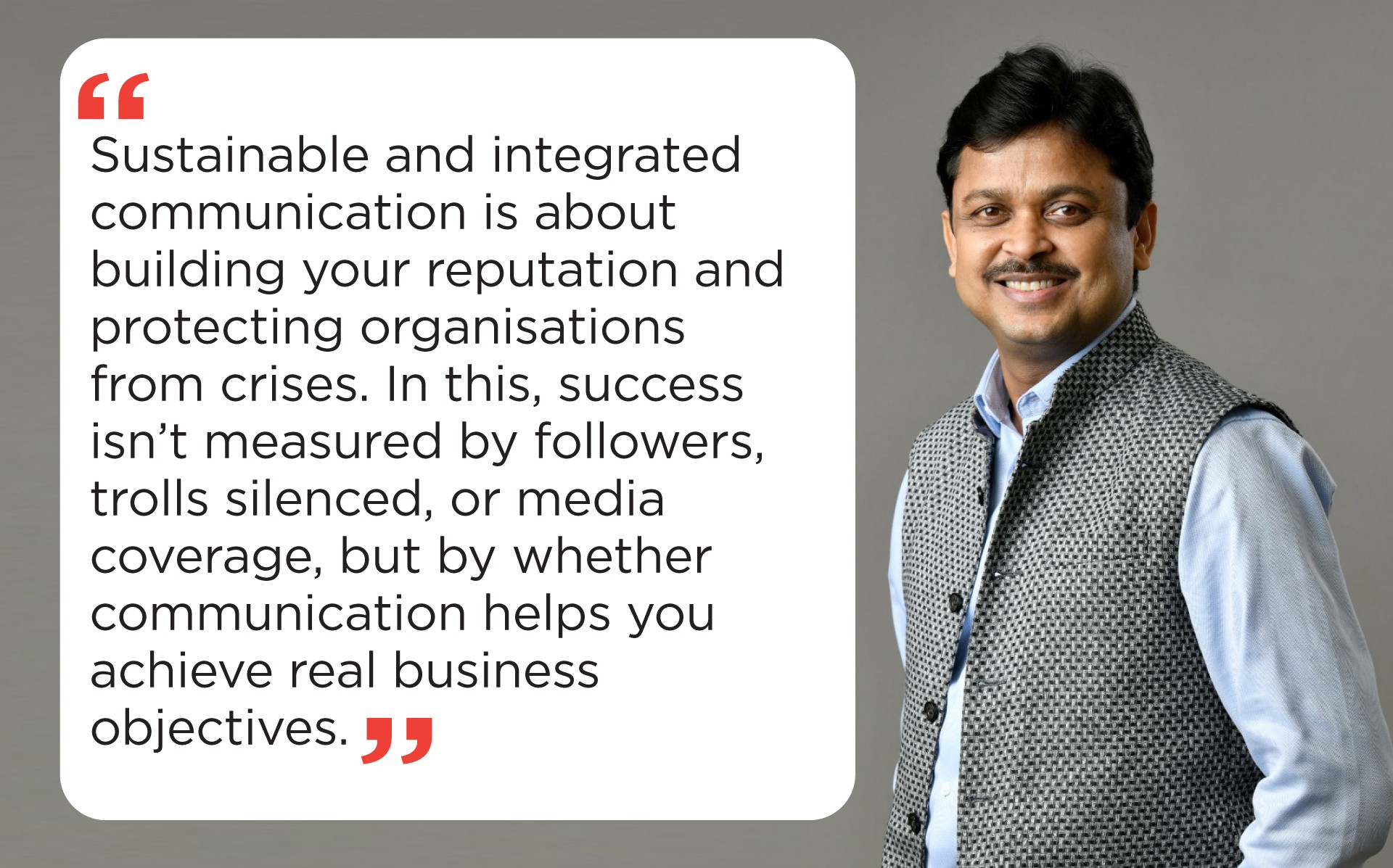
When we talk about sustainable and integrated communication, it’s about building your reputation, protecting you from crises—whether they’re already happening or likely to happen and ensuring that success is not measured by the number of followers gained, trolls silenced, or media coverage achieved. Its focus is purely on outcomes and whether communication has helped you achieve business objectives like sales increase and enhanced market valuation.
At the core of this approach are a few critical elements. Authenticity is key to developing trust, which forms the foundation of brand reputation. Consistency in communication that is purpose-driven is equally important. It is not enough for corporate values to exist only in the boardroom; they must translate into action. We align all of these into our communication strategy to ensure that the organisation ultimately achieves its desired outcomes.
Given your vast experience in driving campaigns across India and globally, what are the key ingredients that make a campaign truly impactful at a global level?
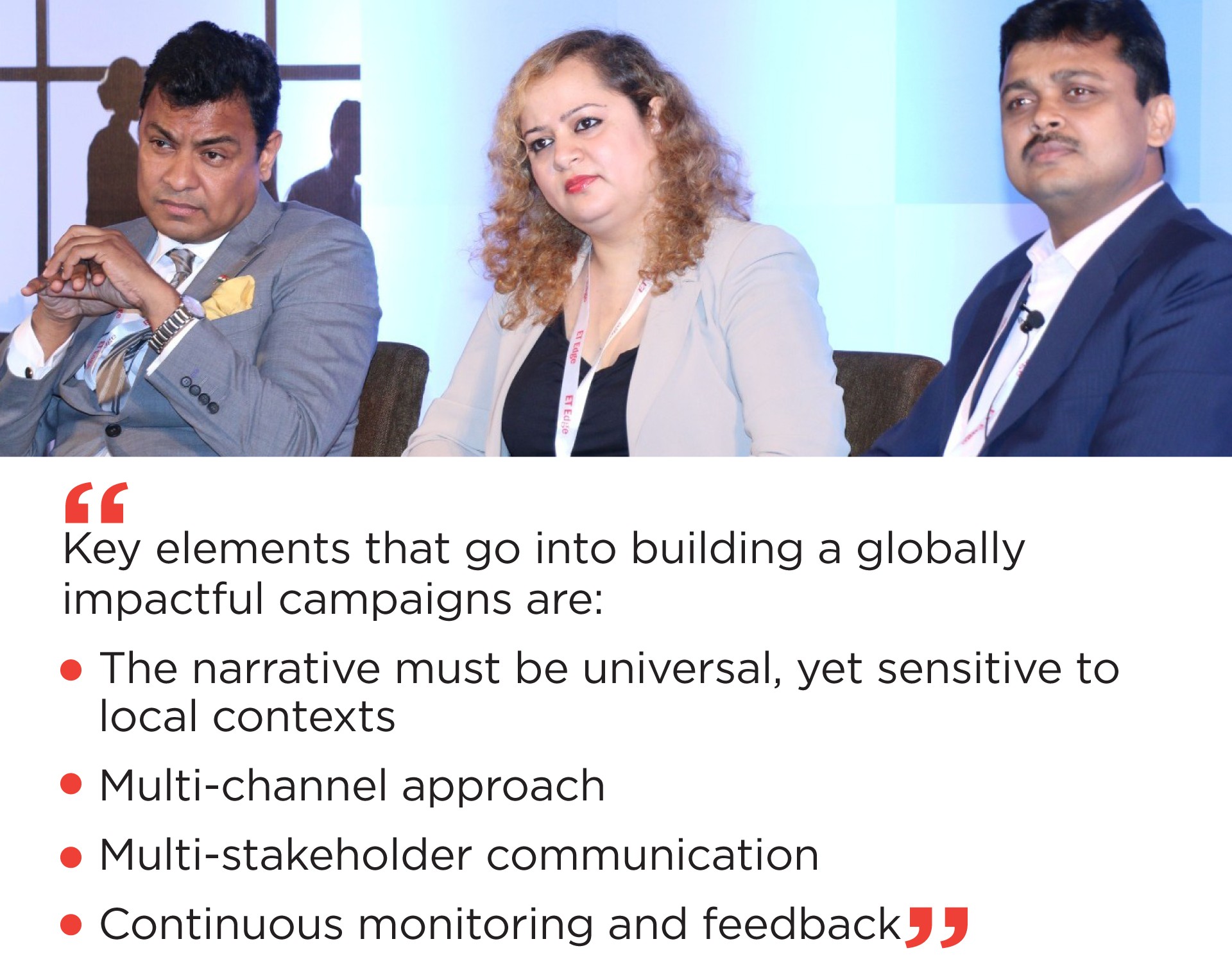
There are many elements that go into building a globally impactful campaign.
First, the narrative framework has to be universal, yet consistent and aligned with local sensitivities. For instance, during the L&T–LTI Mindtree merger, where L&T was acquiring Mindtree, there was a lot of pre-acquisition and hostile takeover narrative being built to prevent the M&A from happening.
We consciously ensured that the language and narrative were not hostile but framed in the interest of all stakeholders. The story was about profit, growth, and long-term value creation—not about monetary acquisition or letting people go. Words, tone, and emotions mattered. We were very mindful of the sensitivities of Mindtree employees, who were understandably anxious about what would happen next.
Our communication focused on the larger canvas of what Mindtree could become within L&T and how employees would have a wider career growth canvas. L&T has defence, construction, aviation, oil and gas, and several other sectors. So, if someone felt stagnated in one vertical, they could explore opportunities within the L&T ecosystem. Over time, this helped build trust and belief among stakeholders.
Another critical ingredient is a multi-channel approach. Communication today cannot rely only on traditional media or social media. Internal communication and employee advocacy are equally important. We aligned this with roadshows, town halls, and direct leadership interactions.
Equally important is multi-stakeholder communication. Governments, bureaucrats, employees, vendor partners, and large partners like Microsoft all needed to be communicated with consistently and uniformly.
Finally, the most important aspect is continuous monitoring and feedback. These campaigns are dynamic. You need to stay updated, track sentiment, regularly share feedback, and be willing to adapt and course-correct.
Crisis and reputation management have been core to your work. How do you define these two areas today, and how can communication professionals get better at handling them?
Many organisations live in a cocoon, believing that a crisis will never happen to them. Whenever a crisis hits, most companies put their legal or finance people in front of the media. However, this is where corporate communications teams should step forward, as they are the crisis experts who know best how to handle the situation. Letting other teams lead with a threatening tone only worsens the situation.
The first step is to have a media crisis plan in place, just like fire safety or other emergency plans. Crisis audits need to be done properly. The reality is that hardly anyone actually does a crisis audit in communication, and that’s a big gap.
Second, be prepared for disinformation. There will always be people with vested interests who will spread false narratives about you.
Third, building a brand today means aligning all departments. We’ve moved from brand management to reputation management. The old idea of brand management is gone. Reputation management is essentially trust management, and that means finance, HR, legal, and all other departments must be aligned with the corporate communication function.
Internal communication must be aligned with the overall business plan; only then can reputation truly be managed. I’ve worked with and audited many organisations where internal communication alignment simply doesn’t exist. When a crisis happens, everyone runs in different directions. Even when companies plan for the next five years, they often don’t know how communication fits in. This needs to be fixed to manage reputation effectively.
What advice would you pass on to the next generation of professionals looking to make a mark in the ever-evolving world of communications?
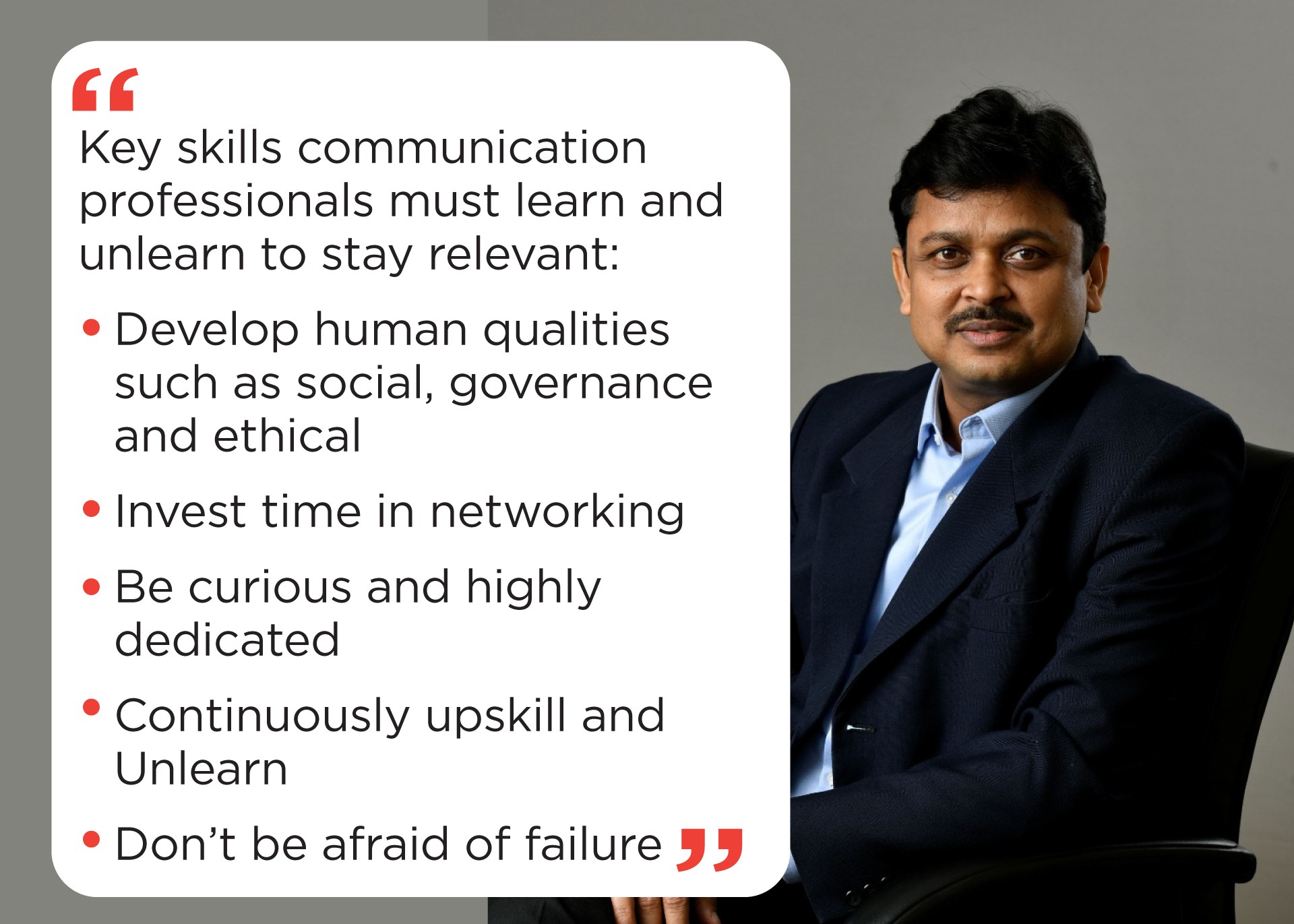
First and foremost, in today’s era of digital communication, where there is an overload of information and misinformation, you have to stay human. Develop strong moral values and human qualities first - social, governance, and ethical qualities.
Secondly, invest time in networking. Remember that stakeholders are also human beings, and your personal connection matters more than any message or digital tool.
Next, you must remain curious and keep upgrading your skill sets. This profession is no longer just about PR, a few posts, or engagements. You need to read, research, and do your homework thoroughly before engaging with either internal or external stakeholders, because they look at you as a knowledge centre.
Keep enhancing both your internal and external skills to stay relevant in this evolving communications landscape. Things that you learned earlier may not work today.
Lastly, don’t be afraid to take risks and fail, because it isn’t something to hide—it’s something to learn from.
What are your future plans for yourself and StrateRise Consulting in the coming years?
My future plan is closely aligned with the idea of promoting India’s own home grown consultancies. I plan to support MSMEs and leading companies in achieving their business goals through enhanced brand perception and crisis protection. We are also expanding into government policy advocacy and issue management consultancy. We aim to stand by promoters and give them end-to-end support, especially during critical moments.
On a personal front, as someone from the communications industry, I strongly believe that communication professionals deserve greater recognition at the corporate board level. We deliver highly cost-effective impact through editorial coverage, reputation management, and brand building, often shaping long-term value for organisations. Having worked closely with multiple stakeholders and played a key role in building brands, I have seen how communications can influence strategy and leadership thinking. This is why I actively encourage boards and leaders to strengthen their communications function and align it with their business goals.
My goal is to scale and position StrateRise Consulting as a leading communication and policy advocacy company from India for the world.
Read more news about PR and Corporate Communication News, Internet Advertising, Marketing News, Digital Media News, People Movement News
For more updates, be socially connected with us onInstagram, LinkedIn, Twitter, Facebook YouTube & Google News
