The rise and reckoning of Indian PR industry
Guest Column: Senior PR professional Sanjay Rammoorthy traces the evolution of India’s PR industry—from its liberalization-era pioneers to today’s tech-driven, agile future
 by
by
Published: Oct 17, 2025 7:07 PM | 5 min read
 Follow Us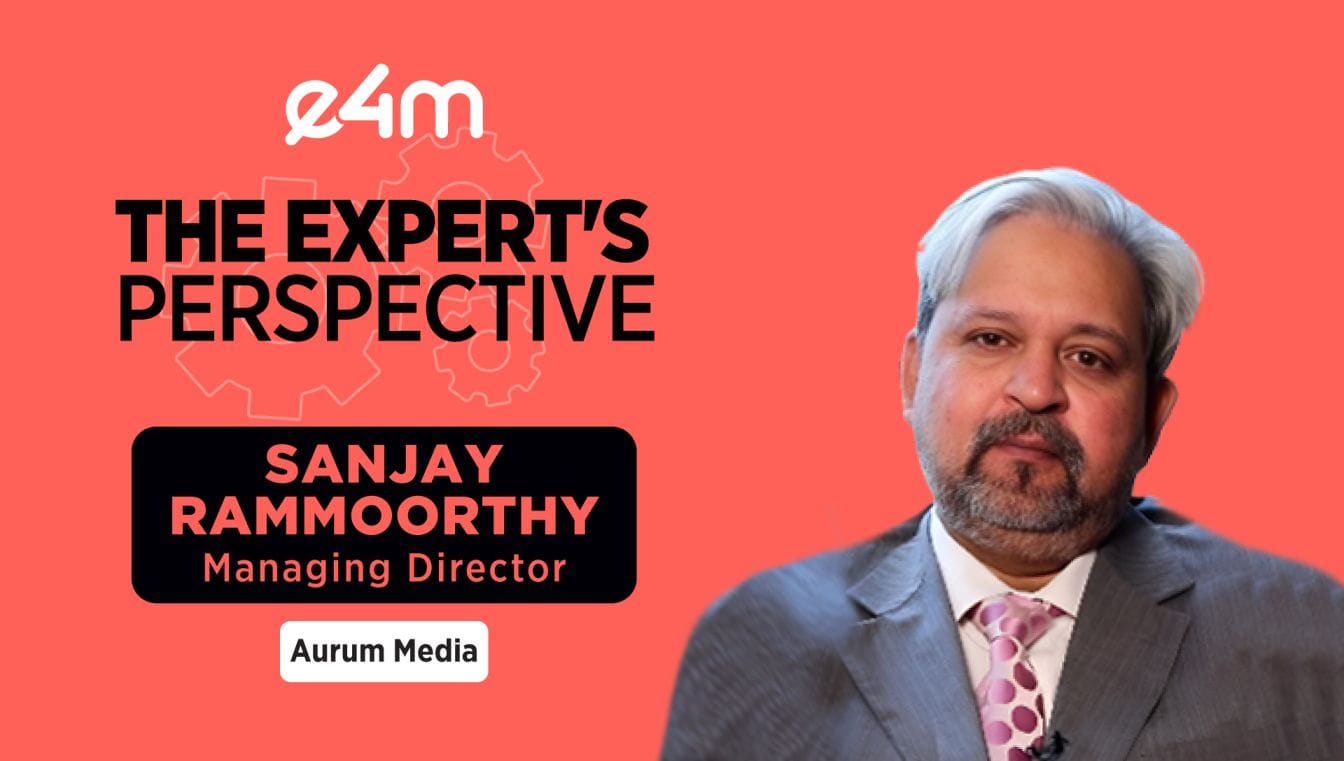

- The 1990s marked a significant transformation in India's communications sector, with the emergence of independent PR agencies that shifted the industry from tactical roles to strategic partners in corporate communications.
- Economic liberalization and media proliferation during this period led to PR becoming essential for reputation management and narrative shaping, particularly in sectors like auto, telecom, and FMCG.
- Following the 2008 economic downturn, many Indian PR agencies faced challenges due to acquisitions by global firms, resulting in client attrition and cultural mismatches, exemplified by the failure of Ketchum India.
- Adfactors PR emerged as a leading firm in the industry, maintaining independence and focusing on client relationships, while the future of PR is expected to be shaped by AI, media fragmentation, and the need for agile, empathetic approaches.
The Birth of an Industry
The 1990s marked a seismic shift in India’s communications landscape. As economic liberalization unlocked new markets, a wave of independent PR agencies like Mohan Rajan’s Paradigm Shift, Kishore Hatangadi’s Corporate Dialogues, N.S. Rajan’s Sampark, Sunil Gautam’s Clea, Dilip Cherian and Bobby Kewalramani’s Perfect Relations, Prema Sagar’s Genesis and later in the decade Adfactors PR started by Madan Bahal and Rajesh Chaturvedi. These pioneers did not just build businesses—they architected an industry.
Strategic Shift: From Footnotes to Boardroom Voices
Before the 1990s, PR was largely tactical and reactive, focused on press liaison and event management. Government organizations and mainly PSU’s had PR departments. These departments main catered to speeches, in-house publications, events, and hospitality. On the corporate side early adopters of the PR tool were large industrial groups like the Tata’s and the Birla’s. Although there were some PR agencies right from the 1980s Good Relations, Ogilvy PR & IPAN, the role was limited to press liaison rather than strategic council. As one agency head once quipped, “We were footnotes in the larger scheme of things.” That changed dramatically. The independent PR agencies changed the dynamics. Agencies like Genesis and Perfect Relations helped shift the perception to strategic communications management, often advising CEOs directly. The PRCAI’s 2024 report shows that over 90% of corporate communicators now view PR as a strategic partner in business outcomes, not just media exposure.
The Liberalization Effect: Fuel for PR's Rise
The Golden Decade
From the late ’90s to the mid-2000s, PR became indispensable. Capital markets matured, media vehicles multiplied, and consumer sectors like auto, telecom, FMCG, and white goods demanded sophisticated storytelling. PR evolved from tactical execution to strategic reputation management. Agencies became boardroom confidants, shaping narratives and managing crises. Retail investors needed education; brands needed trust. PR delivered both. Media proliferation in the 1990s and early 2000s—especially with the rise of private news channels like Zee News, NDTV and CNBC-TV18—created a fertile ground for PR storytelling beyond press releases.
Global Takeovers: A new trend 2010-2020
However, post the economic meltdown in 2008, the business suffered, not only in India but across the world. India also had to step back. By then many Indian agencies were in advances talks with global giants for a collaboration which would eventually lead to a hundred percent takeover. The acquisition of Genesis by Burson Masteller, Hanmer & Partners by MSL, Sampark by Ketchum and Perfect Relations emerging as Dentsu Creative were part of a global consolidation wave. But the transition from founder-led intimacy to process-heavy multinational structures led to client attrition and cultural mismatch. What really should have been good news for the industry and PR professionals left much desired. Omnicom’s shutdown of Ketchum India within three years of full acquisition is a textbook example of failed localization. What led to this was their inability to manage people and clients. Indian clients were used to the service with a human touch with a direct access to the promoters and valued their counsel and their availability.
Adfactors PR: The Outlier That Outperformed
The exception to the rule was Adfactors PR. Founded in 1997 the agency is now India’s largest PR firm, with revenues exceeding ₹500 crore and a client roster that includes Tata, Mahindra, SBI, and ICICI. The leadership was clear in being totally independent and not have global associations. Over the last decade, the firm has consolidated its market leadership with revenue exceeding the next 4 agencies together. One of the key factors that the multi-national agencies did not capture the imagination of its clients was an obsessive focus on systems and processes. Not for a moment dismissing their importance, but letting it become a hurdle in client delivery became an issue. Many agencies implemented a very different approach to providing service making the client uncomfortable. A gradual time-based transmission could have been a smother approach.
The Road Ahead
The PR landscape is now more volatile than ever—shaped by AI, geopolitical flux, media fragmentation and a massive influence of social media. Rigid process-driven models are giving way to agile, hybrid methods of working. AI tools are redefining media monitoring, sentiment analysis, research, content and campaign optimization. The future belongs to agencies that blend tech with empathy, systems with soul. Agility and adoption seem to be the only mantra to stay ahead.
Sanjay Rammoorthy has been an integral part of the India media industry for over two decades and has been associated with media giants like Ananda Bazar Group, Business India Group, Mudra Communications, Ogilvy & Mather, ZEE News, Sahara India Television and Sampark Public Relations. As a television journalist Sanjay has extensively covered various state and general elections. Sanjay now runs a Training & Content company – Aurum Media.
Read more news about PR and Corporate Communication News, Internet Advertising, Marketing News, Digital Media News, People Movement News
For more updates, be socially connected with us onInstagram, LinkedIn, Twitter, Facebook YouTube & Google News