“The curiosity to decode human side of communication pulled me in communications”
In this feature, Namita Narula, Head of Corp Comm, Cloudnine Group of Hospitals opens up about her comms journey, the secret behind managing crises, evolution of healthcare comms, and much more
 by
by
Published: Dec 5, 2025 11:32 AM | 8 min read
 Follow Us

Namita Narula Gandhi, Head of Corporate Communications at Cloudnine Group of Hospitals, is a powerful voice shaping the future of healthcare communication. With her clear vision and heartfelt approach, she brings stories of hope, care, and possibility to life. Namita believes in the power of authentic communication to inspire trust and create meaningful change, and her work reflects that every day. A true changemaker, she continues to make waves by reminding the world that healthcare communications is not just about strategy, it’s about people, compassion, and connection.
Today’s ‘In the Spotlight’ series highlights Namita’s journey from how she entered into the industry, challenging aspects emerging in healthcare communications, her core strategies for managing crises, how AI is transforming the industry, lessons she learned as a communications professional, underrated skills young PR professionals should focus on and more.
Excerpts:
- How did your journey in communications begin, and what inspired you to choose this industriy?
My journey into communications began back in college when I interned with a small boutique PR firm in Delhi. I remain deeply grateful to my first mentor, Ms. Anita Wadhwani, who didn’t just give me an opportunity—she opened an entire career path for me.
What initially drew me in was the sheer power of storytelling: how the right message, delivered in the right way, can shift perceptions, influence emotions, and shape behaviour. But as I stepped into the professional world, I realised something deeper—my real passion lay in understanding people.
I loved observing how they think, what they need, what they expect, and how authentic communication can build trust between a brand and its audience. The curiosity to decode this human side of communication is what pulled me in—and ultimately, what kept me here.
Over the years, this field has continued to evolve, challenge me, and push me to learn every single day. And that’s what I enjoy the most: communications never stand still. It demands curiosity, empathy, agility, and the courage to constantly reimagine how we connect with people. It’s a journey I began by chance, but one I choose to stay on by passion.
- Having worked on both the agency and corporate sides, how has this dual experience shaped your philosophy and approach to communication?
Working on both sides of the communications world has been truly invaluable. My agency experience taught me speed, creativity, and the ability to stay sharp under intense pressure and impossible timelines. It trained me to think on my feet, adapt instantly, and craft ideas that cut through the noise.
On the corporate side, I learned depth and discipline. It taught me how communication must be rooted in strategy, aligned with business priorities, and anchored in long-term reputation building. I began to appreciate the nuances of stakeholder management, internal alignment, and the importance of measurable impact.
This dual exposure shaped me into a more rounded and balanced communicator — someone who can operate with both agility and intention, who can think big and execute with precision. It strengthened not just my craft but also my leadership style, grounding it in clarity, collaboration, and strong cross-functional partnerships. It taught me that great communication is never created in isolation; it emerges when teams, insights, and objectives move together with purpose.
- You lead communication for one of India’s most respected maternity and childcare hospital chains. What is the most challenging aspect of healthcare PR today?
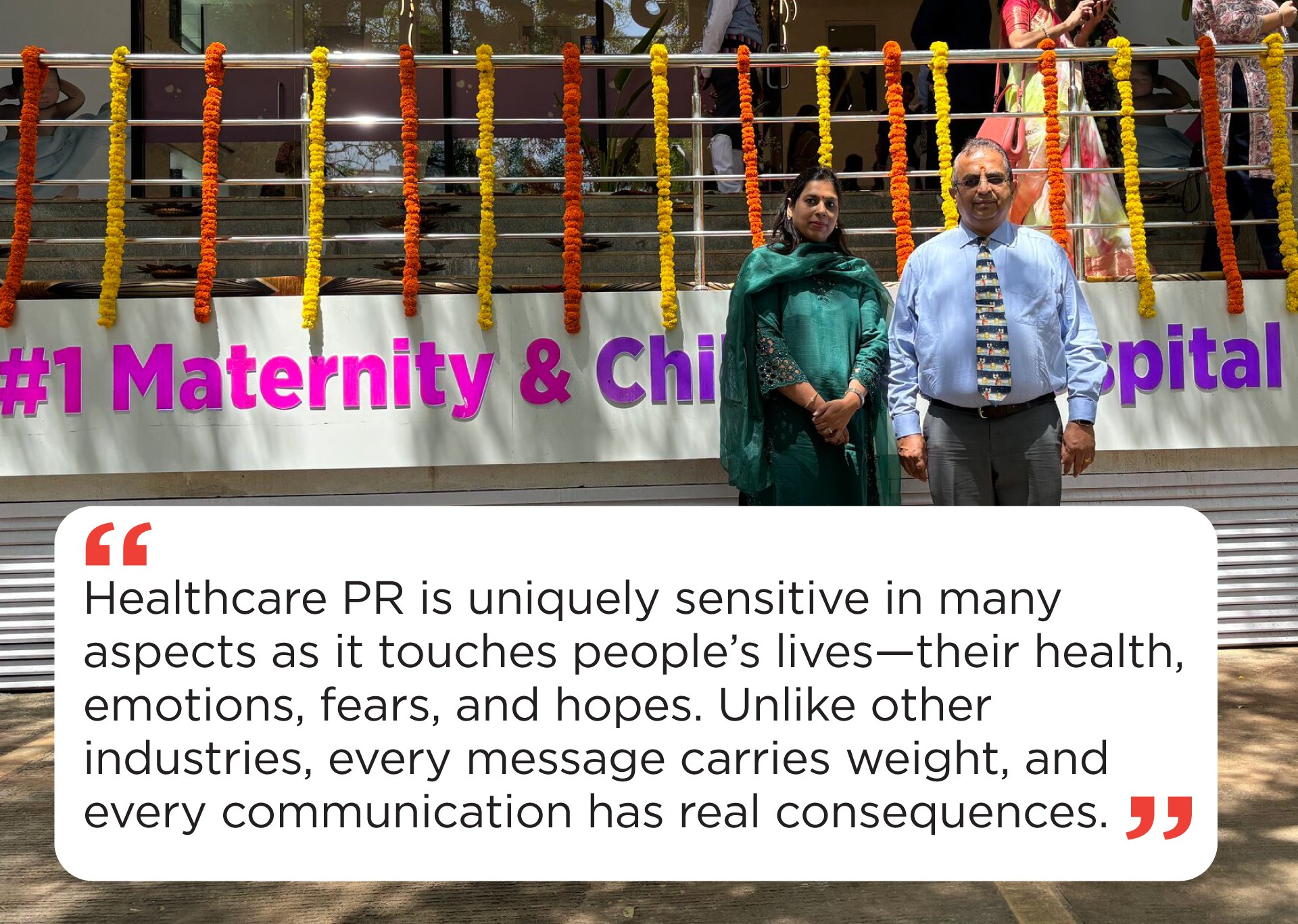
Healthcare PR is uniquely sensitive in many aspects as it touches people’s lives—their health, emotions, fears, and hopes. Unlike other industries, every message carries weight, and every communication has real consequences.
The biggest challenge today is the rise of misinformation and the incredible speed at which narratives spread online. A single misunderstanding can spiral into confusion or panic within minutes. That means every piece of communication must be accurate, timely, and deeply responsible. But accuracy alone isn’t enough. In healthcare, people don’t just expect information—they expect reassurance, empathy, and clarity. They want to feel heard, supported, and guided, especially during moments of vulnerability.
Balancing scientific precision with emotional sensitivity, staying transparent while being comforting, and managing crises in an always-on digital world—that’s the real challenge of healthcare PR. And it’s also what makes the work meaningful
- What key lessons have you learned from leading communications at Cloudnine? What are your core strategies for crisis communication?
Some of my biggest lessons have come from being on the ground, listening directly to patients, families, and frontline teams. Those interactions taught me that in healthcare communication, empathy is not optional — it is the foundation. Trust is everything, and even the smallest communication lapse can have disproportionate consequences.
In crisis communication, a few core principles guide me:
- Act fast but stay factual— respond quickly, but never at the cost of accuracy. Speed should support clarity, not create confusion.
- Communicate with empathy— in moments of fear or uncertainty, people seek reassurance, not jargon or technical complexity.
- Ensure stakeholder alignment— doctors, operations, customer care, and management must speak one unified, consistent message; misalignment magnifies panic.
- Stay transparent— honesty, even when the situation is difficult, protects long-term credibility more than silence ever can. It’s important to offer a clear point of view rather than stepping away from challenging moments.
These principles have shaped how I approach communication, especially in high-stakes, emotionally charged healthcare environments.
- With health-tech, telemedicine, and AI transforming healthcare, how do you see communications adapting?
Healthcare communication is moving toward a future that is more personalised, data-driven, and real-time. Patients now expect information that is accessible, simplified, and enabled by technology — not buried in jargon or complicated systems. We will see a rapid rise in AI-powered engagement, video-first storytelling, multilingual communication that anticipates patient needs before they even voice them.
But even as digital tools evolve and automation becomes smarter, the core of healthcare communication will remain unchanged. At its heart, this field will always depend on trust, empathy, and credibility — because patients don’t just want information; they want connection, understanding, and reassurance from a source they can rely on.
- What are some underrated skills young PR professionals should focus on to thrive in healthcare?
- Listening — not just hearing, but truly understanding the voices of frontline teams, patients, and communities, because real insights come from the ground.
- Empathy in writing — the ability to simplify complex medical information while preserving humanity and sensitivity is a core skill in healthcare communication.
- Crisis calmness — staying composed, objective, and solution-focused when situations become unpredictable or emotionally charged.
- Data literacy — interpreting metrics, patient behaviour, and digital insights to craft communication that is timely, relevant, and impactful.
- Relationship building — nurturing trust-based relationships with doctors, journalists, and cross-functional teams to ensure alignment, credibility, and influence.
In the long run, these soft skills often matter more than flashy presentations or technical proficiency — because they shape how effectively we connect, respond, and build trust in healthcare.
- Which achievements or campaigns are you most proud of?
I’m proud of the campaigns that created real impact — initiative-led stories that celebrated mothers, improved patient awareness, or highlighted Cloudnine’s clinical excellence. Moments where communication directly contributed to trust-building and patient empowerment are the ones that stand out for me.
- What does success look like for you as a communication leader today?
Success, to me, is when communication builds trust, brings clarity, and strengthens the organisation’s reputation in a way that people can feel, not just see. It’s when teams feel supported and aligned, when patients feel informed and reassured, and when the brand is spoken about with credibility and respect. On a personal level, success also means growing people — helping young professionals find confidence in their voice, shape their craft, and discover their place in the industry. Watching someone unlock their potential is one of the most meaningful outcomes of leadership, and a definition of success I hold close.
- How do you envision the role of communications evolving in India over the next five years?
Communications in India is rapidly evolving into a core strategic function — no longer an afterthought, but a boardroom priority that directly influences trust, reputation, and business outcomes. Brands will be expected to communicate with authenticity, speed, and a strong sense of purpose, especially in a landscape where audiences demand transparency and relevance.
We will see a significant rise in digital health literacy, hyperlocal and culturally nuanced storytelling, and the use of AI-driven insights to shape narratives in real time. Reputation management will move from being reactive to being a central pillar of business strategy, guiding decision-making at every level.
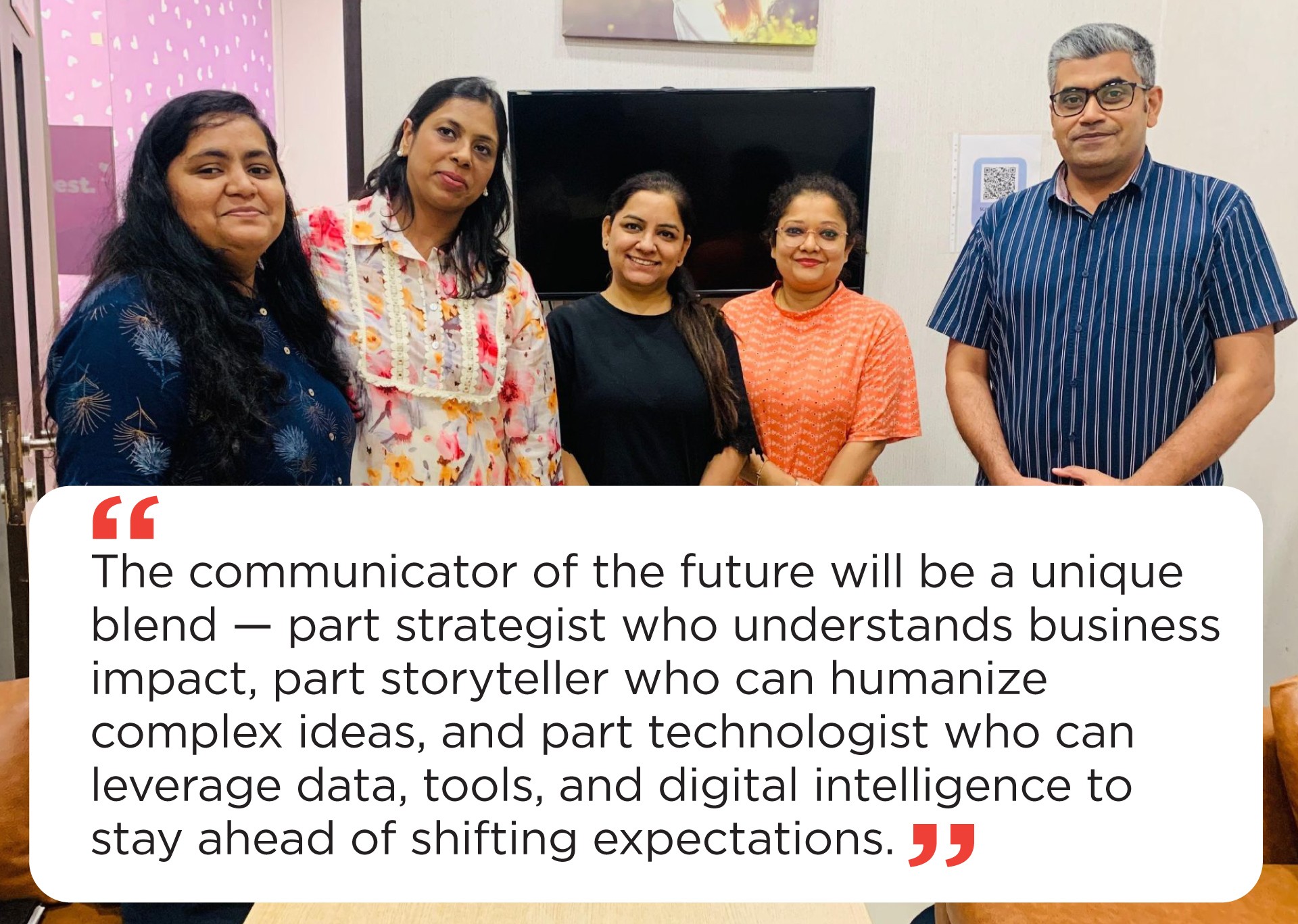
The communicator of the future will be a unique blend — part strategist who understands business impact, part storyteller who can humanise complex ideas, and part technologist who can leverage data, tools, and digital intelligence to stay ahead of shifting expectations.
Read more news about PR and Corporate Communication News, Internet Advertising, Marketing News, Digital Media News, People Movement News
For more updates, be socially connected with us onInstagram, LinkedIn, Twitter, Facebook YouTube & Google News