Leaders as talent builders: How mentorship shapes the next generation of professionals
Ruder Finn’s Atul Sharma and Swiggy’s Akanksha Jain spoke about role of mentorship, leadership, and building people for the long run at the e4m PR & Corp Comm Summit 2025
 by
by
Published: Dec 18, 2025 5:41 PM | 4 min read
 Follow Us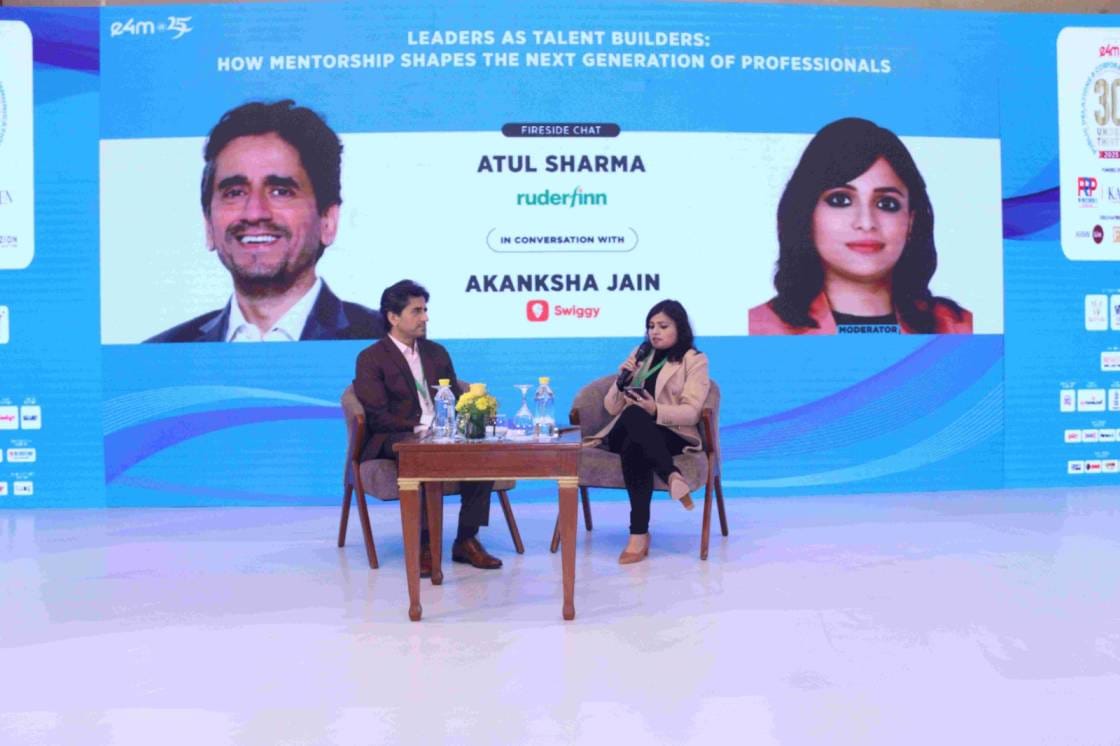

At the e4m PR & Corp Comm Summit 2025, a thoughtful fireside chat brought the spotlight back to a subject often overshadowed by crisis, AI, and outcomes - Mentorship. The session was titled “Leaders as Talent Builders” and featured Atul Sharma, CEO & Head-Middle East, Ruder Finn India, in conversation with Akanksha Jain, AVP - PR & Comms, Swiggy.
Setting the context, Jain highlighted the realities of today’s VUCA world like non-linear careers, Gen Z entering the workforce, hybrid cultures, and AI reshaping roles, making the role of leaders in nurturing talent from scratch tougher than ever.
She shared how mentorship has evolved over time, “Earlier, mentorship was about chance meetings and one-off interactions. Today, with digital access and hybrid work, the expectation from leaders is much higher and more continuous.”
Against this backdrop, she posed a crucial question to Sharma: Has mentorship changed, and are leaders investing enough in building future talent?
Responding to how mentorship has evolved, Atul reminisces and shares some instances from the early days of the profession. “PR was a young, nascent profession then. We were deeply interested in the craft, every idea, every campaign excited us. On the pressures leaders face today, Atul added, “PR has become a 24×7 profession. Crises don’t wait, and because of that, leaders have become extremely outcome-focused. Mentorship often takes a backseat when listening disappears.”
He candidly shared an important observation that leadership today risks becoming outcome-obsessed and short-term, stating, “We’ve become more myopic in how we operate. Wherever leaders overcome that myopia, that’s where great mentorship still exists.”
Steering the conversation towards Gen Z, Akanksha asked how mentorship needs to adapt. “Gen Z is more purpose-driven, expects quicker feedback, and values flexibility. How does a leader respond to that without frustration?” she asked.
On the much-debated Gen Z question, Atul firmly dismissed stereotypes. “Every time someone says this is a Gen Z problem, I think that’s lazy leadership,” he highlighted. Instead, he emphasised listening as the cornerstone of mentorship, “The first important thing for mentoring is to listen and understand what drives people, what motivates them, what will help them become better leaders.”
Sharing real-world observations, he acknowledged that while Gen Z may challenge traditional norms, they often deliver exceptional results when trusted. “Sometimes all you need to say is: I trust you. You know this best. And they do stellar work.”
Taking the conversation to an organisational level, Atul pointed out why mentorship often fails to scale. “Whatever you incentivise is what gets done. Today, mentorship is not incentivised,” he said, stressing the need to link mentoring to retention, business growth, and long-term success. Drawing from industry experience, he added, “We lose young talent because no one takes the time to mentor them or show them the larger picture.”
The conversation also touched upon AI, tech, and reverse mentorship. Atul acknowledged that leaders have much to learn from younger teams. “They pick up technology far faster than we do. Reverse mentorship is not optional anymore,” he stressed.
Perhaps the most powerful moment came when Atul spoke about transitioning from being a manager of outcomes to a builder of people. “I genuinely believe I work for my team, not the other way around. Mentoring begins when you understand people’s aspirations and push them towards the right challenges,” Sharma underlined.
Concluding with advice for first-time leaders, Sharma guided, “Listen actively. Make people feel safe. Work for your people, not the other way around.” He added, “I think as long as you have that legacy clear in your head, and it's my favorite assignment, which I give to a lot of people when they come for interviews to write their own eulogy, I get to know a lot about what people want to do in their lives. Don’t think about outcomes alone. Think about how the world will remember you as a boss, or as a leader people loved working with.”
Read more news about PR and Corporate Communication News, Internet Advertising, Marketing News, Digital Media News, People Movement News
For more updates, be socially connected with us onInstagram, LinkedIn, Twitter, Facebook YouTube & Google News