Anya Geraldine D’Souza: The communicator building brands with purpose and impact
In this feature, we explore Anya Geraldine D’Souza’s journey from her beginnings in communications to leading multicultural teams across industries and markets
 by
by
Published: Oct 29, 2025 11:47 AM | 9 min read
 Follow Us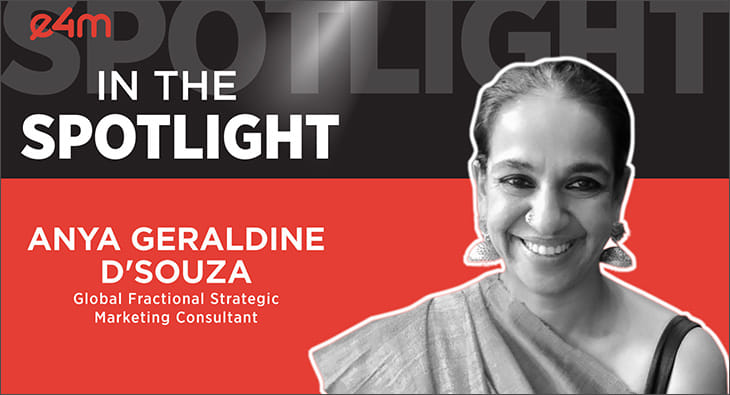

As more businesses embrace flexible leadership models, the Fractional CMO concept is gaining ground — allowing companies to tap into senior marketing expertise without hiring a full-time executive. Anya Geraldine D’Souza, a Global Fractional Strategic Marketing Consultant, is among the leaders driving this approach in the industry.
From her early days in corporate communications to becoming a Fractional Chief Marketing Officer steering global brands across continents, her two decades of journey is a masterclass in adaptability, purpose, and vision. She has helped brands grow, transform, and find their voice across markets and cultures.
Starting her career in communications, she has evolved into a Fractional Chief Marketing Officer (CMO). She has worked across continents, from the United States and Europe to Asia, the Middle East, Africa, and Australia, guiding organizations to tell their stories with authenticity and impact.
Now, as a Fractional Chief Marketing Officer, she brings senior leadership and strategy to companies looking to grow with purpose, without needing a full-time executive on board.
In this feature, we explore Anya’s journey from her beginnings in communications to leading multicultural teams across industries and markets. We dive into her philosophy on the role of marketing communications in shaping the next generation of communicators, her insights on ESG-driven marketing trends redefining brand trust, and her most valuable lessons from over two decades of helping brands and the people behind them grow with integrity and intent.
Excerpts:
1. How would you describe the evolution of your career—from communications to becoming a global marketing leader and Fractional CMO today?
Post graduating from business school with a major in Information Technology and Systems Management and a minor in Marketing, I began my career in business development and marketing with a start-up technology consulting firm in Bangalore. Those early years taught me to think creatively, understand customer challenges deeply, and deliver practical, growth-oriented solutions.
My transition to Weber Shandwick and later Text 100 (now Archetype) marked the start of my journey into communications strategy and brand reputation management. I collaborated with over 30 global technology brands to craft narratives, foster customer loyalty, and generate long-term value. Leading large, diverse teams in dynamic environments honed my leadership and coaching style, ensuring alignment around shared goals and customer-focused outcomes.
A pivotal moment came in 2014 when I joined Honeywell as a Marketing Communications Leader for India and then Asia Pacific, moving from technology to the manufacturing sector. The role expanded my understanding of how marketing integrates with business strategy—spanning sales enablement, product launches, channel marketing, and customer engagement across the Asia-Pacific region. At ELGi Equipments Ltd., I developed and led the global marketing function, driving brand leadership and go-to-market strategy across India, the USA, Europe, the Middle East, Africa, Australia, and Southeast Asia. I also had the privilege of orchestrating ELGi’s ESG agenda and sustainability framework.
Today, as an independent Fractional Strategic Marketing Consultant, I partner with organizations across industries—especially those in India looking to expand globally—to help them scale their marketing functions, strengthen their brand presence, and align their marketing/growth strategy with measurable business outcomes.
2. Having worked with global names like Cummins, Honeywell, and Weber Shandwick, what defining moments shaped your approach to leadership and marketing strategy?
Let me split that up – in today’s hyper-connected world, and at it’s very core, marketing strategy remains rooted in customer understanding, cultural intelligence, business acumen, industry insight, and a clearly articulated value proposition for the brand/offerings. Marketing excellence lies in connecting these fundamentals with executional brilliance — across functions, data, technology, and channels. It’s the ability to translate insight into action, craft narratives that resonate across borders, and create measurable impact through integrated strategies that drive both growth and trust.
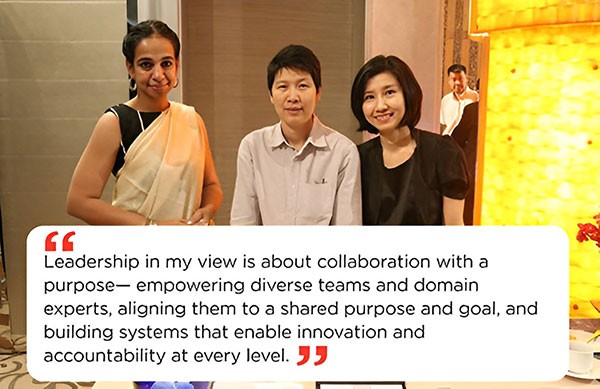
Now, leadership in my view is about collaboration with a purpose— empowering diverse teams and domain experts, aligning them to a shared purpose and goal, and building systems that enable innovation and accountability at every level.
3. The role of marketing has evolved drastically with data, technology, and purpose-led branding. How do you see this shaping the future of communicators?
With the evolution of MarTech platforms, digital ecosystems, and AI, communicators today have access to unprecedented volumes of data and analytical possibilities. Yet, the true competitive edge lies in three fundamentals:
- Identifying which data and metrics truly drive decision-making and growth
- Generating insights that inform human judgment
- Translating this intelligence into sharper, more effective communication strategies.
The best communicators will continuously evaluate campaign performance, amplifying what works and rethinking what doesn’t. They can no longer operate in silos or view ‘communications’ as a start or end-of-funnel activity. Ultimately, communication strategy remains the bedrock of all marketing — digital or traditional. And in a world awash with data, analytical clarity combined with creative intelligence will define the next generation of great communicators.
4. The Fractional CMO model is gaining traction. How is it changing the way businesses view marketing leadership?
After two decades in marketing and communications leadership, Anya Geraldine D’Souza found herself at a crossroads familiar to many experienced professionals — how to continue creating impact without being confined by structure. That question led her to a new model of leadership: Fractional Chief Marketing Officer.
Describing how this model is changing the way businesses view business leadership, she explains, “It’s encouraging to see so many visionary organizations embracing the model to their advantage. Fractional Marketing Leadership allows businesses to access senior strategic expertise without full-time commitment. A fractional marketing leader operates as an embedded partner within the leadership team—defining the marketing roadmap, aligning brand strategy with measurable growth outcomes, mentoring and/or setting up internal teams, and building the internal and external ecosystems needed for execution in line with goals and objectives.
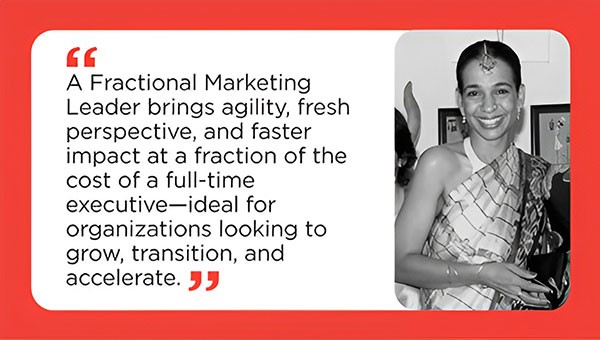
Well in a nutshell, a Fractional Marketing Leader brings agility, fresh perspective, and faster impact at a fraction of the cost of a full-time executive—ideal for organizations looking to grow, transition, and accelerate. In contrast, full-time leadership hires do offer permanence and integration, but often at a higher cost, with longer ramp-up periods and narrower external perspectives. Ultimately, the right choice depends on the company’s growth stage, strategic priorities, and appetite for agility versus permanence.”
5. You’re a strong advocate for ESG and sustainable business strategies. How can professionals move beyond tokenism to drive real impact?
Over the past few years, Anya Geraldine D’Souza has watched a quiet revolution reshape the world of marketing that doesn’t thrive on trends or technology, but by values and impact.
She asserts, “Real ESG impact begins with integration—embedding sustainability into core business strategy, not treating it as a reputation building or compliance achievement exercise. An ESG agenda essentially goes way beyond glossy reports, tick-the-box compliance exercises, or feel-good campaigns that risk slipping into greenwashing. It’s about authentic, measurable action that creates value for both the business and society.
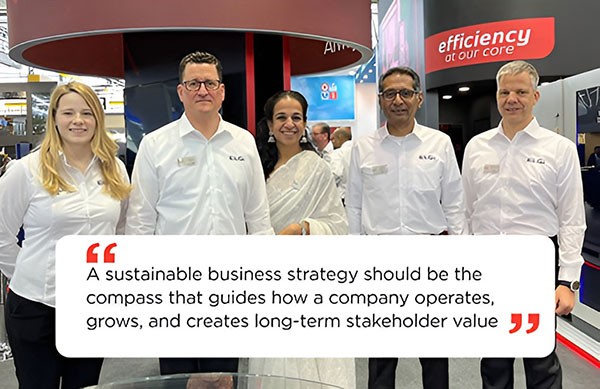
Paul Polman very rightly said, “Companies that do good, do well. They are more innovative, attract better talent, and build stronger brands.” That philosophy captures the essence of true ESG. It requires impactful initiatives, measurable frameworks, transparent reporting, and storytelling grounded in real progress. Ultimately, a sustainable business strategy should be the compass that guides how a company operates, grows, and creates long-term stakeholder value.”
6. Which global trends in ESG-driven marketing excite you the most?
When asked Anya Geraldine D’Souza about what excites her most about marketing today, she confidently mentioned, “I’m inspired by the rise of circular economy models, carbon-neutral innovations, and purpose-driven brands that are using technology to create real social and environmental impact. It’s equally exciting to see product stewardship driving innovation in product design and R&D across industries—where sustainability is influencing everything from material choices to lifecycle thinking.
Globally, progressive policy frameworks, extended value chain responsibility laws, and carbon disclosure regulations are reshaping how organizations build strategy, design products, and communicate impact. These evolving mandates are pushing brands to move from intent to action.
At the same time, the growing scrutiny around greenwashing is compelling companies to communicate with greater integrity and evidence. This shift—where sustainability metrics are being integrated into brand performance and even investment decisions—signals that ESG is central to business competitiveness, credibility, and long-term value creation.
7. In your 22+ year journey, what are the biggest lessons you’ve learned about building brands, people, and purpose?
Great brands are built at the intersection of purpose, people, and performance. Purpose gives direction, people bring it to life, and performance sustains it over time. When culture aligns with purpose and teams feel empowered, growth becomes both authentic and enduring.
To build a strong, resilient brand today:
- Think Big, But Act Small: Be bold about your brand’s purpose and global ambition, but act locally and authentically.
- Invest in Objective Insight: Use data and research to guide decisions, ensuring consistency, credibility, and measurable outcomes.
- Prioritize Across a Circular Funnel: Focus on initiatives that truly drive ROI — from awareness to conversion — and refine continuously.
- Create an Action-Based Strategy: Measure, track, and optimize every effort to ensure results align with business objectives.
- Put Your Audience First: Keep customer needs and cultural context at the forefront of every message and campaign.
- Tell Great Customer Stories: Leverage real stories to humanize your brand and amplify them across paid, earned, shared, and owned channels.
- Live Your Brand Values: Ensure every person representing the brand — from leadership to front-line teams — embodies its values and never compromises them
8. What will define the next decade of marketing communications?
Well, for one, a deep and agile understanding of what drives your customers, aligned with your offering, industry dynamics, and core value proposition.
Two, while AI will drive precision, efficiency, and scale, human creativity and trust will sustain engagement.
Three, brands with authentic purpose will build deeper emotional equity and long-term loyalty. Four, digital will continue to evolve, but in-person and experiential touchpoints are re-gaining importance (if they indeed showed signs of fading out in the first place), creating an equitable mix.
Lastly, the function’s success will hinge on defining meaningful metrics, synergies at the cross functional level, ensuring interoperability of platforms, and linking analytics to growth.
Read more news about PR and Corporate Communication News, Internet Advertising, Marketing News, Digital Media News, People Movement News
For more updates, be socially connected with us onInstagram, LinkedIn, Twitter, Facebook YouTube & Google News