Real-time fact-checking biggest challenge in the age of viral fake news: Kalli Purie
Speaking to ANI, Kalli Purie, India Today Group Vice Chairperson and Executive Editor-in-Chief, said fake news spreads seven times faster than truth
 by
by
Published: Aug 25, 2025 4:39 PM | 4 min read
 Follow Us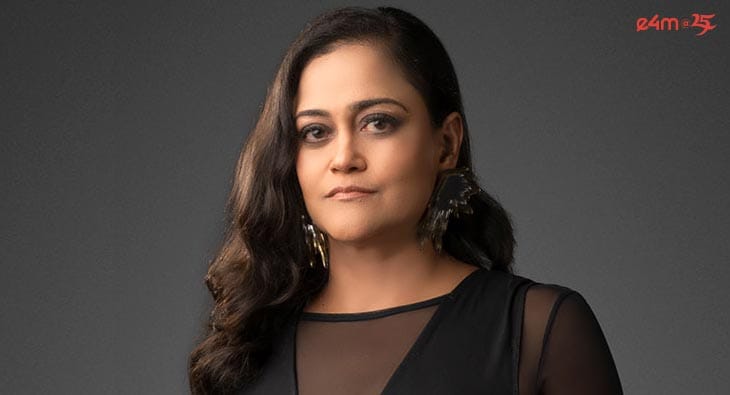

India Today Group Vice Chairperson and Executive Editor-in-Chief Kalli Purie, in an interview to ANI Editor-in-Chief Smita Prakash, said that news channels had to face criticism during times like 'Operation Sindoor', but it is not right to blame the entire genre for the mistakes of a few channels. She said, "News channels worked 24 hours without sleep. Beds were set up in offices so that people could get an hour of sleep, as the sirens would often ring at 3 am."
Kalii Puri said that at that time many people were misled because the new generation was covering the war for the first time using news and social media. “There were SOPs (standard operating procedures), but many young reporters were not aware of them. Information used to come from official WhatsApp groups and when the same information was found on many groups, people believed it to be true. During this time, false news was also planted, like Karachi was attacked, while in reality Karachi was not attacked. It was true that the Navy was on high alert, but Karachi was not attacked at that time.”
There would be someone on the Navy ship who would have contacted a reporter or editor he knew and said, 'We are forward deployed.' Now that soldier would not actually know what is going to happen, because he is also not given complete information. But he has an idea. Because of this, a mixed effect of excitement and inexperience was seen in the journalists and channels as well. That is why, I will not say that everyone repeated the same thing that Karachi was attacked and we reached Lahore. Actually only one or two channels said this, most did not say this.
I think this is unfair. Those who planted misinformation in the media (government or semi-government sources) broke the trust relationship with many journalists. Yes, the media has to face criticism for this, but they are also at fault. The media is always blamed. If anything goes wrong, the media is the easiest target. But sometimes it is said - 'I did not say that.' Whereas the video byte is there for everyone. In such a situation, there is no scope for misquotation. Then it is said that the video was edited. But the entire blame is always put on the media. I agree that the media is held responsible, but the related issue is that of fake news. Nowadays so much editing and changes are done in the videos that the work of fact-checking in the newsroom has become very difficult and time-consuming.”
On fake news, he said, “This is the biggest challenge for us. Fake videos and news spread very fast on social media. We have to do real-time fact-checking, even when it has already gone viral. Our fact-checking team has been there since 2019 and big tech companies have helped us with tools. But the problem is that if someone gets fake news on WhatsApp, even if we fact-check it, that person will not correct it because he will not want to prove himself a fool. Because of this, fake news spreads seven times faster than the truth.”
He said that now it is difficult to correct mistakes even on TV and digital. “Earlier, if there was a mistake in print, then lakhs of copies could not be recalled. On TV and digital, it was thought that changes could be made immediately. But now people take screenshots. Even on a small spelling mistake, calls come from political parties.”
Speaking on the pressures Kalli Puri said, “The BJP government is accused of pressurising the media, but which government has not put pressure? I remember my childhood days when there was no TV and India Today magazine was published. Once the government did not like something and the press in Haryana was shut down. Then A.P. and his team set up a press in Chennai and from there the magazine was sent to the country and the world. Pressure is not new – it comes from political parties as well as big business houses. Many times we have been banned because of our stories.”
He said it was now up to the editors and journalists to decide whether they would bow to the pressure or not. “If you look at it from a business perspective, it is easy to bow because it makes better business sense. But if you believe that journalism is a ‘noble profession’ that has an element of public service, you should not bow.”
Read more news about Television Media, Digital Media, Advertising India, Marketing News, PR and Corporate Communication News
For more updates, be socially connected with us onInstagram, LinkedIn, Twitter, Facebook YouTube & Google News
