Happy Birthday Aroon Purie: The institution builder who shaped modern Indian journalism
Purie’s professional journey is defined not just by institution-building at scale, but also by an instinctive understanding of what journalism must do at critical moments in history
 by
by
Published: Dec 29, 2025 9:15 AM | 3 min read
 Follow Us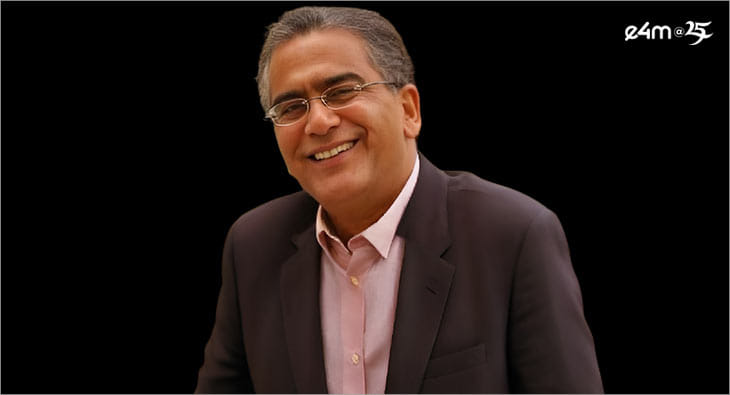

Aroon Purie, who has not merely chronicled modern India but helped shape the very grammar of Indian journalism, celebrates his birthday today. On the occasion, e4m reflects on and celebrates the remarkable professional journey of a true media icon.
Purie’s professional journey is defined not just by institution-building at scale, but also by an instinctive understanding of what journalism must do at critical moments in history. When India Today was launched in 1975, the country was in the throes of the Emergency, information was scarce, and trust in public discourse was under strain. Conceived initially to bridge an information gap for Indians abroad, the magazine quickly became something more consequential: a publication that combined rigour, narrative depth, and clarity at a time when credible reportage mattered most. Over the decades, it grew into India’s most widely read magazine, shaping reader expectations and newsroom standards across languages and platforms.
Educated at The Doon School and the London School of Economics and trained as a chartered accountant, Purie brought an unusual blend of editorial sensibility and business discipline to media leadership. He began his career at Thomson Press in 1970, eventually turning it into South Asia’s largest commercial printing operation with a national footprint. That grounding in production and process would later inform the scale and efficiency with which the India Today Group expanded, across magazines, newspapers, television, radio, digital platforms, publishing, and printing.
What distinguishes Purie’s leadership is not just expansion, but coherence. As the India Today Group diversified, it retained a recognisable editorial spine. From print to broadcast, the emphasis remained on authority, sharp analysis, and presentation that respected the intelligence of the audience. This approach found powerful expression in television with Aaj Tak and Headlines Today, channels that helped define the vocabulary of Hindi and English news broadcasting and set benchmarks for reach, pace, and credibility.
Over time, the group evolved into one of India’s most diversified media conglomerates, reaching over 50 million readers, viewers, and listeners. Yet Purie’s influence has never been limited to numbers alone. He shaped newsroom cultures, mentored generations of editors and journalists and demonstrated that journalism could be both commercially viable and editorially uncompromising, an increasingly rare balance in a competitive media environment.
Recognition followed naturally. In 2001, he was awarded the Padma Bhushan for his contribution to Indian journalism, alongside numerous other honours in India and abroad. He also served on the boards of several prestigious institutions, reinforcing his role as a media leader with global perspective and institutional credibility.
In recent years, Purie has overseen a smooth generational transition, handing over operational reins while continuing to guide the organisation’s long-term vision. That continuity reflects perhaps his most enduring legacy: building institutions that outlast individuals, trends, and cycles of disruption.
As he marks another birthday, Aroon Purie’s career reads less like a personal success story and more like a chronicle of Indian media’s coming of age.
Read more news about Television Media, Digital Media, Advertising India, Marketing News, PR and Corporate Communication News
For more updates, be socially connected with us onInstagram, LinkedIn, Twitter, Facebook YouTube & Google News
