Barkha Dutt, Prannoy Roy and other veteran journos leading India’s independent media boom
The rise of India's independent media highlights a growing demand for transparent, unbiased, and in-depth reporting free from corporate or political influence
 by
by
Published: Apr 17, 2025 1:31 PM | 7 min read
 Follow Us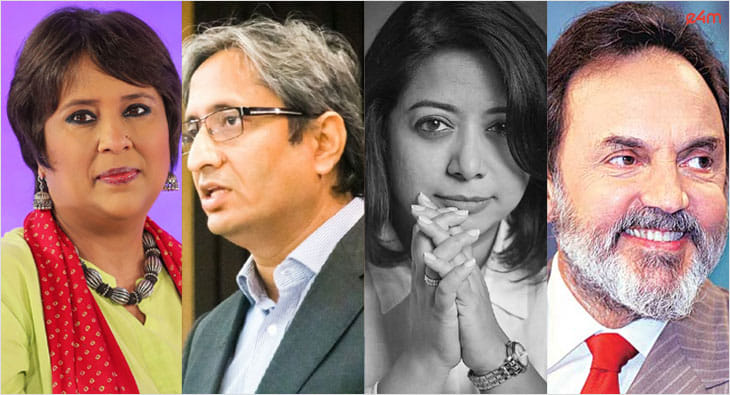

In recent years, a notable shift has been taking place within India's journalistic landscape. Veteran journalists, many of whom have shaped the country's media for decades, are increasingly stepping away from traditional newsrooms to embrace independent platforms. From Barkha Dutt’s Mojo Story to Shekhar Gupta’s ThePrint, these seasoned reporters and anchors are taking control of their narratives and creating spaces where editorial independence can thrive. This trend, while reflecting broader global shifts, highlights a growing demand for transparent, unbiased, and in-depth reporting free from corporate or political influence.
This transformation isn’t just a byproduct of dissatisfaction with legacy media; it’s a response to the changing consumption habits of news audiences. With digital platforms such as YouTube, independent journalists now have the tools to reach millions without relying on traditional broadcasting infrastructure. Many journalists have found immense success in creating independent channels that cater to a more discerning audience, bringing credibility and alternative perspectives into the spotlight.
Barkha Dutt
View this post on Instagram
Barkha Dutt, a prominent Indian journalist and author, gained national recognition for her frontline reporting during the Kargil War in 1999. After a 21-year tenure at NDTV, she departed in 2017 to pursue independent journalism. In 2020, she founded Mojo Story, a digital platform emphasising grassroots reporting and unfiltered narratives. As of April 2025, the Mojo Story YouTube channel has amassed over 1.88 million subscribers and more than 739 million views, reflecting its significant reach and influence.
Shekhar Gupta
View this post on Instagram
Shekhar Gupta is a distinguished Indian journalist and author, renowned for his extensive career in media and his contributions to digital journalism. Over the years, he held significant positions, including Editor-in-Chief and CEO of The Indian Express from 1996 to 2015. He also had a brief tenure as Editor-in-Chief at India Today in 2015. In 2017, Gupta founded ThePrint, a digital news platform, where he serves as the Editor-in-Chief and Chairman. His weekly column, "National Interest," is widely read and has been compiled into the book Anticipating India. Gupta's leadership and journalistic endeavors have earned him the Padma Bhushan, India's third-highest civilian award, in 2009.
Faye D’Souza
View this post on Instagram
Faye D’Souza is a renowned Indian journalist, recognized for her incisive reporting and commitment to unbiased journalism. Formerly the anchor of The Urban Debate on Mirror Now, she won the RedInk Award for 'Journalist of the Year' in 2018. In September 2019, D’Souza launched her own YouTube channel, [@FayeDsouza], which has gained over 349,000 subscribers and 46 million views, focusing on clear, fact-based reporting. She also has a strong presence on Instagram, with 2 million followers, sharing insightful updates and engaging with her audience.
Ravish Kumar
View this post on Instagram
Veteran journalist Ravish Kumar, rose to prominence as the Senior Executive Editor of NDTV India, where he helmed shows like 'Prime Time' and 'Ravish Ki Report'. Known for championing the voice of the common man, he was awarded the Ramon Magsaysay Award in 2019 for his courageous journalism. In November 2022, Kumar stepped down from NDTV amidst ownership changes and soon launched his YouTube channel, [@Ravish Kumar Official]. By April 2025, the channel had amassed over 12.7 million subscribers and more than 2.4 billion views. Through independent reporting and sharp political commentary, Kumar has become a leading example of veteran journalists finding editorial freedom and massive reach on digital platforms.
Prannoy Roy
Prannoy Roy, former chairperson of NDTV from 1988 to 2022, co-founded the channel, revolutionizing Indian broadcasting with the first independent 24x7 news service in 1998. In a sharp turn of events, he sold NDTV and after stepping down, Roy transitioned to new ventures, co-founding deKoderdigital, an AI-driven election analysis platform. It has over 1.27 lakh YouTube subscribers, showcasing Roy's shift from traditional media to innovative, tech-driven journalism.
Sanket Upadhyay
View this post on Instagram
After nearly two decades across marquee newsrooms like NDTV, CNN-News18, India Today, and Times Now, Upadhyay stepped down from his role as Consulting Editor at NDTV in May 2024 to launch The Red Mike, an independent YouTube-based platform rooted in editorial autonomy and issue-first journalism. Known for his sharp, uncluttered news delivery, Upadhyay has quickly found a loyal digital following. As of April 2025, The Red Mike boasts over 879,000 subscribers and 230 million views, signalling a strong appetite for credible, no-nonsense reporting beyond the studio floor.
Bhupendra Chaubey
View this post on Instagram
Bhupendra Chaubey, a distinguished Indian journalist with a career spanning over two decades. He began his journalism journey in 1999 as a political correspondent at NDTV. In 2005, he joined CNN-IBN (now CNN-News18), where he served as Executive Editor for nearly 15 years, anchoring prominent shows like 'India at 9' and 'Viewpoint'. In July 2020, Chaubey transitioned to become the Editor-in-Chief of India Ahead, a news channel launched by the Andhra Prabha Media Group in 2018. Additionally, he co-founded Earshot Digimedia, an award-winning podcasting platform, to create compelling vodcast and podcast content for both Indian and global audiences. His podcast called Talk to Bhupen is his passion project that invites youth to understand important world issues through dialogue.
Sushil Mohapatra
Two days ago, journalist Sushil Mohapatra, concluded his 17-year tenure at NDTV to embark on a new venture, his YouTube channel, Grameen Report. This platform focuses on rural issues and grassroots storytelling, continuing his commitment to impactful journalism. Mohapatra's distinguished career includes accolades like the Ramnath Goenka Award and the Journalism for Peace Award, the latter for his documentary Mujhe Ghar Jaana Hai, highlighting the plight of recovered mental health patients awaiting reunification with their families.
Abhisar Sharma
View this post on Instagram
Abhisar Sharma, a seasoned journalist with over two decades of experience across Zee News, NDTV, BBC, and ABP News, has transitioned to independent journalism through his YouTube channel, [@abhisar_sharma]. Known for his fearless reporting, he has received the Ramnath Goenka Award (2008) and Red Ink Award (2016). As of April 2025, his channel has over 8.1 million subscribers and 2.66 billion views. Uploading over 19 videos weekly, Sharma offers critical, in-depth commentary on politics and current affairs, reaching a wide audience seeking independent voices.
Ajit Anjum
View this post on Instagram
Ajit Anjum, one of India's most popular journalists, has spent over 30 years navigating the highs and lows of mainstream media, with key editorial roles at India TV and News 24. In 2010, he was awarded the prestigious Ramnath Goenka Award for his exemplary broadcast journalism. In a bold move away from legacy media, Anjum launched his YouTube channel [@AnjumAjit] in 2020, carving out a space for raw, ground-level reporting and sharp political commentary. As of April 2025, the channel commands over 7.1 million subscribers and 2.4 billion views, reflecting his strong presence in independent journalism.
The rise of independent journalism represents both a challenge and an opportunity for India’s media industry. As traditional news outlets face increasing criticism for bias, sensationalism, and corporate influence, the move towards digital, independent platforms offers an alternative that resonates with those craving authenticity.
The future of journalism in India seems to be veering towards this new model, where accountability, depth, and freedom are the cornerstones. Independent digital journalism not only gives journalists more control over their content but also ensures that diverse voices find a larger audience. As technology continues to evolve, these independent journalists will likely shape the future of media, creating an ecosystem where truth, transparency, and critical thinking thrive. With the growing appetite for trustworthy news, it’s safe to say that this movement will only gain momentum in the coming years.
Read more news about Digital Media, Television Media, Out of Home Advertising, Print Media, Latest Advertising India
For more updates, be socially connected with us onInstagram, LinkedIn, Twitter, Facebook, YouTube & Google News