The Blue Lock football strategy brands must borrow
Guest Column: Dr. Sandeep Goyal explains what marketers can imbibe from the concept of the Japanese manga series - Blue Lock
 by
by
Published: Jun 25, 2026 8:49 AM | 7 min read
 Follow Us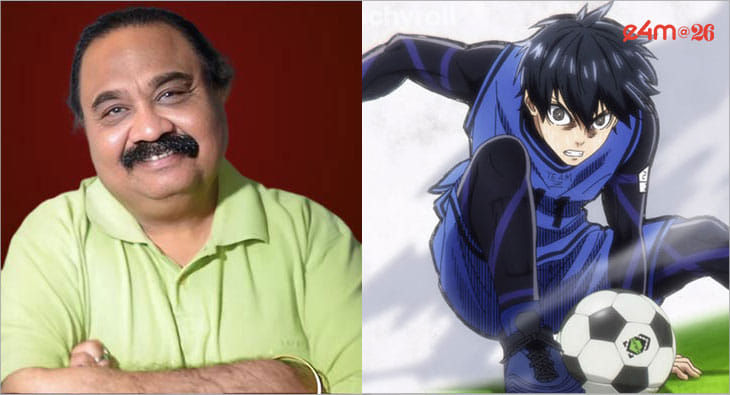

- **Concept of Blue Lock**: Blue Lock is a Japanese manga/anime series that centers on a competition among 300 teenage strikers, where only one can represent Japan in football, emphasizing the importance of individual ego in scoring goals.
- **Shift in Football Culture**: The series reflects a broader trend in football, moving away from the traditional team-player model to a focus on "selfish strikers" who prioritize their scoring abilities, as seen in the rising prominence of players like Haaland and Mbappe.
- **Marketing Lessons**: The narrative of Blue Lock offers valuable insights for brands, advocating for a focus on unique strengths, embracing a strong ego, and fostering competitive collaboration to stand out in a crowded market.
- **Brand Strategy Framework**: Key strategies derived from Blue Lock include identifying a brand's unique "weapon," prioritizing boldness over politeness, and being willing to eliminate less effective strategies to focus resources on what truly drives success.
Since the World Cup football fever is at its peak, it is the most opportune time to look at a football strategy from Japan that has great learnings for brands, globally, and in India. It is called Blue Lock.
Blue Lock is actually a Japanese manga/anime series by Muneyuki Kaneshiro and Yuusuke Nomura that blew up after 2022.
Its premise, in one line? Japan’s FA, desperate to win the World Cup, locks 300 teenage strikers in a prison-like facility called “Blue Lock”. Only 1 will survive. Everyone else is banned from playing for Japan ever again.
The Core Idea is simple: “Egoism = Goals”. Traditional football coaching drills one thing into strikers: pass, link-up, be a team player. Blue Lock throws that out. Its coach, Ego Jinpachi, argues: “To score, you need an ego. A striker who doesn’t think he’s the best will never shoot when it matters.”
So, the series is basically a psychological experiment. 300 forwards are forced to evolve or get cut. No midfielders, no defenders. Just kill-or-be-killed competition for the 1 spot.
Key concepts from the show:
- Ego: Your personal weapon/style. Isagi = spatial awareness. Bachira = dribbling. Chigiri = speed. You win by sharpening your ego, not copying others.
- Flow: That zone where instinct takes over. The show treats it like a drug.
- Chemical Reaction: Strikers get better only when they clash with another monster ego. Comfort = death.
Blue Lock, interestingly, is showing up in real football + striker culture. Blue Lock started as fiction, but it hit at the same time football itself was rethinking the #9 role. So, it feels real.
- The “Selfish Striker” is Back In Fashion
For 10 years, Pep/Guardiola-style football praised false 9s: Firmino, Messi dropping deep, Kane creating. The striker was a facilitator. Now look at 2023-2026: Haaland, Mbappe, Osimhen, Gyokeres. Clubs pay €100M+ for pure finishers with massive ego. “Give me the ball and get out of the way” is back. That’s Blue Lock logic.
- Academies Are Talking “Weapons”
Several European academies and YouTube coaches now use “find your weapon” language — straight from Blue Lock. Instead of making every striker well-rounded, they push players to identify 1 elite trait: 1st touch, blindside run, weak-foot shot.
Example: La Masia drills for “spatial scanning” get memed as “Isagi training” online.
- Content + Culture
TikTok/IG reels of Haaland runs, Mbappe sprints, or random U17 goals are captioned with Blue Lock edits, music, and lines like “I will be the best striker in the world”. It’s become Gen-Z’s shorthand for striker ego. Clubs like Man City and PSG have even posted Blue Lock-style edits themselves. The line between anime and marketing is gone.
- Psychology of the #9
Sports psychologists now talk about “healthy egoism” for strikers. The fear of passing up a shot is called “Striker’s Dilemma”. Blue Lock gave it a name and made it cool. You’ll hear pros say: “A striker has to be a little delusional.” That was Ego’s thesis.
The Catch: Fiction vs Reality
Blue Lock works in a manga because 299 kids can be thrown away. In real football, you need 11 players. Pure ego without teamwork loses matches. The show’s value is that it gives strikers permission to be selfish inside the box. Off the ball, you still need work rate, pressing, link-up. Haaland has ego + sprints 10 km. That’s the real formula.
Blue Lock didn’t change football tactics. It changed the story strikers tell themselves. It turned “ego” from an insult into a skill. And in an era where goals decide €200M transfers, that story is powerful. Coaches are no longer trying to kill striker ego. They’re trying to recruit the right kind of ego.
The Blue Lock brand bible or what marketers can steal from 300 egos fighting to be #1: Forget football. Blue Lock is a playbook for brands in 2026. Everyone’s in the same facility = same feed. Same algorithm. Same budget. Only 1 brand survives in the customer’s head.
Here’s what to learn from Ego Jinpachi:
- Law #1: Kill “Team Player” Marketing. Build a Weapon.
Blue Lock: 300 strikers enter. “Pass more” = you get cut. You survive by having 1 broken, unfair weapon.
Brand Lesson: Being “well-rounded” is death. No one remembers the 8/10 brand. They remember the 10/10 at 1 thing.
Do this:
- Zomato = Roast culture weapon
- Durex India = Timely meme weapon
- Nike = Athlete ego weapon
Audit question: If your brand died tomorrow, what 1 thing would customers say you were best at?
- Law #2: Ego > Ego-less
Blue Lock: “A striker who doesn’t believe he’s the best will never shoot.”
Brand Lesson: Safe, polite brands get ignored. Algorithms reward conviction, even if it’s arrogant.
Do this: Take a stance. Kaiser/Haaland brands don’t ask for attention, they take it.
Don’t do this: “We’re here for everyone” = you’re here for no one. That’s the player who gets cut first.
Law #3: Chemical Reaction = Collaboration
Blue Lock: No one evolves alone. Isagi only awakens after clashing with Kaiser, Nagi, Rin.
Brand Lesson: Your growth is tied to your rivals + creators. Play vs them, not with them.
Do this: Amul vs Patanjali. Zomato vs Swiggy. Duolingo vs everyone. The beef creates attention.
Brand Rule: Find 1 “Rin” to chase. If you’re not trying to beat someone, you’re already eliminated.
- Law #4: Flow State Is The New KPI
Blue Lock: “Flow” = when instinct > overthinking. Players in Flow score.
Brand Lesson: Your content needs Flow moments. Scroll-stoppers that hit in 0.8 seconds.
Do this:
- First 3 seconds: Isagi’s “Direct Shot” = your hook. No logo, no intro.
- Repurpose once: 1 big idea → 200 AI UGC avatars. Nagi’s “trapping” = 1 idea, 100 executions.
- Law #5: Cut 299 Players Without Guilt
Blue Lock: 299 strikers are banned for life. Japan only needs 1 #9.
Brand Lesson: Not every platform, audience, or product deserves you.
Do this: Blue Lock your media plan. Kill 70% of your ad sets/channels. Double budget on the 1 weapon that works.
Brand Q: What 3 things can we stop doing this quarter and still grow?
The Final Commandment: Be Delusional On Purpose
Strikers in Blue Lock are clinically delusional. They believe they can score from anywhere. Brands in 2026 need the same. Because the feed doesn’t reward realism. It rewards obsession.
Your Blue Lock Test as a Brand Custodian for 2026:
- Weapon: Can you write your brand’s weapon in 5 words?
- Ego: Would your brand say “I’m the best” without blushing?
- Cut: What are you willing to lose to win?
If you can’t answer all 3, you’re one of the 299.
Dr. Sandeep Goyal is a Nipponophile. He studies and follows Japanese culture very closely.
Disclaimer: The views expressed here are solely those of the author and do not in any way represent the views of exchange4media.com.
Read more news about Marketing News, Advertising News, PR and Corporate Communication News, Digital News, People Movement News
For more updates, be socially connected with us onInstagram, LinkedIn, Twitter, Facebook, YouTube & Google News