How Libas is redefining consumer relationships in India's fashion industry
Sidhant Keshwani, Founder & CEO of Libas, took part in a fireside chat at Pitch Brand Talk and shared the brand’s journey from a family-owned business to being a powerhouse women’s fashion ecomm brand
 by
by
Published: Oct 17, 2024 2:20 PM | 5 min read
 Follow Us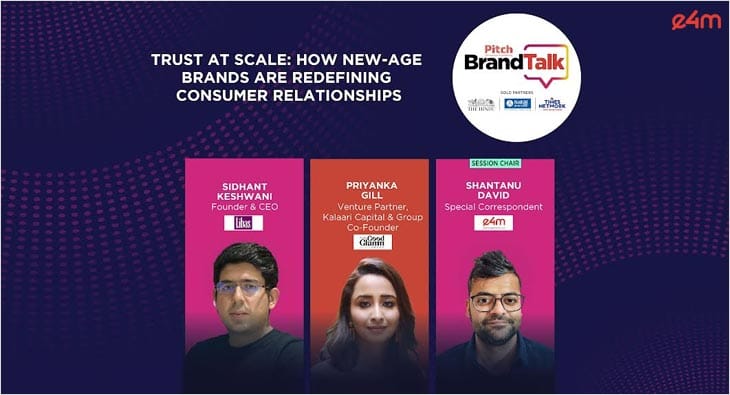

At the Pitch Brand Talk held in Delhi on October 16, Sidhant Keshwani, Founder & Chief Executive Officer, Libas, spoke at a session, 'Trust At Scale: How New-Age Brands Are Redefining Consumer Relationships' in a fireside chat, chaired by Shantanu David, Special Correspondent, exchange4media.
In the fast-evolving world of fashion, few brands have managed to capture the pulse of India’s growing online market as effectively as Libas. At a recent session titled “Trust At Scale: How New-Age Brands Are Redefining Consumer Relationships”, Sidhant Keshwani, Founder & CEO of Libas, shared the brand’s journey from a family-owned business to one of India’s largest women’s fashion brands in the e-commerce space. With over a decade of experience, Keshwani provided valuable insights into how Libas scaled trust, built consumer relationships, and navigated the highly competitive Indian market.
Keshwani’s path to entrepreneurship was not premeditated. “I actually wanted to become an investment banker,” he remarked, reflecting on his time studying economics in the UK in 2011. However, it was the rise of e-commerce in the UK that captivated him, sparking the realization that India, with its massive population, was ripe for a similar revolution. This pivotal moment led to the founding of Libas in 2012.
Choosing fashion as a category was strategic. “I had some experience in the family business, and fashion seemed like an easier entry point. The idea was to crack e-commerce, not the product itself,” Keshwani explained. From there, the brand began listing on marketplaces like Flipkart and Myntra, steadily carving out a niche in the market.
Keshwani emphasized that Libas’ success has been built on speed—an attribute that has defined the brand’s approach to fashion. Drawing inspiration from fast-fashion giants like Zara, Libas adopted a similar model but tailored it to the Indian consumer, focusing exclusively on Indian ethnic wear. “In today’s ecosystem, speed is everything. We were the first to tap into the fast fashion model for Indian wear, launching new trends in as little as 10 days,” Keshwani noted. This strategy has helped Libas stay ahead of the curve, offering customers the latest styles quickly and affordably.
Libas uses social media as its “mood board,” identifying emerging trends in real-time and responding faster than traditional seasonal cycles. “We stopped working on seasonal fashion entirely. If there’s a trend on social media today, our goal is to have it in the market within days,” Keshwani added.
Building consumer trust at scale is no easy feat, especially in a price-sensitive market like India. However, Libas has managed to do so by consistently delivering value. The brand focuses on high fashion and trend-led products without compromising on quality. Keshwani highlighted that smaller towns in India are now driving e-commerce growth, as these consumers tend to be more cautious with their purchases. To capture this market, Libas created “mass-appeal segments,” offering affordable, trend-right options for first-time buyers.
“Once we’ve earned the customer’s trust with their initial purchase, we work on increasing their basket size over time,” Keshwani said, explaining the brand’s long-term strategy to build loyalty.
Libas’ growth has not been confined to the digital realm. In recent years, the brand has made a successful foray into offline retail, opening over 20 stores across India. What sets this offline journey apart is the data-driven approach Libas has adopted. “We identified regions where our products were selling the most online and chose those areas to open stores,” Keshwani said. This strategy has resulted in zero offline marketing spend, with word-of-mouth driving store footfall.
All of Libas’ stores have been profitable from day one, proving that the transition from online to offline has been seamless for the brand. With plans to open 200 stores over the next two years, Libas is well-positioned to expand its footprint across metros and Tier 1 cities.
In the world of fast fashion, sustainability often seems at odds with business goals. Keshwani acknowledged this, saying, “Any fast fashion brand founder talking about sustainability without being a hypocrite is difficult.” However, he stressed that sustainability is a long-term journey for Libas, citing initiatives like eco-friendly materials and green-certified warehouses.
The brand’s commitment to sustainability is also reflected in its new 100,000-square-foot headquarters, a gold-standard green building. “We know this is a 10-15-year journey, and we need to start today to be prepared for the future,” Keshwani stated.
As Libas looks toward the future, Keshwani emphasized that innovation will continue to drive the brand. While fast adaptation to trends has been a key factor in their success, Keshwani hinted at a future where Libas will not just follow trends but set them. “We’ve already started setting trends, but creating them takes more time. Still, if we don’t innovate, we won’t stay relevant,” he concluded.
Read more news about Marketing News, Advertising News, PR and Corporate Communication News, Digital News, People Movement News
For more updates, be socially connected with us onInstagram, LinkedIn, Twitter, Facebook, YouTube & Google News
