Culture Hacks: Why cross-brand collabs are marketing’s wild card
Cross-brand collabs thrive on surprise, shared fan bases, nostalgia, hype and cultural relevance—blurring the line between ads and identity to create buzz that feels anything but marketing
 by
by
Published: Aug 25, 2025 9:50 AM | 6 min read
 Follow Us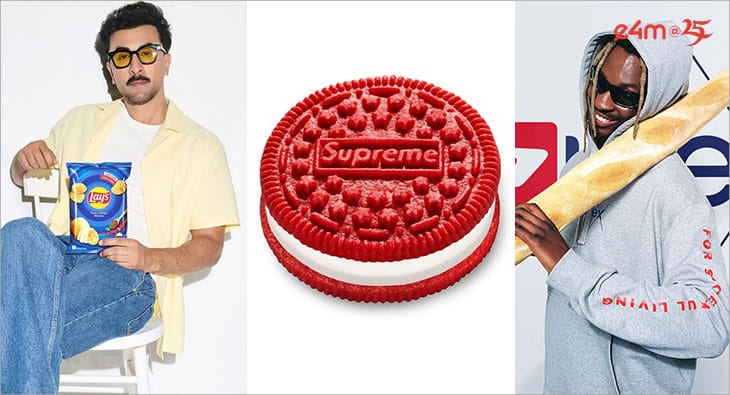

When chips start turning into sneakers, you know brand marketing has left the safe lane and entered meme territory. The latest example is Lay’s India teaming up with ARKS, Ranbir Kapoor’s lifestyle label, to drop ARKS Colour-Lay's, a sneaker line inspired by the brand’s iconic chip packets. It’s not a joke, there are actual blue kicks for Magic Masala fans, red ones for Spanish Tomato Tango loyalists, orange for Hot & Sweet Chilli, and green for Cream & Onion. What was once a party snack is now strutting down the street as style.
The drop is a bold reminder that in today’s culture economy, the most effective marketing doesn’t look like marketing at all. Abhinav Verma, Co-Founder of ARKS, called it a reframing of something instantly recognisable into the language of sneakers. For Lay’s, the move is about embedding itself into youth culture, with marketing director Saumya Rathor noting that the tie-up helps the brand live naturally in spaces where its consumers already are. A limited-edition capsule, unveiled through a digital-first rollout, became less about footwear and more about cultural resonance.
View this post on Instagram
Cross-brand collaborations like this work precisely because they are unexpected. Chips and sneakers don’t belong in the same sentence, and yet the mash-up makes perfect sense to an audience constantly looking for novelty. These partnerships double visibility by pooling fan bases, trigger emotional cues like nostalgia and humour, thrive on scarcity-driven hype, and most importantly, blur the line between advertising and cultural identity. Instead of shouting for attention, they give consumers something they want to wear, share, and screenshot. Here are a few brand collabs that don't sound right together, but became very successful collaborations.
KitKat × Spotify
KitKat’s “Break the Loop” campaign with Spotify took the brand’s iconic “Have a break” tagline into the digital era. Special KitKat packs came with QR codes that unlocked personalized playlists on Spotify, with Ayushmann Khurrana as campaign face. By fusing snacking with music discovery, KitKat refreshed its break-time positioning for younger audiences who treat playlists as mood lifelines. This showed how even a simple chocolate bar could become a gateway to immersive entertainment experiences.
Tinder × Indu’s Ice Cream
View this post on Instagram
Dating app Tinder collaborated with Mumbai-based artisanal ice cream brand Indu’s to launch limited-edition breakup-themed flavours like Dil Ka Falooda and Your Ex’s Tears. Available only on Swiggy and Zomato, the quirky line struck a chord with urban youth who process heartbreak with humour. The campaign turned Tinder’s brand promise of relationships, good and bad, into something scoopable, fun, and highly Instagrammable. It demonstrated how local food brands can pair with global platforms to spark emotional conversations.
Heinz Ketchup × Smoothie King
View this post on Instagram
In one of the more outrageous crossovers, Heinz teamed up with Smoothie King to launch a ketchup milkshake. As bizarre as it sounds, the campaign wasn’t really about sales, it was about shock value and virality. Consumers were intrigued, amused, or even horrified, but they talked about it. The move cemented Heinz as a playful risk-taker, unafraid of pushing boundaries. This kind of over-the-top collaboration shows how “weird” often translates into free publicity and cultural chatter.
Parle Mango Bite × Hyphen
View this post on Instagram
Parle’s nostalgic Mango Bite candy found a new avatar in beauty through its partnership with lip-care brand Hyphen. The collab brought out mango-flavoured lip balms, fusing childhood confectionery memories with modern self-care routines. It gave millennials and Gen Z a sense of nostalgia in their vanity kits, bridging everyday beauty with playful indulgence. For Parle, it was a way of refreshing a legacy candy for a new audience, while hyphen gained instant cultural recall through a trusted brand.
Durex × Diesel
View this post on Instagram
In the international space, condom brand Durex partnered with denim giant Diesel to create a fashion-led collaboration. The move took sexual wellness out of the taboo closet and into mainstream culture by associating with high fashion. Diesel’s edgy positioning matched Durex’s boldness, and together they sparked conversations about sexuality, inclusivity, and confidence. It wasn’t just about jeans or protection, it was about cultural rebranding. This collaboration proves how unlikely pairings can normalize difficult conversations through style.
Lenskart × Harry Potter
Lenskart leaned into fandom culture by launching a Harry Potter-inspired eyewear line. Featuring themed frames and accessories inspired by Hogwarts houses and iconic elements from the Wizarding World, the collection merged everyday eyewear with fantasy. It tapped into Gen Z and millennial nostalgia for Potter while giving eyewear a collectible, pop-culture status. For Lenskart, this partnership moved the brand from functional necessity to lifestyle accessory, proving that even prescription glasses can carry cultural cachet.
View this post on Instagram
Netflix × 4700 BC Popcorn
Streaming and snacking found their perfect match in Netflix’s collab with gourmet popcorn brand 4700 BC. The partnership rolled out content-specific flavours linked to Netflix titles, marketed with quirky ad films featuring the “three Karans” (Johar, Wahi, Bohra). For Netflix, it was about enhancing the binge-watching ritual; for 4700 BC, it was about national visibility at scale. The collab cemented popcorn as the must-have binge snack and added a branded flavour to entertainment nights.
Kurkure × Ching’s Secret
Kurkure joined forces with Ching’s Secret to create a fusion flavour that blended Kurkure’s signature crunch with Ching’s desi-Chinese spiciness. The result was a masala schezwan-inspired snack that resonated with Indian tastebuds. Beyond flavour, the tie-up brought two mass brands under PepsiCo and Tata Consumer together in a way that amplified reach. It showed how combining distinct taste identities can unlock fresh excitement in the competitive snacking market while keeping innovation rooted in local palates.
Supreme × Oreo
In 2020, Supreme teamed up with Oreo to release a limited-edition red cookie stamped with the Supreme logo, instantly turning a humble snack into a streetwear collectible. Sold originally for $8 a pack, the cookies quickly vanished from shelves and reappeared on resale platforms at eye-watering prices, some going for thousands of dollars. The collab wasn’t about taste but about cultural cachet, blending the worlds of food and fashion in a way that proved how hype and scarcity can transform even a biscuit into status.
View this post on Instagram
And there are many other examples but as Lay’s and ARKS have proved, a chip packet doesn’t just belong in your hand, it can live on your feet, in your feed, and in the wider conversation. The list of such quirky collabs is only growing, and each one makes it clear: culture is the new currency, and the brands that can remix it best are the ones that win.
Read more news about Marketing News, Advertising News, PR and Corporate Communication News, Digital News, People Movement News
For more updates, be socially connected with us onInstagram, LinkedIn, Twitter, Facebook, YouTube & Google News
