CTV now a key channel for reaching affluent banking consumers: Anoop Manohar, Axis Bank
Anoop Manohar, Chief Marketing Officer, Axis Bank, shares that digital accounts for over 50% of Axis Bank’s marketing mix and is also working on influencer collabs
 by
by
Published: Mar 16, 2026 9:28 AM | 6 min read
 Follow Us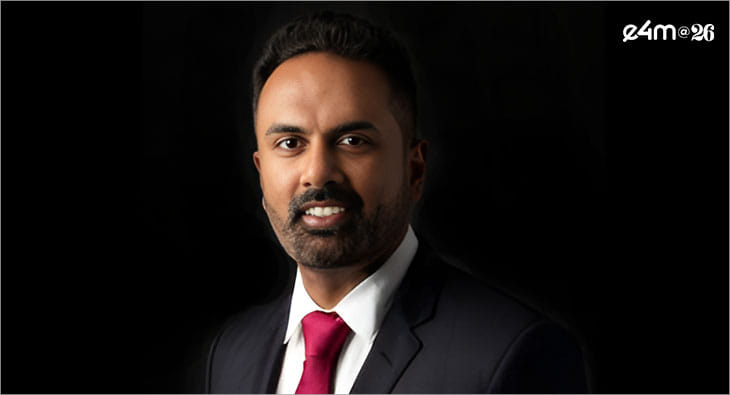

As the banking sector becomes increasingly competitive and digitally driven, marketing strategies are evolving to reach consumers across multiple platforms while balancing brand-building with performance-led initiatives.
For Axis Bank, this shift is reflected in a growing reliance on digital channels within its overall media strategy, according to Anoop Manohar, Chief Marketing Officer, Axis Bank.
Manohar said digital platforms now account for more than half of the bank’s marketing mix as the brand adapts to changing consumer media habits and a rapidly expanding digital ecosystem.
“Overall, digital is definitely above 50% of our marketing mix,” Manohar said.
However, he noted that the bank’s media mix varies significantly depending on the audience being targeted and the nature of the campaign. Campaigns aimed at senior citizens tend to rely more on channels such as television, print, Facebook and WhatsApp, while communication directed at younger consumers or product-led promotions typically leans more heavily on digital platforms.

Media mix
Manohar explained that brand-led campaigns tend to rely more on traditional media for reach and credibility, while performance marketing and product-led communication are increasingly digital-first.
The diversification of platforms has made media planning more nuanced compared to earlier years when advertising options were limited to a few television channels and print publications.
“It really depends on the proposition and the audience you are trying to reach,” he said. “There is no single mix that works across everything.”
Connected television (CTV) has emerged as an important channel for Axis Bank, particularly for reaching affluent audiences.
“For products like credit cards and premium banking propositions, this audience becomes extremely important,” he said. At the same time, he noted that CTV forms only one part of a broader marketing strategy that must also recruit customers across different segments.
Influencer marketing is used selectively by Axis Bank due to the regulatory environment in which financial institutions operate.
Manohar said the bank has collaborated with influencers primarily around specific propositions, such as its education-focused initiatives.
“We don’t use influencers as a standalone channel yet,” he said. “But where it makes sense, we collaborate with them to create content rather than simply handing them pre-produced messaging.”
Tier II & III Markets
Beyond metropolitan cities, tier II and III markets are becoming increasingly important for the bank’s growth.
Manohar said Axis Bank has expanded its wealth platform into these markets over the past year, discovering significant demand among affluent customers outside metros.
“There is often an assumption that most wealth is concentrated in metros,” he said. “But when we go into these markets, we find extremely wealthy individuals there as well.”
Axis Bank has also launched a broader “Bharat Banking” initiative aimed at strengthening its presence across tier II, tier III and rural markets.
“These markets are extremely important for future growth,” he added.
Axis Bank also tailors its communication strategy across regions, particularly when campaigns target specific consumer segments.
Manohar said vernacular communication plays a key role in region-specific campaigns. For instance, NRI-focused campaigns often target markets such as Kerala and Punjab, where overseas populations are higher. He added that language localisation also extends to branch interactions, with communication adapted to local languages. For national campaigns, the bank develops a central creative that is later adapted across multiple Indian languages, noting that “there is no one-size-fits-all approach.”
New age fintech brands
The rise of fintech companies has changed the competitive landscape for traditional banks, but Manohar believes the development has ultimately benefited the industry.
According to him, fintechs have introduced new ideas and innovations that have expanded the financial ecosystem.
“Competition is good,” he said. “In many cases fintech companies have brought innovation into the category, and over time those innovations benefit the entire ecosystem.”
He cited the example of UPI adoption, which has helped formalise transactions across small businesses and created new opportunities for lending and financial services.
Long-term brand platforms
Alongside its core marketing initiatives, Axis Bank has also been nurturing long-term brand platforms such as SPLASH, a nationwide art, craft and literature competition for children aged 7–14.
The initiative began more than a decade ago as a branch-level activity aimed at bringing customers into bank branches. During the pandemic, the program transitioned into a digital format, allowing the bank to scale participation beyond individual branches.
Today the platform operates in both digital and physical formats and engages children between the ages of seven and fourteen.
Last year, registrations for the competition crossed nearly one million participants.
The platform allows the bank to engage with families who may not yet be customers while also building early brand familiarity among younger audiences.
“At one level it gives us leads and helps us reach potential customers,” Manohar said. “But it is also about building the brand among parents and children through art and culture.”
Role of AI
Artificial intelligence is gradually being integrated into Axis Bank’s marketing operations, particularly in areas that improve efficiency and automation.
Manohar said the bank began experimenting with AI about a year ago, initially using it to automate transaction-related communication messages sent to customers.
The bank is also using AI tools to generate static creatives that are later converted into HTML-based emails sent to customers.
However, the use of AI in video production and media planning remains at an experimental stage. Looking ahead, he expects AI to eventually help connect multiple customer signals and enable more contextual engagement.
Outlook
Looking ahead, Manohar believes artificial intelligence and rising consumer awareness will be the two biggest forces shaping marketing in the BFSI sector.
Consumers today have access to far more information about financial products and brands, making transparency and authenticity increasingly important.
“There was a time when marketing was one voice speaking to many people,” he said. “Today there are many voices, and conversations about brands are happening everywhere.”
As a result, brand communication must align closely with the actual customer experience across branches, call centres and digital channels.
“What you say about your brand must reflect what you actually do,” he added.
Read more news about Marketing News, Advertising News, PR and Corporate Communication News, Digital News, People Movement News
For more updates, be socially connected with us onInstagram, LinkedIn, Twitter, Facebook, YouTube & Google News
