The algorithm only pushed content that was good: Sufi Motiwala on his unfiltered approach
Influencer Sufi Motiwala, a fashion commentator, described his platform as ‘one big video’, blending fashion humour, relatable content, and topicality to sustain audience engagement during campaigns
 by
by
Published: Oct 3, 2025 8:59 AM | 7 min read
 Follow Us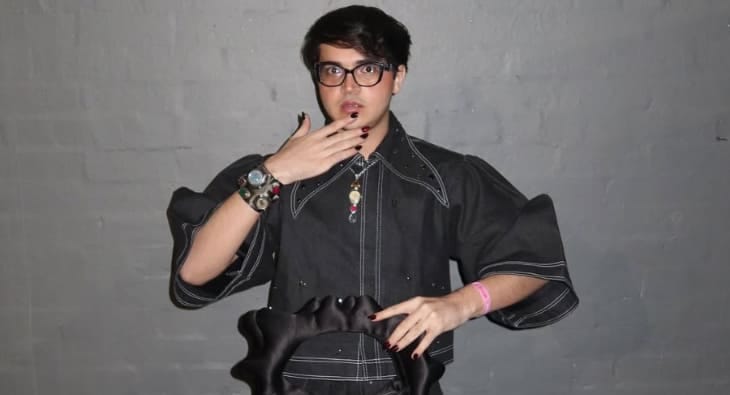

At just 21, Sufi Motiwala emerged as one of the most talked-about names in the influencer space. Known for his witty, fashion-led reels that regularly crossed half a million views, Motiwala partnered with marquee brands such as Vaseline, Samsung, and Myntra. With an engagement rate of 7.5%—almost double the industry average—he built a loyal following of young, urban Indians, 84% of whom were women aged between 18 and 24.
Behind Motiwala’s high engagement lay a clear strategy: keep branded content secondary to organic storytelling. “If we had two or three branded videos, I could assure you there were at least 10 to 15 non-branded ones going up,” he said. “Once you were on my Instagram, you were going to scroll—so after a few nice jokes, you could see an ad. I deserved that much.”
He described his page as “one big video,” where fashion humour, everyday relatability, and topical references ensured audiences remained invested even when a campaign was inserted. “Of course we were giving them fatigue with the amount of content going up, but because it was interesting, topical content, the brand deals found their sweet spot in between,” he added.
Read On: 67% Indians trust influencer recommendations over traditional ads: Kantar
Collaboration vs Control: Red Flags in Brand Deals
Motiwala made it clear that the term “collaboration” was often misinterpreted in the industry. “I wasn’t going to say something that ChatGPT had written for me because I literally built a career out of saying things that came out of my brain in my way,” he said. “Collaboration meant two parties coming together to create something, but it often ended up being a power dynamic struggle.”
When asked about red flags in brand deals, he explained, “If you gave me a ready-made script that didn’t even sound like me, just a bunch of buzzwords, then I wasn’t going to say it. Content still needed to pique my interest—it had to make me giggle or at least make me curious.”
Choosing the Right Brands
Motiwala insisted that his collaborations were guided by both usage and aesthetics. “I got excited when it was a brand I typically used,” he said. “That month, we promoted Novology’s acne corrector, which I had actually been using, or Sprite, which I regularly consumed.”
View this post on Instagram
Beyond usage, alignment with his creator persona was crucial. “Because I was a fashion creator, I didn’t feel comfortable giving advice on finance or endorsing a banking scheme. I didn’t want to sit and say something I didn’t know about and go to jail!” he joked.
Read On: Relatability is the bridge: Vishnu Kaushal on tailoring personas to fit brand campaigns
He added, “We focused on having fun and working with brands that were open to collaboration and didn’t send us a script to read. Many brands still did that, which was just stupid.” While branded reels sometimes saw 20–25% fewer comments than his organic skits, he noted, “It depended on the matter of content. Just because you had a million followers didn’t mean every post was going to be a hit. The algorithm only pushed content that was actually good and interesting. If a campaign was exciting, like Vaseline or Myntra’s trend report, it performed. If it was just a plain placement, the results reflected that.”
View this post on Instagram
Trust, Taste, and Over-Consumption
Despite Kantar reports showing that 67% of consumers trust influencers more than celebrities, Motiwala stayed cautious. “I didn’t know if people trusted me. They’d never told me. In fact, I felt like people shouldn’t trust anybody blindly. Anything you consumed or applied should be your own decision. Just because you saw it on the internet didn’t mean you needed to buy it. That’s how over-consumption happens, and that’s not good for the world,” he said.
He added that he had never bought anything simply because someone endorsed it online. “One of my values was that you should find your own taste. Have a personal taste in fashion, in beauty, in everything.”
Stepping Into Long-Form Storytelling
The creator also stepped into long-form storytelling with Amazon Prime Video’s Partner, where he acted alongside Tamannaah Bhatia. While the show revolved around brand-building, Motiwala’s own takeaway was refreshingly blunt. “I knew that I would never be able to be a brand owner,” he admitted. “I just didn’t think I possessed the qualities to multi-manage logistics, money, and aesthetics. I would love to just hold the product and tell you, buy this.”
View this post on Instagram
Read On: Brands now realise our connection with audiences is better than celebrities: Dolly Singh
Hunger or Fame: How to Start a Content Journey
Motiwala believed aspiring creators should start with clarity of intent rather than a hunger for fame. “The first question I always asked them was—do you feel interested in making content, or do you just want to be famous? Because if you only wanted fame, then content creation was not for you,” he said. “This was a cycle—you had to reinvent yourself, tweak, and adapt as social media changed. Right then, it was about aesthetics, random viral looks, or something unexpected from Twitter. If you didn’t know who you wanted to be in this industry, going viral had no meaning.”
For him, fame was always a by-product. “You either needed to be interested in the money side, the creative side, or the packaging side of content. You couldn’t just say you wanted fame.” His dream partnerships included Schiaparelli, which he called his ultimate brand collaboration, and Wisdom Kaye as the global creator he most wanted to work with.
Working with Farah Khan and Myntra
One of his highlights was working with Farah Khan on Myntra’s "Jashn-e-Iftar", a festive campaign for the Iftar season. The collaboration not only allowed him to explore a different creative side. “I didn’t know there was a mujra artist hidden inside me until Farah Khan and Myntra brought it out,” he laughed.
“It was a fun experience, and as a Muslim, my first Eid campaign meant a lot to me. Recently, I was lucky to share screen space with legendary people, and there were more advertisements coming up that were really funny.”
Read On: From trends to trust: Why authenticity is shaping the future of India’s creator economy
Navigating Social Drama
On tackling negativity and scrutiny, Motiwala maintained an unfiltered approach. “There was actually no strategy. I used my Instagram as if I still had 700 followers—I liked what I wanted, I commented on what I wanted. If someone said something in public, I responded in public. At the end of the day, I just needed to go to bed at peace that I cleared my side of the story. I didn’t care about Reddit, I didn’t read most of my comments—everything I did was for me, everyone else was just a viewer.”
He admitted that the first thing he did in the morning was check WhatsApp. Between organic and branded content, he preferred organic. “Right then, I was done with content; I wanted to take a break and re-inspire myself.” His sources of inspiration included reading, music, and travel. On awkward brand pitches, he laughed, “I never said yes to a pitch that I didn’t find cool.”
For Motiwala, every piece of content added to a larger narrative. “I felt like everything we did was part of a storybook that kept growing. My values were simple: fashion was fun, fashion was for everybody. And yes—I wanted to go to the Met Gala.”
He shared his Met Gala wishlist with a laugh: “I’d love if Moschino, Schiaparelli, or Robert Wun designed my look. Miss Chloé [Chloé Zhao], please invite me.”
Read more news about Influence Zone, Marketing, PR and Corporate Communication, Internet Advertising, People Movement
For more updates, be socially connected with us onInstagram, LinkedIn, Twitter, Facebook, YouTube & Google News
