Supriya Sule reintroduces ‘Right to Disconnect’ bill, stirring debate on after-hours work
The bill aims to protect employees from work-related calls, emails, and messages after office hours
.png) by
by
Published: Dec 8, 2025 6:47 PM | 4 min read
 Follow Us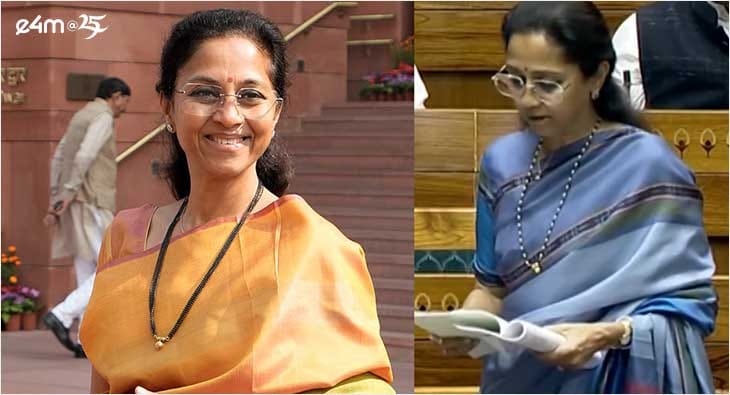

NCP MP Supriya Sule has revived a crucial debate in Parliament by reintroducing the Right to Disconnect Bill, a legislative proposal aimed at shielding employees from after-hours work pressure fuelled by round-the-clock digital communication.
The bill comes at a time when hybrid work, global time-zone demands and constant connectivity have blurred boundaries between professional and personal life for millions of Indian workers. Framed as a response to the escalating “always available” expectation in India’s digital work environment, the bill seeks to protect employees from work-related calls, emails and messages once their official duties for the day are over.
View this post on Instagram
What the Bill Proposes
At its core, the bill grants employees the legal right to ignore work-related calls, emails and messages after office hours, without fear of retaliation or negative performance consequences. This includes communication from superiors, colleagues or clients.
The draft outlines that:
- Employees should not be penalised, formally or informally, for choosing not to engage in work beyond designated hours.
- Organisations may be required to define clear policies that distinguish “work time” from “non-work time” for all categories of employees.
- Contract, outsourced and temporary workers would also fall under its protection, acknowledging that after-hours pressure is not limited to full-time staff.
- An Employees’ Welfare Authority is proposed to address grievances, ensure compliance, and hold employers accountable for violations.
Sule argues that the bill is not anti-industry but pro-wellbeing, designed to address rising burnout and chronic stress caused by India’s increasingly “always-on” work culture.
Why the Bill Matters Now
India’s workforce, especially in IT, services, finance, consulting, digital media and start-ups, has long grappled with unwritten norms of late-night availability. Pings during dinner, weekend work chats and urgent messages past midnight have become normalized, often spilling into personal routines and eroding mental health. Sule noted that the inability to disconnect “affects mental health, work satisfaction, and family life”, emphasizing that clear boundaries are essential for long-term productivity.
Private Member’s Bill, Public Debate
While private members’ bills have historically low chances of becoming law, Sule’s proposal has succeeded in sparking a wider conversation around work culture reform. HR leaders, employee unions and corporate professionals have increasingly acknowledged that burnout and digital fatigue are becoming structural issues rather than individual complaints.
What Are People Saying
“A much-needed conversation in today’s always-connected work culture. Clear boundaries don’t reduce productivity, they enable better focus, healthier minds, and stronger outcomes. Curious to see how organizations evolve if this becomes law,” a user noted.
I commend Hon'ble @supriya_sule for introducing the Right to Disconnect Bill, 2025 in the Lok Sabha. In an age of constant digital overload, this Bill recognises a basic need: allowing workers the time to rest and recover. A healthier workforce is a more productive workforce, and… pic.twitter.com/gMDgxv3135
— Fauzia Khan (@DrFauziaKhanNCP) December 7, 2025
'Right to Disconnect' Bill Introduced: A Game-Changer for Employees
— Meet Soni (@FinTalkByMeet) December 6, 2025
Last night you probably checked your phone and boom a work message popped up at 9 PM.
And you just sat there thinking… “Why am I doing office stuff when my brain checked out at 6?”
Good news though. The Right… pic.twitter.com/iR6Mz6xc69
I truly appreciate @supriya_sule ji for introducing the Right To Disconnect Bill 2025. A much-needed step towards better work-life balance in India. ?✨#RightToDisconnect pic.twitter.com/j4pqpD8Kch
— Shivam Goad (@Goadshivam1) December 8, 2025
The bill’s reintroduction is also seen as a push to nudge employers towards formal, codified communication norms, replacing the vague expectations that currently dominate many workplaces.
A Cultural Reset
Even as legislative prospects remain uncertain, the conversation around the bill has prompted many organisations to reassess their internal practices. The push to disconnect is increasingly being viewed not as a restriction but as a marker of a healthy, sustainable work ecosystem.
If the bill gains traction, it could become one of the most significant workplace reforms of the digital era, one that recognises that rest is not a luxury, but a prerequisite for meaningful productivity.
Read more news about Industry Briefing, Internet Advertising, Marketing, PR & Corporate Communication, Television Media
For more updates, be socially connected with us onInstagram, LinkedIn, Twitter, Facebook YouTube & Google News