‘Successful brands are using insights, automation, storytelling to connect with customers’
Kautilya Pandey, Senior Vice President & Head of Growth & Marketing at Shiprocket, shares how technology, premium delivery, and global ambitions are reshaping the e-commerce landscape
 by
by
Published: Sep 23, 2025 4:19 PM | 6 min read
 Follow Us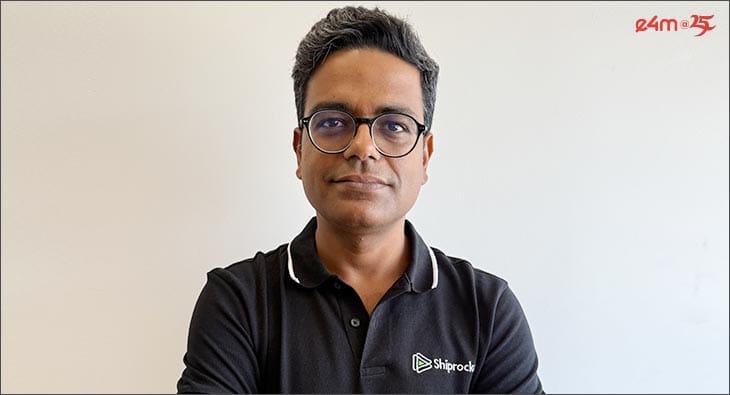

Rapid technological adoption, rising customer expectations, and the expanding aspirations of direct-to-consumer (D2C) firms are all influencing the Indian e-commerce industry. Shiprocket is a platform that lies at the nexus of marketing, data intelligence, and logistics. It has gradually transformed from a logistics facilitator to a full-stack commerce infrastructure partner.
In a conversation with Kautilya Pandey, Senior Vice President & Head of Growth & Marketing at Shiprocket, several themes emerge that highlight how Indian companies are reimagining growth. Pandey's viewpoint demonstrates the changes characterizing contemporary business, from lowering return rates and enabling AI-driven personalization to creating first-rate delivery experiences and considering international expansion.
AI as the Invisible Growth Enabler
E-commerce operations now heavily rely on artificial intelligence, but Pandey emphasizes that the technology's true potential is not only in efficiency but also in enhancing the bond between the business and its customers. AI is used by Shiprocket in several stages of their product stack, he said.
Courier allocation, delivery exception management, and multi-courier pricing models form the operational backbone. Yet, AI’s role goes deeper with tools like Sense, an issue-resolution engine, and checkout optimisation that reduces cart abandonment. These interventions transform what could be friction points into moments of reassurance and trust, he said
Additionally, the company, Pandey shared, developed Shunya.ai, a platform that provides enhanced personalization to commerce-first brands. It aims to assist companies in reflecting the diversity of Indian consumers through contextual product recommendations, regionalized information, and predictive delivery preferences.
“Our AI-first approach ensures that every layer of the Shiprocket stack, from cart to doorstep, is intelligent, intuitive, and built for the future of commerce,” Pandey notes. According to him, this multifaceted application of AI enables D2C companies to turn routine business dealings into chances for retention and loyalty, which is a long-term differentiator in a crowded market.
Tackling the Persistent Challenge of Returns
For Indian D2C brands, Return-to-Origin (RTO) remains a structural challenge, eroding margins and creating customer dissatisfaction. Pandey points to a data-first approach that blends marketing and logistics intelligence to mitigate the issue.
Shiprocket uses real-time risk assessment models to identify orders that may be prone to returns, such as those with invalid addresses or frequent returners. Intelligent address validation and AI-led interventions then allow brands to course-correct before the order is processed.
When deliveries fail, automated IVR calls in regional languages allow customers to reschedule, update details, or cancel, thus salvaging intent. At the same time, the newly introduced RevProtect solution offers revenue assurance by covering part of the losses from shipping delays or RTO orders.
“Reducing returns isn’t just a profitability concern,” Pandey explains. “It’s about ensuring that the customer experience remains consistent and reliable, even when things don’t go as planned.”
Shiprocket seeks to increase conversion quality and make sure every transaction has a better probability of being completed by coordinating marketing signals with operational operations.
Premium Delivery as a Brand Narrative
Shipping and delivery, once considered backend hygiene, are increasingly becoming part of brand storytelling. Consumers now expect not just speed but also reliability and premium experiences, particularly in categories like jewellery, luxury goods, or medical equipment.
This change is highlighted by Shiprocket's partnership with CriticaLog. By implementing improved SLAs, temperature-controlled logistics, and chain-of-custody tracking, the business is putting itself in a position to handle delicate and valuable deliveries.
For Pandey, this is as much about brand positioning as it is about infrastructure. “Premium delivery experiences sharpen our identity as a precision-focused commerce infrastructure player,” he says. “It allows us to cater to businesses that demand both scale and sophistication.”
By extending its trust equity into premium categories, Shiprocket is catering to a more affluent, quality-conscious segment of sellers and buyers. It signals the company’s intent to enable brands to grow not just fast, but also premium.
Taking Indian Brands Global
Another emerging priority for Indian D2C players is cross-border commerce. With more homegrown brands aspiring to global recognition, the logistics backbone becomes critical.
Shiprocket has established export hubs near Delhi Airport, designed to manage customs, packaging, and returns for Indian sellers. The model simplifies the complexities of international trade, giving smaller businesses a plug-and-play route to global markets.
The rollout of Delivered Duty Paid (DDP) services for the US and Canada, along with the HSN Vision tool for duty and tax calculations, reflects a broader strategy: to reduce compliance risks and enable smoother cross-border experiences.
“Helping brands in Bharat get discovered locally and scale globally is central to our mission,” Pandey says. “Our role is to make that journey seamless by taking the friction out of logistics and compliance.”
The Shifting Marketing Playbook
On the marketing front, Indian MSMEs and D2C brands are moving away from broad, top-of-the-funnel approaches to sharper, ROI-driven strategies. According to Pandey, the new playbook is rooted in full-funnel commerce marketing, where discovery, conversion, and retention are seamlessly connected.
WhatsApp commerce, regional storytelling, creator-led campaigns, and influencer collaborations are gaining traction, especially in Tier 2 and Tier 3 markets. Shiprocket’s Ads stack complements this trend by offering campaign audits and AI-led creative generation, reducing turnaround times and helping brands scale experimentation.
The focus is also shifting from heavy dependence on marketplaces to stronger D2C websites and lifecycle marketing strategies. This diversification reflects a growing maturity in how MSMEs view customer lifetime value (LTV).
“The most successful brands aren’t just spending more; they’re spending smarter,” Pandey observes. “They are leveraging insights, automation, and storytelling to build deeper connections with their customers.”
A Market in Transition
The festive season will test the resilience and agility of Indian D2C brands, with heightened consumer demand and operational complexities. Pandey notes that Shiprocket is enabling sellers with customised tools and data-driven insights to gear up for peak season readiness.
More broadly, the evolution of India’s e-commerce ecosystem is underscored by rising consumer expectations, technology-led differentiation, and global aspirations. Shiprocket, through its blend of AI, marketing intelligence, and logistics innovation, seeks to position itself as a partner in this journey.
While challenges like returns and cross-border complexities remain, the broader trajectory is one of greater sophistication and sharper focus on brand-consumer trust. In this context, Pandey’s insights reflect not just Shiprocket’s strategy but also the wider shifts shaping India’s D2C landscape today.
Read more news about Industry Briefing, Internet Advertising, Marketing, PR & Corporate Communication, Television Media
For more updates, be socially connected with us onInstagram, LinkedIn, Twitter, Facebook YouTube & Google News