Why does Google want beauty influencers? To soft sell its 'vibe'
“A Day at Google" reels have been going viral where influencers are helping big tech companies sell its lifestyle and version of success
 by
by
Published: May 8, 2025 9:18 AM | 5 min read
 Follow Us

“What I ate in Google office cafeteria… today” That’s one of the reel hooks taking over Instagram. Influencers are strolling through Google offices, showing off their days lounging in massage chairs, sipping coffee in the cafeteria, hitting the gym, or simply catching a nap in the famed nap pods. But this isn’t a company tour or a hiring announcement. It's content meticulously crafted to blur the lines between aspiration and accessibility—making it seem like anyone could be part of this elite workspace (MNCs), and their job involves, well, doing almost nothing, according to the experts.
In April alone, 119 influencers posted a total of 166 pieces of content showcasing the Google office experience, racking up a total of 893K engagements.
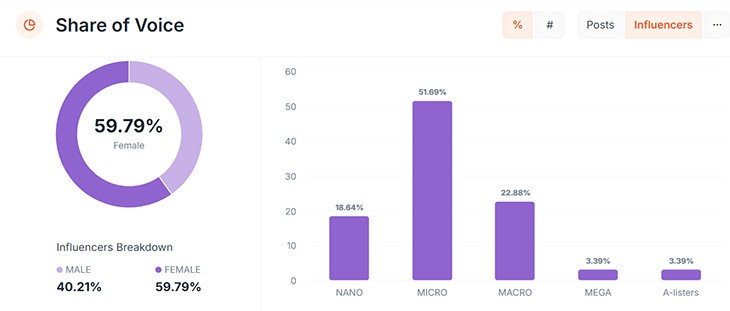
As per the Qoruz insights, more than half of these influencers were micro-influencers, with followings ranging from 10K to 100K. Most of them were women, primarily based in Delhi, Mumbai, Bengaluru, Gurgaon, Hyderabad, and Surat. Some even made reels on how others can experience the same Google office visit.
But what had experts doing a double take?
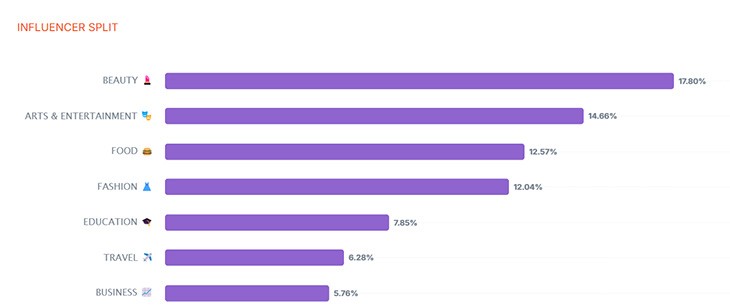
Most of these influencers aren’t even tech creators. Around 18% of these posts came from beauty influencers, followed by arts and entertainment, food, fashion, and education.
And this isn't a mistake. By showcasing influencers who don’t fit the mold of traditional tech professionals, Google is trying to break down the idea that its jobs or office spaces are reserved only for engineers and coders. The influencers, in turn, are selling a lifestyle—a version of success that's more about environment than skill, experts pointed out.
Sanmesh Sapkal, Director - Key Accounts at TheSmallBigIdea (TSBI) said, "Brands are realising it's not enough to market solely to their core audience. While focused content can serve the primary base, its impact eventually plateaus. To truly grow their share of voice, they need to engage with adjacent or 'surrogate' audiences—those who may not be immediate consumers but hold potential value.”
He gave examples of Zomato and Swiggy. “If they limited content to food-related updates, their reach would be far more restricted. Instead, they tap into broader cultural conversations, memes, trending topics, and lifestyle content, making their presence felt everywhere. And yet, they cleverly bring it back to food. It’s a smart, layered strategy.”
View this post on Instagram
Selling leisure as aspiration
The format is consistent: a day-in-the-life vlog inside Google. Lakshman Goswani, with 1 million followers on Instagram and 9.7 million on YouTube, created a reel in a regional language during his visit to Google’s Bengaluru office. His content hit 1 million views and 74,600 engagements.
View this post on Instagram
Ankita Lahoty, a software engineer with just 5,000 followers, posted a reel titled “A Day at Google.” It went viral, racking up 3.3 million views and over 167,000 engagements.
Another creator made two videos in Google’s cafeteria, each crossing 2.5 million views and 52,800 engagements.
View this post on Instagram
Krisneil Peres, Co-Founder of Fame Keeda, saw this trend as a deliberate shift from product-driven content to perception-driven communication. “They’re clearly trying to reach audiences beyond the tech circle,” Peres said. “A reel from a beauty creator inside Google’s workspace says more than a product demo ever could.”
Krisneil added that the content isn’t about explaining what Google does; it's about where Google fits into people’s lives. “They’re shaping how the brand is perceived in culture. And that’s how people start to actually use the tech—not because it’s explained to them, but because they see it fitting into lives that look a little more like theirs.”
It’s not just Google
This marketing model is spreading. Clothing brand Savana recently invited influencers like Rida Tharana to visit its factory, meet workers, and film the process of packaging deliveries. While the product remains central, the influencer-led storytelling humanises the infrastructure behind it.
View this post on Instagram
Similarly, YouTubers Ganeshprasad S. and Sharan Hegde—who have 4.4 million and 3.45 million followers, respectively—were invited as guest lecturers at IIM-B to speak on building a sustainable business and motivating 100 women entrepreneurs. Influencers like Ankur Warikoo, Tanmay Bhat, and Sarthak Ahuja have also served as guest mentors at Masters’ Union, a leading business school from Gurgaon.
This trend isn't confined to India. Globally, Harvard University recently invited James Stephen, also known as Mr. Beast, to discuss branding, social media strategy, and creating engaging content. Similarly, Tetr College of Business, a global institution for entrepreneurship, invited Nuseir Yassin (a.k.a. Nas Daily) to teach students.
“We’re not just bringing in influencers for popularity's sake,” said Tarun Gangwar, COO of Tetr College of Business. “The primary goal is to bridge the gap between traditional education and the rapidly evolving creator and digital economy.”
According to Gangwar, many influencers today wear multiple hats—as entrepreneurs, marketers, and community builders. Their lived experiences help students understand unconventional career paths, emerging sectors like D2C and personal branding, and practical skills that textbooks often miss.
Read more news about Digital Media, Internet Advertising, Marketing News, Television Media, Radio Media
For more updates, be socially connected with us onInstagram, LinkedIn, Twitter, Facebook, YouTube & Google News