Brands pivot ad budgets to gaming, AVGC-XR as India’s creative economy surges
Automotive, financial services, consumer tech and lifestyle brands take the lead in creator collabs and partnerships with gaming cos
 by
by
Published: Feb 19, 2026 9:22 AM | 8 min read
 Follow Us

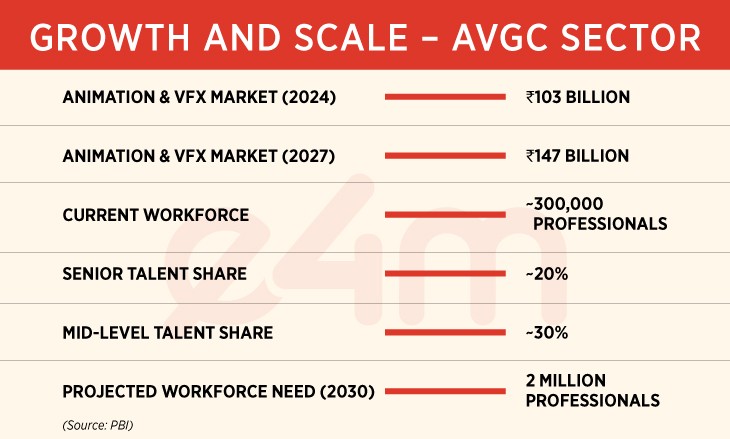
51 dedicated stalls, AI-powered tools, immersive media tech - the WAVES Creators’ Corner at the India AI Impact Summit 2026 presented a sweeping view of AVGC-XR innovation.
It demonstrated how animation, VFX, gaming, comics and extended reality are rapidly integrating applied artificial intelligence into production, distribution and audience engagement frameworks. Union Minister for Information and Broadcasting Ashwini Vaishnaw positioned the pavilion as a strategic extension of the ministry’s flagship initiatives - WaveX, Waves Bazaar and the Create in India Challenges.
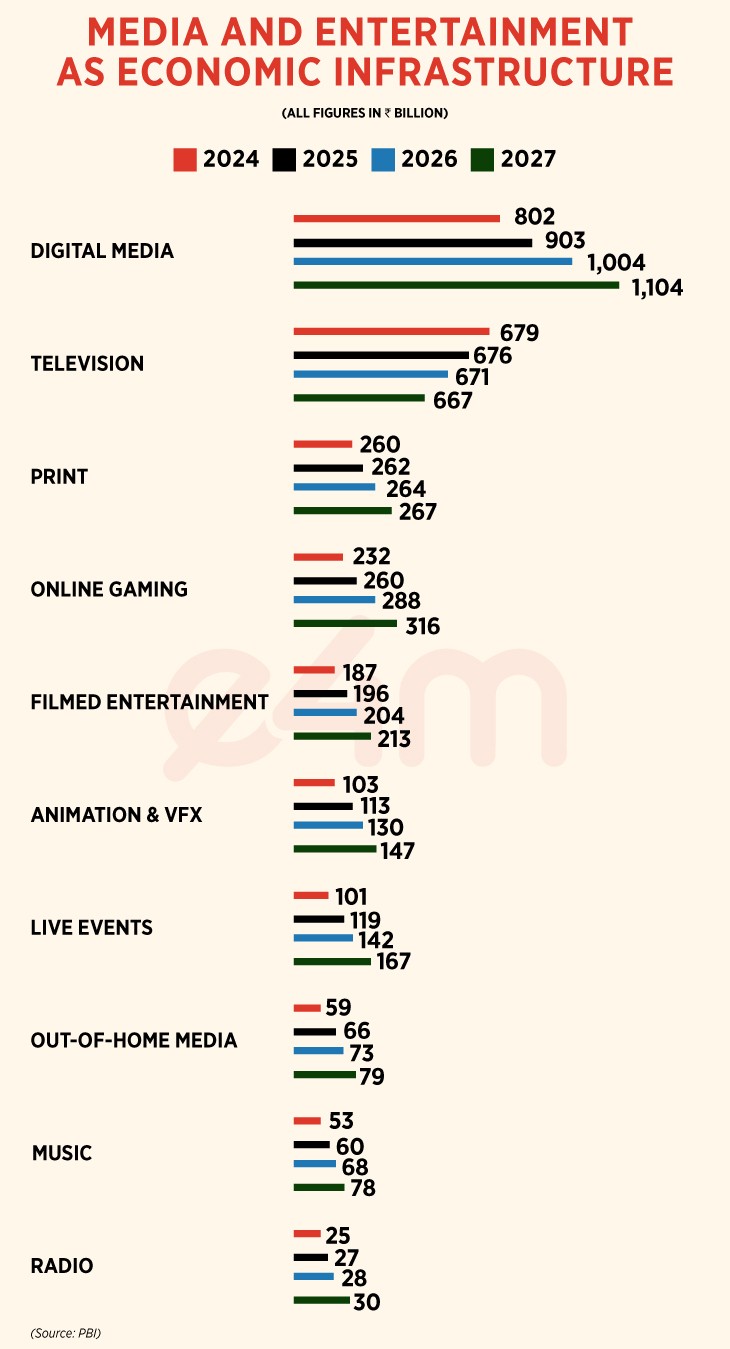
India’s gaming and AVGC-XR sector has emerged as one of the powerful growth engines within the country’s expanding creative economy/orange economy. As per Economic Survey 2025-26, the media and entertainment sector was valued at ₹2.5 trillion in 2024, and is projected to cross ₹3 trillion by 2027, with advertisers, global brands and institutional bodies accelerating investments into esports, livestreaming and high-performance gaming ecosystems in response to measurable audience attention and sustained engagement metrics.
Advertising drivers
Industry executives said the most visible shift had taken place in advertising and marketing budgets, where gaming and esports are no longer being treated as experimental innovation spends but have been integrated into structured annual planning cycles for brands targeting Gen Z and digitally fluent young consumers.
Nimish Raut, Global Head of Esports Partnerships and Special Projects at NODWIN Gaming, says the last two to three years have marked a decisive transition from curiosity-driven allocations to performance-scrutinised investments that compete directly with mainstream advertising channels.
“Earlier, gaming and esports were treated as test budgets under digital, almost as a line item for experimentation, but today they were increasingly embedded in annual marketing plans, particularly for brands that were serious about youth penetration and long-term cultural relevance,” Raut said.
He also shared that advertiser categories had expanded beyond endemic technology brands into automotive, FMCG, fintech, telecom, education and BFSI, with collaborations such as Tesla’s association with BGMS in 2025 reflecting broader comfort among global brands in aligning with competitive gaming properties that delivered consistent reach and community engagement.
“What changed was not just the presence of brands but the depth of their involvement, because instead of static logo placements we saw co-owned tournament intellectual properties, campus circuits, creator-backed challenges and integrated storytelling running across digital broadcasts and on-ground experiences,” he said.
Rohit Agarwal, Founder and Director of Alpha Zegus, said brands are increasingly designing campaigns around interactivity and episodic storytelling rather than one-off polished uploads that disappeared within crowded feeds.
“Brands are using gaming creators less like billboards and more like hosts, because the integration is live, interactive and community-led, and instead of a single post we are seeing watch-alongs, challenge formats, creator-led tournaments and co-streams creating repeat exposure within an engaged ecosystem,” Agarwal said.
Raut also pointed out that every sponsorship rupee flowing into esports competed with Meta performance campaigns, Google advertising, cricket sponsorships, OTT integrations and music festivals, which meant gaming properties were evaluated on measurable return rather than novelty value.
He said the strongest performance came from tournament IP partnerships and creator-led livestream integrations that combined awareness, recall and consideration within a participatory environment where audiences spent extended time invested in match outcomes rather than passively scrolling through short-form feeds.
Bigger role for gaming creators
For creator marketing agencies, the transformation was equally visible in how brands redefined the role of gaming influencers within campaigns, shifting from transactional endorsement posts to deeper integrations that positioned creators as cultural hosts guiding community conversations.
Referring to YouTube data on more than 30 per cent of daily logged-in users watching live content in Q2 2025, Agarwal said: “In practical terms, we were already seeing between 5 and 15 per cent of creator marketing budgets moving toward gaming and livestream surfaces for mainstream brands, and in youth-focused categories that allocation could climb to 15 to 25 percent when the objective was high-attention reach and cultural relevance rather than just impressions.”
He also mentioned that YouTube data shows gaming accounted for approximately 10.6 per cent of the platform’s most-viewed new content during the year, underlining the scale at which live engagement had entered mainstream consumption.
He added that the emphasis was no longer on vanity metrics but on attention density, measured through watch time, concurrent viewers, chat velocity and repeat engagement, along with downstream performance indicators such as click-through rates, app installs and measurable conversion lift.
Agarwal cited global benchmarks such as The Game Awards 2025, which reported 171 million global livestreams and 4.4 million peak concurrent viewers, as evidence that live gaming broadcasts operated at scales advertisers traditionally associated with television.
In terms of benchmarks, gaming creators tend to outperform other categories on time spent and depth of engagement because audiences don’t just scroll past. They stay, chat, react, and return. In India, YouTube has publicly positioned itself as ‘new TV’, with Indian adults spending 72+ minutes a day on the platform overall. When you layer live gaming on top of that behaviour, the advantage is not just reach. It’s sustained attention and community interaction, which is why more brands are treating gaming creators as an always-on media channel, not a one-off influencer line item.
Trust, Time And Transaction
Animesh Agarwal, aka 8Bit Thug, and Co-Founder of S8UL and 8Bit Creatives, said the power of gaming creators lay not merely in scale but in the depth of trust built through extended interaction, which reshaped how purchase decisions were influenced within digital communities.
“Gaming creators played a meaningful role in shaping decisions because their communities spent hours with them, listening to their perspectives on games, technology and everyday products, and that time investment built a level of trust that naturally influenced purchase behaviour,” he said.
He said brands involved creators earlier in the campaign development process, allowing them to shape formats and storytelling in ways that felt authentic to their audience rather than retrofitted after media plans were finalised.
“This led to integrations that felt familiar, drove stronger recall and sparked genuine interest, especially when livestream formats allowed creators to demonstrate products in real time, answer questions instantly and address consumer doubts within a trusted environment,” Agarwal said.
He added that in gaming livestreams it was common to see viewers remain engaged for 45 to 90 minutes, a duration rarely observed in other content formats, which gave brands an opportunity to move beyond awareness into persuasion and consideration within a single session.
Premium Ecosystems And High-Intent Consumers
The expansion of PC gaming has also drawn premium advertisers seeking high-intent consumers who were already investing in performance-driven technology ecosystems, according to Vishal Parekh, Chief Operating Officer at CyberPowerPC India.
“Gaming gave brands something increasingly rare, which was focused and voluntary attention within an audience that was digitally fluent, informed and influential in technology decisions within their peer groups,” Parekh said.
He observed that categories such as automotive, financial services, consumer tech and lifestyle showed growing interest in PC gaming communities, recognising that users who invested in high-performance systems often valued reliability, innovation and long-term capability, attributes aligned with premium brand positioning.
“Ad spending gradually moved toward these intent-rich spaces, where integrations felt credible because the product was seen performing under real-time pressure during competitive play or seamless streaming sessions,” he said.
Innovation At The Startup Level
At the early-stage end of the ecosystem, gaming startups experimented with hybrid monetisation models that combined in-app revenue with brand collaborations embedded directly into gameplay mechanics rather than inserted as interruptive banners.
As for Sagar Nair, Head of Incubation at LVL Zero Incubator, a company backing gaming entrepreneurs, in-app monetisation remained the core revenue foundation for founders seeking product-market fit, but brand partnerships became increasingly strategic as engagement deepened across casual and mid-core segments.
“We saw advertising evolve into part of the engagement architecture, including co-created content drops, branded experiential events within games and narrative integrations that felt native to players, which allowed startups to diversify revenue while maintaining immersion,” Nair said.
He added that global brands recognised India as a dynamic gaming marketing market not only because of scale but because gamers formed social clusters, participated in live events and influenced trends across platforms, making long-term co-creation partnerships more valuable than short-term placements.
Beyond marketing budgets, the broader institutional context reinforced the sector’s strategic significance. The Indian Institute of Creative Technologies was positioned as a national centre of excellence to bridge skilling and industry collaboration in AVGC-XR and gaming, while the World Audio Visual and Entertainment Summit aimed to connect creators, startups, investors and global partners, signalling that the Orange Economy was treated as a serious economic lever rather than a peripheral cultural activity.
Collectively, industry leaders conveyed a consistent message that gaming and AVGC-XR were no longer emerging niches but foundational pillars of India’s digital economy, where culture, commerce and community intersected within measurable, performance-driven frameworks.
As India moved toward a projected ₹3 trillion media and entertainment economy, gaming stood at the centre of that trajectory, not simply as entertainment but as infrastructure for attention, influence and economic growth in a rapidly platform-driven world.
Read more news about Digital Media, Internet Advertising, Marketing News, Television Media, Radio Media
For more updates, be socially connected with us onInstagram, LinkedIn, Twitter, Facebook, YouTube & Google News
