The Director Economy: Ad filmmakers and the signature styles that set them apart
In this week’s Director Economy, these five maestros have carved distinctive visual languages that brands queue up for, turning their production houses into creative powerhouses
 by
by
Published: Sep 20, 2025 10:06 AM | 8 min read
 Follow Us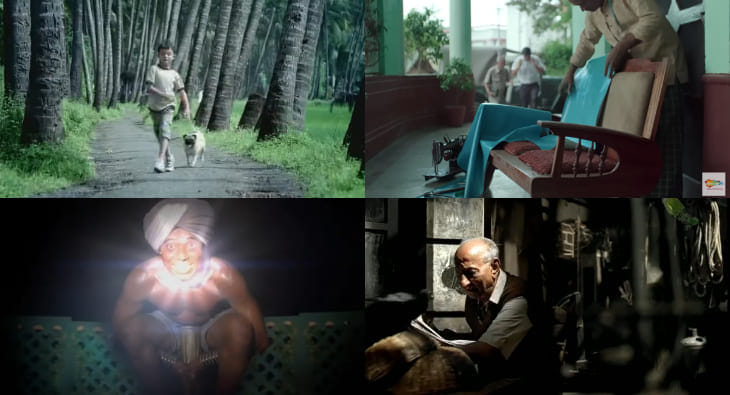

The advertising landscape in India has evolved dramatically over the past two decades, transitioning from formulaic commercial narratives to sophisticated storytelling that rivals feature filmmaking. At the heart of this transformation lies a select group of directors whose unique visual signatures have become synonymous with quality advertising.
The director economy in Indian advertising represents more than just a shift in creative power dynamics. It's fundamentally altered how brands approach storytelling, moving away from generic executions to director-driven narratives that carry distinctive stamps of cinematic excellence.
These filmmakers have actively shaped the creative economy, creating distinct directorial voices that agencies and brands specifically seek out for their campaigns. Each of these five directors has developed such a recognizable style that their involvement in a project immediately elevates brand perception and campaign effectiveness.
Take A Look: Hit Or Miss - The Week In Ads
Prakash Varma, Founder & Director, Nirvana Films
Varma's approach to filmmaking centers on simple, resonant storytelling with an actor-focused directing style that captures performances feeling lived-in and authentic. As the founder of Nirvana Films, Varma has directed commercials for Kit Kat, Bisleri, Netflix, Amazon Prime, iPhone, PhonePe, and UltraTech Cement, along with campaigns for Kerala Tourism and Dubai Tourism featuring Shah Rukh Khan.
What sets Varma apart in the competitive advertising space is his mastery of extracting genuine human emotion from seemingly mundane scenarios. His directorial signature lies in creating intimate moments that feel spontaneous despite being meticulously crafted. Nirvana's early success included the Vodafone Hutch campaign featuring a boy and a pug, which remains one of India's most loved advertisements. This campaign exemplified Varma's ability to create emotional connections without relying on heavy dialogue or dramatic situations.
Varma's cinematic style is characterized by naturalistic performances, subtle visual storytelling, and an emphasis on character development within the constraints of commercial timeframes. His work demonstrates how advertising can transcend its primary function to become genuine entertainment that audiences seek out and share. The ZooZoos campaign for Vodafone further established his reputation for creating memorable characters that could carry entire marketing campaigns across multiple touchpoints.
Prasoon Pandey, Director, Corcoise Films
Pandey has been ranked among the ‘Top 25 Advertising Film Directors in the World’ by the Gunn Report, yet his approach to filmmaking remains refreshingly humble and deeply philosophical. Pandey believes that, as creatives, they really do not create anything, but they put together various things that they have seen in life, and germinate an idea out of them.
His best-known work, Fevicol Sofa, is a classic piece of advertising: a cinematic chronicle of a sofa's journey over 60 years as it's handed down through the generations, evocatively shot in monochrome that becomes gradually infused with colour, serving as clever social commentary. This campaign perfectly encapsulates Pandey's signature style: the ability to weave complex narratives within commercial frameworks while maintaining visual sophistication that elevates brand messaging.
Pandey's directorial approach focuses on concealing craft behind seemingly effortless storytelling. His campaigns often feature multiple timeline narratives, sophisticated color grading, and production design that supports the story rather than overwhelming it. His work demonstrates how advertising can function as social commentary while maintaining commercial effectiveness.
Read On: We Need To Challenge Conventional Rules, Says Prasoon Pandey
Ram Madhvani, Director, Equinox Films
Madhvani takes a 360-degree approach to each brand, seamlessly blending advertising, marketing, and craft, while being acclaimed for his National Award-winning Hindi feature film Neerja and receiving an International Emmy nomination for his thriller series Aarya. As co-founder of Equinox Films, Madhvani represents the modern advertising director who thinks beyond traditional campaign boundaries.
Equinox has a total of six directors, including Nitin Parmar, Deb Medhekar, Sandeep Modi, Priyanka Ghose, Tanvi Gandhi, and Madhvani himself, with three producers and headed by Amita Madhvani as co-partner and producer. This collaborative structure reflects Madhvani's belief in building creative ecosystems rather than relying solely on individual directorial vision.
Madhvani's most celebrated work remains the Happydent Palace commercial from 2006, which exemplifies his signature approach to transforming simple product propositions into cinematic spectacles. The campaign won him a Silver Lion at Cannes Lions International Festival of Creativity in 2007, along with Best Director, Best Film, and Best Production Design at the Asia Pacific Awards. The Gunn Report recognized it in 2015 as one of the 20 best ads of the 21st century based on a global public poll.
The Happydent Palace commercial showcased Madhvani's ability to create watercooler moments that transcend advertising boundaries. Conceptualized by Prasoon Joshi and directed by Madhvani, the campaign demonstrated how grand creative visions could be executed with meticulous attention to craft. The campaign's enduring appeal lies in its perfect marriage of product proposition and creative storytelling, where the brand benefit of teeth whitening was transformed into a palatial fantasy that audiences genuinely enjoyed watching.
Read On: We At Equinox Are Ready, Hungry & Willing To Adapt: Ram Madhvani
Madhvani's signature style involves creating immersive brand experiences that extend beyond conventional advertising formats. His work demonstrates a sophisticated understanding of brand architecture, where each campaign element contributes to larger narrative structures. His approach to commercial filmmaking borrows heavily from feature film sensibilities, incorporating complex character development, nuanced performances, and production values that rival mainstream cinema. His success across multiple formats illustrates how contemporary directors are building multimedia creative empires.
Rajkumar Hirani, Founder & Director, Rajkumar Hirani Films
Hirani is recognized as one of the most successful filmmakers of Indian cinema, with movies that are often lighthearted but revolve around significant societal issues with humour and emotional intelligence, starting his career in ad films after shifting from film editing. While primarily known for blockbuster films like 3 Idiots and PK, Hirani's advertising background significantly influences his feature film approach.
Before becoming one of Indian cinema's most beloved directors, Hirani's advertising journey began after a bad experience in film editing forced him to shift to ad films, where he made several successful ads. His most memorable advertising work remains the iconic Fevicol campaign featuring the 'Zor Laga Ke Haisha' tagline, where multiple men and even an elephant try unsuccessfully to break apart a wooden plank joined by Fevicol. What makes this campaign particularly significant is that Hirani himself appeared in them as well.
The Fevicol campaigns of the 1990s showcased Hirani's early mastery of humor-driven storytelling that never overshadowed the product proposition. These advertisements established his signature approach of using comedy to deliver memorable brand messages, a technique that would later become the cornerstone of films like Munna Bhai M.B.B.S.. Hirani began his career in the advertising industry and got his first break as a film editor in 2000 for Mission Kashmir, but his advertising roots remained evident throughout his feature film career.
His transition from advertising to feature films demonstrates how commercial filmmaking skills translate effectively to mainstream cinema. His work shows how advertising can serve as a training ground for larger storytelling ambitions while maintaining its own artistic merit.
Abhinay Deo, Director, Ramesh Deo Productions
Deo represents a new generation of filmmakers bringing fresh perspectives to advertising. He has worked with leading agencies like J Walter Thompson, Ogilvy & Mather, Lowe, Taproot, and Bartle Bogle Hegarty, servicing major clients including Coca-Cola, Pepsi, Nike, Toyota, Cadbury, and Nestle.
Among his most memorable works, Deo particularly highlights his campaigns for The Times of India, which showcased his ability to handle large-scale brand narratives with emotional depth. His early work included a series of Valentine's Day campaigns for Hallmark while he was at Ogilvy, where he demonstrated his knack for creating romantic narratives within tight budget constraints, a skill that would become characteristic of his resourceful approach to filmmaking. These campaigns established his reputation for delivering high production value regardless of financial limitations.
Deo's work is characterised by a more experimental approach to advertising filmmaking. He's comfortable pushing boundaries in terms of visual style, narrative structure, and production techniques. This makes him particularly sought after by brands targeting younger demographics or those looking to disrupt category conventions. His campaigns often feature bold visual choices, unconventional casting, and narrative techniques borrowed from digital content.
His understanding of multi-platform content creation gives him an edge in today's fragmented media landscape. Deo doesn't just create 30-second commercials; he develops content ecosystems that work across television, digital, and social media platforms. This integrated approach to campaign development has made him valuable to brands looking for 360-degree content solutions.
Deo's aesthetic sensibilities lean toward high contrast visuals, kinetic editing, and contemporary music choices that reflect current cultural trends. He's particularly skilled at creating content that feels native to digital platforms while maintaining broadcast quality and brand messaging clarity. For agencies working with brands that need to speak to millennials and Gen Z audiences, Deo provides the cultural fluency and technical expertise to create authentic connections.
Read more news about Internet Advertising India, Marketing News, PR and Corporate Communication News, Digital Media News, Television Media News
For more updates, be socially connected with us onInstagram, LinkedIn, Twitter, Facebook YouTube & Google News
