From cola wars to code wars
Guest Column: Krishna Prasad, Co-founder and Chief Product Officer at nhance, shares his views on the evolution of Indian broadcast sponsors during the T20 World Cup and more
 by
by
Published: Feb 12, 2026 10:39 AM | 2 min read
 Follow Us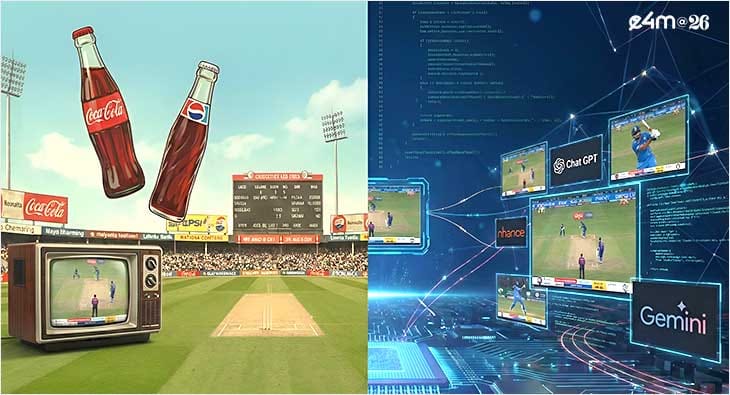

There are many ways to read a country’s evolution. Economists read policy. Investors read markets. Sociologists read migration and demography. But if you really want to understand what India is becoming, watch who advertises during cricket (for this article I have looked at the ICC Men’s T20 World Cup).
Cricket in India has never been just a game. It is ritual, theatre, marketplace, and national pulse rolled into one. When something shows up during a World Cup broadcast as a co-presenting sponsor or associate partner it is not accidental. It means that brand believes India is ready. Ready to consume it, trust it, adopt it, aspire to it.
Over the last two decades, the evolution of Indian broadcast sponsors during the T20 World Cup tells a remarkably coherent story. A story of a country that moved from building infrastructure to consuming lifestyle, from downloading apps to conversing with intelligence.
In 2007, when India lifted the inaugural T20 trophy, the broadcast landscape was dominated by ESPN Star Sports. The sponsors reflected the India of that moment. Nokia was everywhere. Hyundai was visible. Tata Sky rode the wave of DTH adoption. Reliance symbolised telecom ambition. Pepsi still owned youth culture. It was an India discovering connectivity and mobility. The middle class was expanding. Owning a phone was aspirational. Owning a car meant arrival. Installing a satellite dish meant stepping into the modern world. Cricket sponsorship mirrored a country building its pipes, telecom towers rising, distribution networks expanding, roads improving, incomes climbing. Advertising was about ownership. Own this device. Own that car. Own your connection to the world.
By 2012, Hyundai and Nokia still held strong positions, but something subtle had begun to shift. The mobile phone was no longer rare; it was becoming personal. India was transitioning from shared devices to individual devices. Connectivity was spreading beyond metros into smaller towns. The advertising tone changed from utility to aspiration. The narrative was no longer just about access; it was about lifestyle.
Disclaimer: The views expressed here are solely those of the author and do not in any way represent the views of exchange4media.com.
Read more news about Internet Advertising India, Marketing News, PR and Corporate Communication News, Digital Media News, Television Media News
For more updates, be socially connected with us onInstagram, LinkedIn, Twitter, Facebook YouTube & Google News
