Drumming up soft power: Remembering Ustad Zakir Hussain
Krishna Iyer, Director of Marketing, MullenLowe Lintas Group, shares his tribute for the maestro
 by
by
Published: Dec 19, 2024 2:07 PM | 5 min read
 Follow Us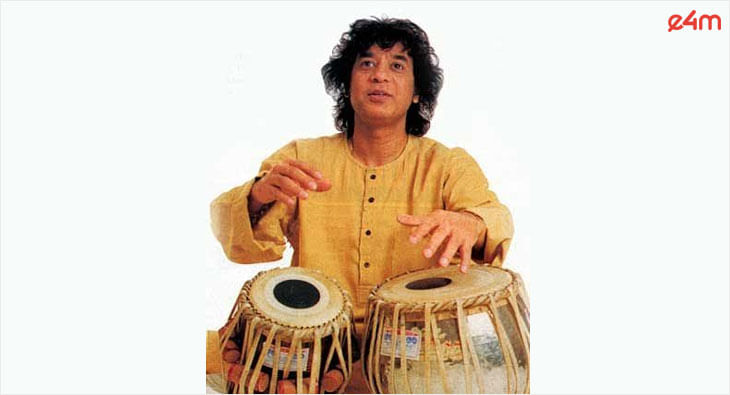

In the symphony of Indian culture, Ustad Zakir Hussain was the tabla’s heartbeat, resonating far beyond mere rhythm. With every deft stroke, he conveyed a language so universal it dissolved boundaries, transcended religion, and erased borders. Zakir Hussain was not just an artist—he was India’s ambassador to the world, showcasing its soft power with wit, humility, and impeccable rhythm. Now, as we mourn his passing, the beats of his tabla echo in our hearts, a poignant reminder of his unparalleled legacy.
If soft power is about influencing through attraction and persuasion, Zakir Hussain embodied it with every ta, dha, dhin, and na. Through music, humor, and cross-cultural collaboration, he achieved what no diplomat ever could: he brought the world together with nothing more than a pair of drums.
Born Into Rhythm
Legend has it that when Zakir was born, the first sounds he heard were not lullabies but tabla syllables. His father, Ustad Allah Rakha, whispered ta, dha, dhin, na into his ears as if initiating him into the sacred rhythm of life. His mother, though initially surprised, later remarked, “It’s as if Zakir was destined to speak the language of the tabla before any other.” And speak it he did—fluently, profoundly, universally.
From those whispered beats, Zakir’s life became a crescendo of rhythm. His tabla was not just an instrument; it was an extension of his soul. Every dha he struck felt ancient yet fresh, timeless yet immediate. It was as if his tabla carried the wisdom of generations, distilled into a symphony of beats.
An Ustad Storyteller with the tabla!
The tabla is a subtle instrument, more inclined to whisper than shout, and Zakir Hussain made it dance talk, and even sing! He once described its repertoire as a language of syllables—ta-ka-dha-ka—that could narrate stories. In his hands, these drums did not just keep time; they spoke, laughed, argued, and loved. Each performance was a conversation: a rapid exchange of rhythm punctuated by moments of thoughtful silence.
One memorable concert saw Zakir breaking down the tabla’s syllables to an audience of curious children. “This is ta,” he began, “it’s the tabla saying hello. Dha? That’s the tabla cracking a joke.” By the end of his playful demonstration, even the youngest listener understood that rhythm was not just sound; it was emotion, storytelling, and connection.
A Universal Rhythm
Zakir’s genius lay in transcending the ‘Indianness’ of his art without ever diluting it. A quintessential anecdote comes from his collaboration with Mickey Hart, drummer of the Grateful Dead. Together, they formed Planet Drum, a Grammy-winning ensemble that united percussion traditions from around the world. Picture a tabla conversing with a djembe and a conga, each drum finding its place in a global symphony. Through such collaborations, Zakir proved that while India had gifted the world yoga and chai, it could also lead a global percussion jam session.
From playing with John McLaughlin in Shakti to collaborating with Yo-Yo Ma, Zakir’s tabla became a passport. “My tabla gets more stamps than I do,” he once quipped. His music, as mobile as a diplomat, resonated across jazz, Western classical, and electronica, making audiences everywhere sway to its rhythm.
Breaking Barriers, Building Bridges
In India, where classical arts often bear the weight of religious identity, Zakir Hussain’s music rose above. Born to a Muslim father, his tabla’s beats found home in Hindu temples, Sufi shrines, and global concert halls alike.
During a U.S. concert, an audience member asked how religion influenced his music. Zakir smiled, leaned into the mic, and said, “My religion is rhythm, and my gods are Ta, Dha, and Na.”
The audience erupted in laughter and applause at his ability to dissolve divisive questions into universal truths. Wah Ustad!
The Ambassador with a Smile
Zakir’s charm was not limited to his music, he was an ustad at humor that made him relatable. At a lecture, he joked, “As a child, I thought teentaal (the 16-beat rhythm cycle) was a family member because my father kept calling for it during practice.” This mix of gravitas and levity made him a rare kind of cultural envoy—one who could share a stage with legends and then share a laugh with the backstage crew.
Wah Taj and Beyond
Who could forget Zakir’s iconic ad for Taj Mahal Tea? With his signature bouncy curls, trademark smile and effortless tabla solo, he made “Wah Taj!” a household phrase. That ad did not just sell tea; it sold India as a brand: timeless, refined, and deeply resonant. His performances at venues like Carnegie Hall and the Royal Albert Hall amplified this image, presenting India not as exotic but as an integral voice in global culture.
The Eternal Beat
Zakir Hussain’s tabla did not just create sound; it wove narratives of shared humanity. Even in his absence, the rhythms he set in motion will continue to inspire. For every aspiring tabla player in Kolkata or every percussion enthusiast in Berlin, Zakir’s legacy beats on.
As we remember him, it feels fitting to end with three words that embodies his spirit: “Om Tat Sat.” The primordial rhythm, eternal and unbroken, much like the maestro himself. With every ta and dha that echoes in practice rooms and concert halls, Ustad Zakir Hussain, and the tabla lives on.
Read more news about Internet Advertising India, Marketing News, PR and Corporate Communication News, Digital Media News, Television Media News
For more updates, be socially connected with us onInstagram, LinkedIn, Twitter, Facebook YouTube & Google News