‘This recognition celebrates every campaign, challenge & story I’ve been a part of’
Jyoti Rai talks about her exciting journey, transformation she has witnessed as a women leader, and what she feels about her win as Communicator of the year
 by
by
Published: Jul 22, 2025 6:57 PM | 8 min read
 Follow Us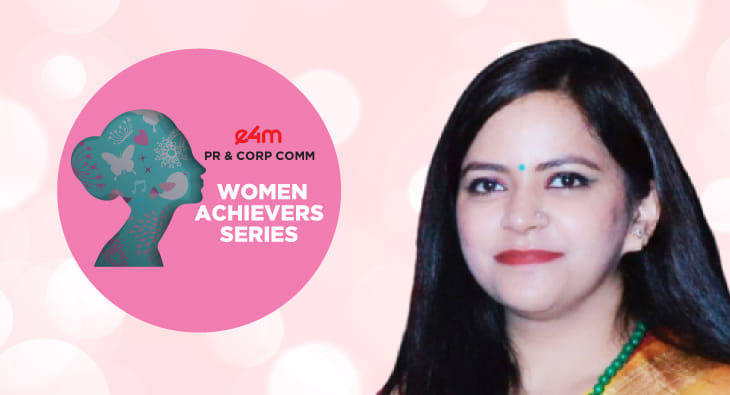

Women have played a huge role in shaping the communications industry, even if their stories haven't always been at front. The industry has several remarkable women whose talent shape our world, often blending empathy with innovation in ways that make communication more real, more inclusive, and more powerful for everyone.
In today's Women Achievers series, we honour and celebrate the achievements and innovation of Jyoti Rai, Senior Communications and Public Relations Strategist - South Asia, Rotary International. She was bestowed with the ‘Communicator of the Year (Mar Comm professional)’ award at the 5th edition of e4m PR & Corp Comm Women Achievers' Awards 2024.
Excerpts:
How has been your journey in the communications industry, share your experiences and challenges as a woman leader?
My journey in communications has been dynamic and fulfilling. Starting in journalism, I learned the power of truth, clarity, and impactful storytelling. Over time, I transitioned into strategic roles across corporate, nonprofit, and global development sectors, deepening my understanding of how communication shapes real-world outcomes.
As a woman leader, I’ve had to assert my voice, build credibility, and challenge stereotypes. I’ve realized that empathy, intuition, and emotional intelligence—often seen as ‘soft skills’—are key strengths for a communicator, especially when leading teams or managing complex relationships.
From my early days as an intern to now leading communications for a global organization across South Asia, I’ve learned to trust my instincts and be discerning about environments that support growth and inclusion. Women must actively seek workplaces where their voices are valued.
I’m passionate about using communications as a tool for social impact. So, I gravitated to spaces where I could that. Building campaigns on public health, education, gender equity, and disaster response, I have seen the power of authentic storytelling. As we move into an era of ESG priorities, I believe women communicators have a vital role in shaping inclusive and equitable dialogue.
For me, communication is not just a job; it’s a responsibility—to reflect truth, drive change, and connect people to possibilities. I hope to continue using communication as a force for progress and impact.
What shifts and transformations have you observed for women in the workplace over the last few decades, and what do you think still needs improvement?
Over the last few decades, the workplace has evolved significantly for women—particularly in terms of visibility, representation, and recognition. We've seen more women rise to leadership roles, more conversations around diversity and inclusion, and a growing acknowledgment of the value women bring—not just as employees, but as strategic thinkers, empathetic leaders, and change-makers.
There’s also been a shift in how women support each other—through mentorship, community building, and shared advocacy. That solidarity has been powerful in challenging traditional structures and creating room for more authentic, inclusive leadership styles.
However, there's still ground to cover. The glass ceiling may have cracks, but it hasn’t shattered. Pay equity, representation at the highest levels, and opportunities for career growth after life events like maternity are still pressing issues. Unconscious bias continues to shape perceptions about women’s capabilities—especially in fields traditionally dominated by men or where assertiveness is misread.
There’s also a need for deeper conversations around intersectionality. Not all women experience the workplace the same way. Factors like caste, class, age, disability, and sexual orientation intersect with gender to create unique challenges. True progress will come when workplace cultures become more flexible, inclusive, and truly equitable—not just on paper but in practice.
What are the most important skills and qualities that women leaders need to succeed in the PR and comms industry?
In the dynamic world of PR and communications, women leaders thrive when they blend strategic thinking with empathy, resilience, and authenticity. One of the most important skills is the ability to listen deeply—not just to clients and audiences, but also to teams, stakeholders, and even to what isn’t being said. Communication isn’t just about messaging; it’s about connection. And that calls for a high degree of emotional intelligence.
Adaptability is another key strength. The media and digital landscape evolve constantly, and those who can anticipate change, think ahead, and pivot quickly are the ones who stay relevant. Equally essential is the ability to craft compelling, purpose-driven narratives—especially in a world where audiences increasingly value transparency, ethics, and impact.
From a leadership standpoint, confidence and the ability to articulate your ideas clearly can be game-changers. Women in our field are often the driving force behind successful campaigns, yet we’ve been conditioned to stay in the background. It’s time to take up space, trust our instincts, and advocate for our perspectives. Even if your idea isn’t perfect, voicing it builds clarity, confidence, and presence—and sometimes the unspoken idea is the one that changes the game.
Being informed and doing the extra legwork also matters. Campaigns that lack authenticity are easy to spot. But when you’ve poured thought and purpose into your work, it not only elevates your output but strengthens your own credibility.
Finally, building strong networks—of mentors, peers, and allies—is invaluable. The PR industry is nuanced and fast-paced, and having people you trust can help you navigate challenges with more ease. At the heart of it all, I believe consistency and integrity are what truly sustain success—and define the kind of leader you become.
What suggestions would you give to companies who want to attract and retain more women in leadership positions?
To attract and retain more women in leadership, companies need to move beyond performative allyship and invest in structural change. This begins with creating an inclusive culture where women feel heard, seen, and empowered—not just at entry level but throughout the leadership pipeline.
Offer flexible work models without penalty, invest in mentorship and sponsorship programs, and ensure that leadership development opportunities are equally accessible to women. Normalize conversations around caregiving, mental health, and work-life integration, because these are often barriers that disproportionately affect women.
Most importantly, companies must track and hold themselves accountable for representation at every level—not just in hiring, but in promotions, pay parity, and decision-making roles. Leadership must model inclusive behavior and be intentional about removing biases from evaluations, feedback, and growth trajectories.
When women see other women thriving and leading authentically, it signals that success doesn’t require assimilation—it allows for ambition, empathy, and individuality to co-exist. That’s when real retention begins.
What advice would you offer to young women who are starting their careers in the communications industry?
Own your voice, stay curious, and never underestimate the power of storytelling. Communications is not just about writing press releases or managing social media—it’s about shaping narratives, building trust, and driving change.
For young women starting out:
- Be open to learning from every corner—journalism, policy, digital, development. Each experience will sharpen your lens and expand your toolkit.
- Ask questions. Speak up. Share your ideas—even if they’re half-baked. You don’t need to be perfect to contribute.
- Find mentors who challenge and champion you—but also learn to self-advocate and build your personal board of advisors.
- Don’t fear the less “glamorous” parts of the job. Some of your strongest skills will be built behind the scenes—drafting, listening, adapting.
- And finally, don’t shrink yourself to fit into a room—reshape the room to fit your voice. This industry needs more communicators who lead with empathy, integrity, and vision—and that’s where you come in.
Lastly, how do you feel as a winner of the 5th edition e4m PR & Corp Comm Women Achievers Awards 2024?
It feels incredibly special to be recognized among such inspiring women leaders. This award is more than just a personal milestone—it’s a reminder of the responsibility we carry as communicators to use our voices with purpose.
This recognition celebrates every campaign, challenge, and impactful story I’ve been a part of. It reaffirms my belief in the power of communications to drive change, not just for brands but for society. I’m particularly pleased that my work on campaigns like polio eradication, as well as other social issues close to my heart, was recognized. This motivates me even more to continue making a meaningful contribution to our industry.
Read more news about PR and Corporate Communication News, Internet Advertising, Marketing News, Digital Media News, People Movement News
For more updates, be socially connected with us onInstagram, LinkedIn, Twitter, Facebook YouTube & Google News