Media Mantra’s Udit Pathak on redefining PR for a global era
In this feature, Udit Pathak, Founder Director of Media Mantra Group, shares his perspectives on PR industry’s biggest shifts, company’s global ambitions, the transformative role of AI, and more
 by
by
Published: Nov 10, 2025 12:40 PM | 6 min read
 Follow Us

In a world where storytelling, strategy, and technology are taking forward the communications industry faster than ever, Udit Pathak, Founder and Director of Media Mantra Group, stands at the intersection of evolution and vision. He has been a steady force behind one of India’s most dynamic independent PR consultancies. As Media Mantra strengthens its international presence, expanding operations in Dubai and eyeing new frontiers in Saudi Arabia, Pathak reflects on the future of communications.
In this conversation, he shares his perspectives on the three biggest shifts redefining PR in 2025 and beyond, the company’s global ambitions, the transformative role of AI in reputation management, the essential skills that will define the next generation of PR leaders, and more.
.jpg)
Excerpts:
You’ve been part of the industry’s transformation from traditional PR to integrated communications. What do you think are the three biggest shifts shaping PR in 2025 and beyond?
You know, when I started my career, PR was all about relationships with journalists, long hours in newsrooms, and print clippings that you’d proudly show clients. It was simpler, slower, and deeply human. Over the years, the world changed, and communication became this beautiful mix of art, data, and technology.
Looking ahead to 2025 and beyond, I see three significant shifts that are reshaping our world. The first is the move from public relations to public relevance. Today, people don’t just want to know what a brand sells; they want to know what it stands for.
The second is the growing role of data in shaping stories. At Media Mantra, we begin every campaign by studying patterns in human behaviour. Numbers don’t replace intuition, but they guide it. And the third is authenticity. In a world flooded with content, being real has become the only lasting strategy. Whether it’s a corporate statement or a social post, people connect with honesty more than perfection.
What’s your vision for Media Mantra’s international footprint over the next five years? What kind of global collaborations or innovations are you most excited to explore?
When we opened our first international office in Dubai, it felt like the beginning of a new chapter, not just an expansion. Dubai is such a fascinating space because it connects the East and the West. It gave us a chance to understand global sensibilities while keeping our Indian storytelling spirit alive.
Over the next five years, I see Media Mantra becoming a truly global communications group with a strong focus on collaboration. We want to partner with like-minded agencies that share our values of bold thinking and credible storytelling.
What excites me most is exploring the intersection of creativity and technology. I’m curious about how cultural insights from India can shape global brand narratives. The idea is to build a network where innovation travels both ways, from India to the world and from the world back to India.
What plans do you have to make Media Mantra a thought leadership brand internationally?
Thought leadership, for me, isn’t about talking the loudest. It’s about speaking when you have something meaningful to say. Over the years, Media Mantra has built a reputation in India for being strategic, sharp, and dependable. The next step is to take that same authenticity global.
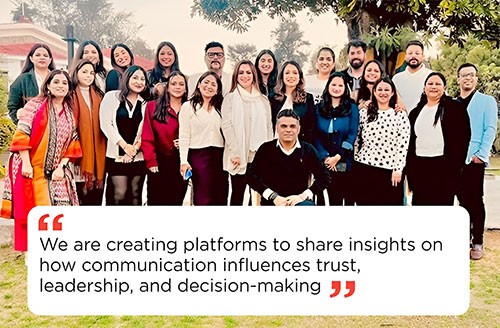
We are creating platforms to share insights on how communication influences trust, leadership, and decision-making. I want Media Mantra to be seen as a voice that simplifies communication for businesses by not just being a service provider but a partner that brings perspective.
We’re also investing heavily in people. Thought leadership begins internally. When our team members start thinking beyond their roles, the brand naturally becomes more credible. The goal is simple — to be respected globally not for our size, but for our substance.
What’s your take on AI-driven reputation management? Do you think technology enhances or dilutes the human essence of communication?
It is one of the key conversions today because it sits right at the heart of modern PR. I often say that technology can process emotions, but it can’t feel them. AI is fantastic when it comes to scanning sentiment, predicting trends, and giving insights in seconds. But the essence of communication still lies in understanding human emotion.
At Media Mantra, we use AI tools to monitor conversations and identify risks early. It helps us act faster. But when it comes to handling a crisis or advising a client, that still needs human judgment. Machines can tell you what’s being said, but they can’t always tell you why it’s being said.
So yes, technology enhances communication, but it cannot replace the heart behind it. The sweet spot is when AI and intuition work together.
How do you see the role of PR evolving in a creator-driven, influencer-first economy?
We’re living in an era where creators and influencers can build more trust than brands themselves. It’s fascinating to watch how individual voices shape collective opinion today.
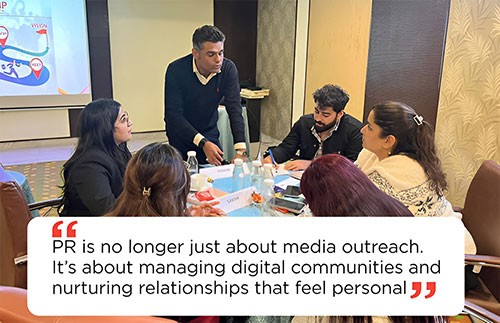
In this environment, PR is no longer just about media outreach. It’s about managing digital communities and nurturing relationships that feel personal. I often tell my team that we’ve moved from earned media to earned attention.
The role of PR professionals now is to help brands work with creators who genuinely align with their story. Influence without authenticity fades quickly. In many ways, PR professionals are now the interpreters between brands and people, ensuring that both speak the same emotional language.
What skills do you believe the next generation of PR professionals must cultivate to stay relevant in this decade?
I’ve always believed that PR is not a profession, it’s a mindset. The younger generation entering this space needs three things above all: curiosity, adaptability, and empathy.
Curiosity, because you can’t communicate what you don’t understand. Adaptability, because the media landscape changes faster than ever. And empathy, because no matter how advanced technology becomes, communication will always be about human connection.
At Media Mantra, we encourage our young professionals to think like owners. We tell them not to wait for permission to innovate. If you can think creatively, analyse smartly, and stay grounded, you’ll always stay relevant.
Read more news about PR and Corporate Communication News, Internet Advertising, Marketing News, Digital Media News, People Movement News
For more updates, be socially connected with us onInstagram, LinkedIn, Twitter, Facebook YouTube & Google News