Boutique, bold, and strategic: Tarunjeet Rattan on the next decade of PR
Tarunjeet Rattan, Managing Partner, Nucleus PR, talks about her journey in the PR industry, the concept and growing role of boutique PR agencies, industry transformations, future plans, and more
 by
by
Published: Oct 17, 2025 5:34 PM | 11 min read
 Follow Us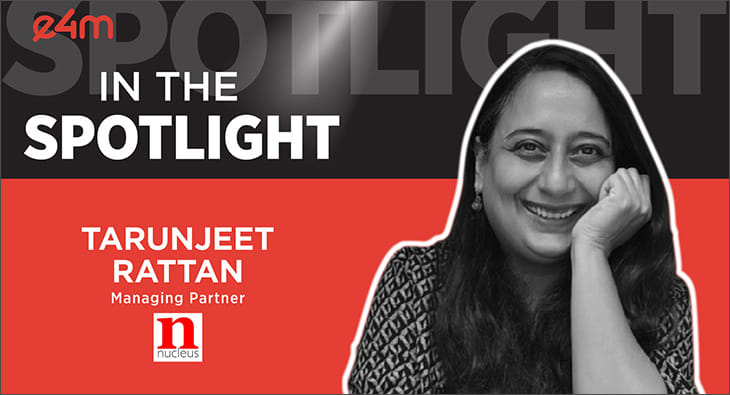

The Indian market is undergoing a transformation as brands today are no longer seeking generic publicity but meaningful connections and strategic narrative building. To navigate this shift, boutique PR agencies are carving out a distinctive niche. Unlike large full-service firms, these agencies are highly specialized, strategically agile, and deeply focused on reputation and storytelling.
To understand the growing role of boutique PR agencies in India and globally, we spoke with Tarunjeet Rattan, Managing Partner, Nucleus PR. Rattan is an insightful and cheerful leader who thrives on unconventional thinking. She introduced the boutique PR model in India at a time when it was relatively unheard of. With over two decades of experience in journalism and PR, she combines her expertise with a passion for learning for the success of brands and stakeholders. Moreover, Rattan is an avid reader and a ‘Santa Claus of knowledge sharing’ who is committed to upskilling her team and the broader PR and communications community.
This feature explores key experiences from her journey as a PR professional to now an entrepreneur leading Nucleus PR, a boutique PR agency. It dives into what drew her to the world of communication, her motivation behind founding Nucleus PR, what sets it apart from traditional agencies, the challenges she faced, her upskilling and mentoring initiatives, future plans, and more. What you'll learn: The evolution of PR strategies, the essence of boutique agencies, and insights into leadership and innovation in the industry.
Excerpts:
You’ve spent over two decades across PR, journalism, and events. What initially drew you to the world of communications?
When asked what drew her to communications, Rattan shares, “I actually started as a science student. Then came my era of rebellion, and I decided to pursue communication because that’s what I was truly good at and passionate about.”
She initially aimed to become an art director, but the realities of the industry changed her path. “I began searching for something that could combine my creative skills, my thirst for storytelling, and my need for strategic insight—that’s when I discovered PR,” she said about how he came across the PR industry.
Her first campus interview set the tone for her career. Her first major break came with IPAN, where she worked with Unilever brands and traveled across the country. “Within two years, I travelled extensively and had managed to tick off nearly 60–70% of the STD code diary I grew up with,” she underscored. Her later stints at Genesis and Star India taught her well and gave her extensive exposure of working with high-end clients and stakeholders.
How different was the industry when you started out, compared to what it looks like today?
Describing the evolution of the industry, Rattan explained, “When I entered the industry about 20 years ago, PR was very different. It was all about sending press releases, managing press conferences, chasing coverage, calling journalists repeatedly, waiting for stories to appear.”
However, her unconventional thinking pushed her to question the limits of traditional PR: “I believed communication should be an all-powerful tool like the ‘Thanos’ of the world, shaping perceptions and driving change.”
Guided by mentors who encouraged strategic thinking, Rattan witnessed the transformation of PR into a more real-time, strategic, and integral part of leadership decision-making. “Today, PR is not outside the leadership circle; it sits within it,” she notes, highlighting how the role of communication has grown.
What inspired the idea behind Nucleus PR, and how did you envision it being different from traditional agencies?
“Bangalore’s entrepreneurial spirit inspired me to take the leap. If I had stayed in Mumbai, I might never have started,” accepts Rattan. She mentions that entrepreneurship was her long-term retirement dream after a corporate career; however, she took the leap of faith, started small, and became a first-generation entrepreneur by starting her own PR agency – Nucleus PR.
15 years ago, she started Nucleus PR in a boutique virtual model. Back then, people didn’t even know what that meant. Back then, she was part of Public Relations Boutiques International — a global network of boutique agencies. Through that, she met brilliant minds across Europe and the US, where this model was already very accepted. That’s when she realized that globally, there were terms like boutique, mid-size, and large agencies — and thought, “Why not in India?” Today, she steers Nucleus PR as an agency built on agile teams, fresh ideas, ethical grounding, and a hands-on approach. Empathy, upskilling, and responsibility—a trifecta that continues to define the agency’s work today.
One of the key differentiators, Rattan asserts, is the type of ideas the agency brings to the table. “I never approached PR purely from a media list perspective. PR has always been the start of a story narrative, the beginning of a brand’s journey. In most cases, when things go wrong — be it in digital, advertising, or events — it eventually lands on the PR team’s plate. I wanted to change that dynamic.”
Moving ahead, she accentuated the role of her husband in helping her build Nucleus PR, and described him as the wind beneath her wings. Together, they created an agency that treats PR as an agent of change—combining strategy, value, and brand ownership.
What were the core challenges in your entrepreneurial journey as a first-generation woman entrepreneur?
When she started her agency, Rattan underscored the significant challenges she faced:
The first challenge was the client's mindset.
Clients either wanted to work with big agencies or with freelancers. The boutique model wasn’t popular when I started out. I had to constantly help them understand that I would work directly with them, take complete ownership of their brand, and deliver the same.
The second challenge was perception and bias.
Whenever I walked into a room, people would look around and ask, “Where is Mr. Tarunjeet Rattan? Is he not coming?” without realizing that it is ‘She’. But over time, I decided to have fun with it and turn those moments into opportunities to challenge preconceived notions about gender roles in business, journalism, and brand partnerships.
The third challenge was talent and operations.
When I started my organization, talent was one of the biggest challenges. This experience led to the creation of PRPOI—now the country’s largest volunteer-led upskilling platform. I started it because I knew that if we didn’t help professionals upskill, it would be impossible to raise the standards of the entire industry or find people skilled enough to join the industry.
Moreover, while I knew PR inside out, running an organization was an entirely different ballgame. HR, admin, billing, operations, and processes—these were not things I had managed before.
Having run India’s largest upskilling volunteer-led community PRPOI for over 12 years now, what have been the key learnings as a professional mentor?
Having run India’s largest upskilling volunteer-led community, PRPOI, for over 12 years, Rattan illustrated the lessons she’s learned about mentoring and professional growth. She credits her own journey as a mentee of the Sherry Blair Foundation and the National Entrepreneurship Network, where she met entrepreneurs who helped her refine her agency’s direction. “Even today, I work closely with a mentor who helps me identify the niche that Nucleus PR can occupy within the spectrum of large, mid-sized, and boutique agencies,” she explains.
One of Rattan’s early learnings was the danger of gatekeeping knowledge. She believes that sharing knowledge transforms ideas into a movement that can impact the entire industry.
Rattan also emphasizes the role of communities in nurturing values that cannot be taught in a classroom: integrity, agility, empathy, and professionalism. “While sessions or workshops can teach you how to master AI or write a PR plan, a community nurtures values through shared experiences. Every month, we conduct live sessions, release LinkedIn newsletters, and publish blogs to help people understand what PR is. This is my way of giving back to the community,” she adds.
To guide the young professionals, Rattan focused on thought-provoking content, like “how to use NLP (Neuro-Linguistic Programming) in PR,” rather than typical workshops. The real reward, she says, comes from the impact on professionals who capture the true power of mentorship and community in PR.
At Nucleus PR, she organises monthly sessions on various industry topics to help teams understand how to apply these tools in practical work.
How can Boutique agencies contribute more across India and globally?
Rattan emphasized that the next 12 months are going to be crucial for boutique agencies. These are the firms that will set trends, educate brands about real PR, and redefine how relationships are built. She mentions:
- Boutique firms work with a select number of clients, so every engagement is senior-led and deeply personal.
- It’s a high-ownership model, so we don’t treat it as a client; it’s the client.
- Unlike larger firms, where senior leaders pitch and juniors execute just like the bait and switch method, boutiques maintain continuity and involvement throughout.
In her view, what sets boutique agencies apart is ownership. Brands today are tired of being one among many. They want to be the big fish in a small pond, and boutique agencies offer that focus and ownership. “Big or small — if you take ownership of a brand like it’s your own, that’s when true PR happens. Over 15 years, we’ve built a solid reputation entirely through referrals. To check the effectiveness of our methods, we even treat our own agency like a client, using PR to test ideas before recommending them,” she underlined.
What leadership traits do you believe are essential for success in PR today?
For Tarunjeet, leadership comes down to a powerful trifecta: confidence, courage, and clarity. “If you can develop clarity in what you want to do and have the courage to follow it, with confidence, you can possibly solve everything,” she guides.
But there’s one more essential quality, which she calls the bonus carrot, is humility. “The best people I know in this industry, with 40 or 50 years of experience, are also the most humble.”
Even after 25 years in the business, Rattan admits, “I still feel I don’t know anything. It’s always day one. You can learn from anybody. There is no age for learning. So, the humility to know that I don't know everything. And the humbleness to accept it is something that will help you, I think, work wonders in your career.”
What excites you about this industry? How do you see the future of Nucleus PR, and what are your plans to move ahead in the industry?
In future, Rattan is most excited about witnessing the new opportunities ever-evolving nature of communications would bring and to create meaningful impact through her agency.
“Our goal is to become a strategically-led boutique agency that works with clients in a 360-degree approach, focusing primarily on reputation management that focuses on reputation management and showing why storytelling needs to be at the nucleus of every communication plan,” she shared.
To stay ahead, Rattan continually upskills herself while leading a team of senior professionals who have witnessed the industry transform over the last 20 years. At the same time, she welcomes new talent, regardless of age or experience, provided they have a willingness to learn.
She also emphasizes the importance of understanding industry trends, technology, and consumer behavior. “AI has become the new leveler, just like the internet was before. We observe international models and assess how they could work in our cultural context, because context matters deeply,” she adds.
She is deeply fascinated by Gen Z, whose consumption patterns, trust in media, and perception of credibility are reshaping communications. “The next decade will belong to those who truly understand these dynamics, and we at Nucleus PR are committed to being at the forefront of it,” she concluded.
Read more news about PR and Corporate Communication News, Internet Advertising, Marketing News, Digital Media News, People Movement News
For more updates, be socially connected with us onInstagram, LinkedIn, Twitter, Facebook YouTube & Google News