We’re prioritizing performance marketing: Ramesh KP, Head of Marketing, South Indian Bank
Ramesh KP, Head of Marketing, on how South Indian Bank is blending heritage with modernity, from vernacular campaigns in Tier 2 and 3 towns to performance-driven digital strategies in metros
 by
by
Published: Aug 29, 2025 12:52 PM | 7 min read
 Follow Us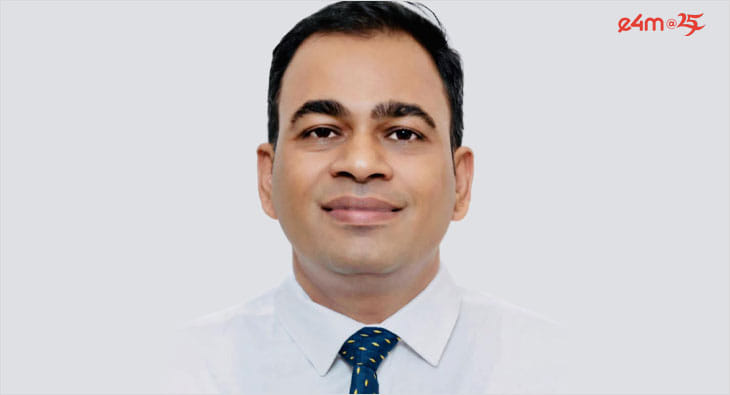

As South Indian Bank approaches its centenary, it faces a unique marketing challenge - staying true to its deep Kerala roots while positioning itself as a progressive, digital-first, pan-India brand. At the helm of this balancing act is Ramesh KP, Head of Marketing, who has been steering the bank’s narrative around “Trust Meets Tech.”
In this conversation, he shares how South Indian Bank is blending heritage with modernity, from vernacular campaigns in Tier 2 and 3 towns to performance-driven digital strategies in metros, while also weaving cultural touchpoints like Onam into its marketing roadmap.
Edited excerpts:
South Indian Bank has a deep regional heritage but is also expanding its pan-India presence. How do you balance this dual identity in your marketing strategy?
It’s about being clear on who we are. Our roots give us authenticity — we are a bank that has grown with Malayalis for nearly a century. But that legacy only matters if we adapt it to a pan-India audience. So we lean on our core strength — being a customer-first bank that never mis-sells, always provides the right product fit, and builds relationships.
At the same time, our brand positioning “Trust Meets Tech” signals that while we have heritage, we are also a progressive digital-first bank. That balance keeps us relevant in both metros and regional markets. We also localize strongly — vernacular content, regional campaigns, and hyper-personalization — so our message resonates authentically in Tier 2 and 3 towns, while in metros it speaks to a younger, digital-native population.
How are marketing spends evolving — especially the shift from broad awareness campaigns to digital performance-driven campaigns?
In BFSI, performance is critical. Awareness is important, but what ultimately matters is acquisition, conversion, and retention. That’s why we are prioritizing performance marketing, CRM-led engagement, and attribution models that digital allows. Traditional media still gives reach, but the lack of measurability compared to CPL or CPM metrics makes it harder to justify heavy spends. The shift is clear: more data-driven, performance-oriented investments.
We’re also seeing growing emphasis on content-based marketing — explainer videos, financial literacy, podcasts — because this builds longer-term trust while also feeding the performance funnel.
In fact, we’re doubling down on content strategy across channels, through our Social Media Channels - Fincredibles series (English and Malayalam), blogs, and awareness campaigns on financial and cyber safety. As a responsible bank, we see content as a way to give customers reliable knowledge, not just products.
How do you divide your media mix between traditional (print, outdoor, TV) and digital, given your strong regional base?
We’ve moved to a digital-skewed plan — roughly 60% digital and 40% traditional. The reasoning is simple: while our regional presence is strong, we need scalable ways to reach newer audiences cost-effectively. Digital gives us that measurability and agility, while traditional media still plays a role in reinforcing trust in markets where physical presence matters.
Our digital spends are increasingly ROI-driven — from performance campaigns to financial literacy content — while traditional is used more surgically for credibility, especially in Tier 2 and 3 cities.
Do partnerships with cultural events, sports, or local influencers play a role in South Indian Bank’s marketing efforts?
Absolutely. We’re very careful and selective here. Instead of mass influencer campaigns, we prefer hyperlocal and culturally relevant partnerships that feel authentic. For example, we’ve tied up with regional merchants to provide exclusive debit card offers — this gives value to both customers and merchants. Similarly, local influencer advocacy helps us integrate into community conversations, without overwhelming or diluting the message.
We’re also experimenting with advisory-driven influencer content, where credibility matters more than celebrity reach. That aligns well with BFSI, where trust is everything.
How do you adapt communication for Tier 2 and Tier 3 audiences versus metros, where consumer behavior and financial maturity differ?
The communication lens changes. In Tier 2 and Tier 3 towns, we operate almost like a neighborhood brand — more local language, community-driven messaging, and strong branch-level engagement. In metros, the approach shifts to English-first, digital-led, designed for a floating, younger population. But the common thread is our digital assets — whether it’s payments, deposits, or lending products — which make the brand accessible regardless of geography. We’re also seeing that vernacular content and phygital banking experiences are key drivers in Tier 2/3 markets, while metros demand mobile-first journeys and advisory-led engagement. This balance is helping us grow both bases simultaneously.
Onam not only signals the start of the festive season in India but also holds deep cultural and emotional value for Malayalis worldwide. Since South Indian Bank has its roots in Kerala but also serves customers across India, how central is Onam in shaping your festive marketing roadmap compared to other regional and national festivals?
Onam has a very special place in our calendar. For Malayalis, no matter where they live, Onam is a homecoming moment — physically or emotionally. It’s a festival that carries nostalgia, family bonds, and the idea of new beginnings. What’s interesting is that Onam has moved beyond being a “regional” festival; the Onam sadya today is celebrated in metros, corporate offices, even internationally. For us, as a bank with a 96-year legacy rooted in Kerala, the connect is natural. At the same time, it also sets the tone for the larger festive season — Diwali, Navratri, Pongal. This year, we’ve consciously designed our festive roadmap to not just celebrate Onam but to extend that feeling of belonging and community across different regional calendars. And increasingly, we see festivals like Onam becoming content moments — a chance to blend cultural storytelling with financial education and advisory, so customers engage with us beyond transactions.
How does the emotional connect built through Onam storytelling contribute to long-term customer relationships, especially in financial services where trust is key?
Financial services are about trust — and trust is deeply emotional. Onam storytelling allows us to connect with customers at that human level. Festivals like Onam remind people of their roots, of values that don’t change with time, and that’s very similar to how people see their bank — as an anchor. While many categories use Onam for discounts and offers, we see it as an opportunity to reinforce that we’re here for their milestones and transitions. That’s why our approach is always relationship-first rather than transactional. In fact, our marketing is increasingly moving towards “storydoing” — ensuring our campaigns don’t just narrate values but actively demonstrate them, whether through financial wellness initiatives, local partnerships, or customer-first product launches.
With fintechs and neobanks disrupting the space, how is South Indian Bank using digital platforms and martech to stay competitive?
We’ve invested heavily in martech over the last year. Today, we run full-funnel lifecycle campaigns, segment customers into meaningful cohorts, and target with precision. That minimizes wastage and improves acquisition quality. At the same time, we’re building digital-first platforms with strong UI and UX — ensuring that once customers come in, the experience keeps them engaged. This combination of tech-backed targeting and experience design is how we’re competing with fintechs.
Over 98% of our transactions are now digital, and we’ve integrated UPI, STP flows, and fintech collaborations to give customers instant, frictionless banking. We’re also leveraging AI-led personalization to ensure every touchpoint feels relevant, not generic.
Looking ahead, what will be the next big marketing bet for South Indian Bank over the next 2–3 years?
We’re approaching our centenary year, and that gives us a rare and explicit opportunity to reimagine the brand narrative. The focus will be on building imagery as a progressive, trustworthy, and digital-first bank that appeals to digital natives without losing our legacy customers. It’s about moving up the consideration ladder — from being known as a strong regional player to being recognized as a young, modern, pan-India brand with a 100-year foundation of trust.
This will also mean leaning more into ESG-linked storytelling, financial wellness programs, and partnerships that reinforce responsible, inclusive banking. By 2029, our aim is to not just keep pace with the sector but shape it.
Read more news about Marketing News, Advertising News, PR and Corporate Communication News, Digital News, People Movement News
For more updates, be socially connected with us onInstagram, LinkedIn, Twitter, Facebook, YouTube & Google News