90% of our brand building now happens on digital: Gaurav Kwatra, iD Fresh CMO
Kwatra shares how iD Fresh’s marketing priorities have evolved over the past year, particularly in terms of campaign planning, and more
 by
by
Published: Nov 20, 2025 9:37 AM | 10 min read
 Follow Us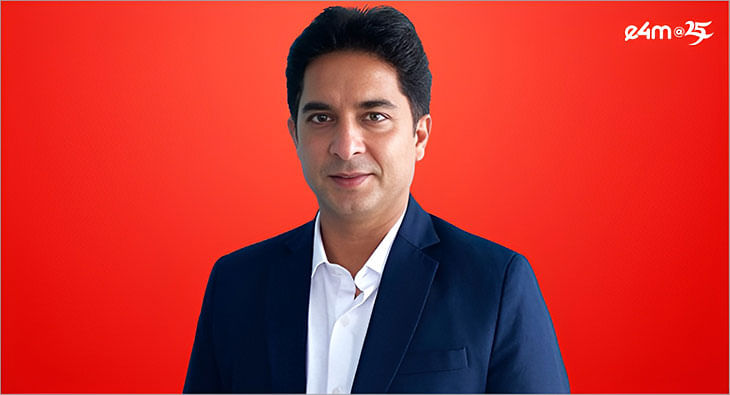

In the past two years, iD Fresh Food has been quietly rewriting the rules of India’s ready-to-cook category. After reporting its first-ever profit in FY24, the Bengaluru-based brand has sustained its momentum with a 22% revenue jump in FY25, clocking ₹681 crore in operating revenue and a 5X surge in profit, according to its latest RoC filings.
The brand's marketing investments have also grown, underlining a lean, yet efficiency-first playbook. Notably, in FY25, the company increased its ad and marketing spend by 11% to ₹52.34 crore, up from ₹34.33 crore in FY24. It looks like the brand’s growth story has gone beyond just convenience foods to now include deep localisation, sharper marketing discipline, calibrated media spends, and a renewed focus on culturally rooted storytelling that strengthens brand trust across regions and consumer cohorts.
One of the driving forces behind this consistent growth in the last year, has been Gaurav Kwatra, Chief Marketing Officer at iD Fresh Food. e4m spoke with Kwatra to understand how iD’s marketing priorities have evolved over the past year, particularly in terms of campaign planning, messaging, consumer targeting and media investments, as the brand balances scale with profitability.
In our conversation, he also spoke about iD’s growing footprint across South India and diaspora markets, the rising role of cultural nuance in food marketing, and the roadmap for new categories and next-phase expansion, and more.
Edited Excerpts;
iD Fresh has seen strong momentum over the last two years. What, in your view, drove this acceleration from a marketing standpoint?
The biggest shift has been clarity and consistency. As a brand, we doubled down on our core promise of honest, pure, fresh food and ensured every piece of communication reflected that truth. Consumers trust us because we don’t overclaim, we show things as they are. Over the past year, our marketing became more insight-led, more reflective of real kitchens, and more grounded in everyday behaviour. When your storytelling mirrors daily life, trust deepens, and that trust ultimately translates into frequency, loyalty, and strong category growth.
Your advertising and marketing spend rose 11% YoY in FY25. How have your marketing priorities evolved—especially with rising digital scale and increased ad spends?
Over the last year, our marketing priorities have become far more focussed, disciplined and digitally intensive. Earlier, we typically ran two or three big landmark campaigns in a year, and that will continue. However, the real shift has been the scale and rigour of our always-on digital communication. This year alone, our category content crossed 600 million views, driven by a stronger social presence and a sharper cadence of content creation.
Technology has been a big enabler, too. AI and new content tools have helped us scale production efficiently without compromising quality. We’ve also strengthened our internal creative team and built deeper partnerships with external agencies to support this acceleration. We even reimagined packaging as a communication asset. During our trust and transparency campaign, we dedicated an entire panel to reinforce our “no preservatives, no chemicals” promise, something we had never done before, and something rare in FMCG at this scale.
So yes, our ad and marketing spends increased 11%, but the real difference is the discipline behind the spend, every rupee is tied to clarity of objective, sharper targeting and consistent storytelling. This combination of always-on content, tech-enabled efficiency and transparent communication has made our investments significantly more impactful.
What were the biggest marketing drivers behind iD’s FY25 performance?
Two clear drivers stand out. First, innovation. Innovations have contributed strongly to our revenue. Our specialty batters, chutneys, ready mixes, and parottas performed exceptionally well and expanded their repertoire across households. Second, brand building. We ran some major, high-impact campaigns during the year, including the “Parota or Paratha?” campaign and our TransparenSee initiative. All of them delivered exceptional viewership, strong recall, and high engagement. Demand generation remained a central driver of our profitable growth.
How do you maintain profitability while continuing to invest in brand building?
We removed noise from the system and ensured every initiative has a purpose, brand lift, awareness, penetration, or retention. Measurement has become more rigorous, allocation is performance-led, and we focus only on platforms that deliver tangible quality engagement. This discipline allows us to scale while protecting efficiency.
How has your media mix evolved across digital, print, TV and retail?
Our ad spends have increased, particularly on the digital side, where our investments have grown 1.25X over last year. The digital, performance and influencer layers have become significantly stronger, reinforcing our digital-first approach.
We are a digital-first organisation. About 90% of our investments go toward digital—OTT, YouTube, social media, and quick-commerce visibility. The remaining spends go into retail branding, sampling and in-store activations. Traditional media still plays an important role: TV gives reach and credibility in certain markets, and print works beautifully for local amplification and category-led storytelling. The mix is similar to last year, but the digital tilt is even stronger now, aided by AI reducing content costs.
You’ve completed one year at iD Fresh. How has this shaped your understanding of the brand, especially compared to your FMCG background?
What we have delivered in terms of business growth, innovation, and communication in just 12 months has been phenomenal. My years at Nestlé and Britannia gave me a deep grounding in consumer understanding, disciplined brand building, and the value of consistency. Those fundamentals guide me every day. But iD is a different ecosystem altogether. Agility is the biggest difference. Decisions move fast, teams are empowered, and you’re extremely close to the consumer. In the last year alone, we rolled out more than a dozen campaigns and innovations. For me, it’s been a high-velocity, high-learning year—one that blends FMCG fundamentals with entrepreneurial speed.
Localisation has become central to your brand strategy. How has it shaped your campaigns and product mix?
Food in India is deeply local, and we strengthened that philosophy significantly this year. We launched products like Puran Poli, Malabar Parotta, speciality batters and chutneys, each one of them rooted in regional culinary traditions. The idea behind this was simple, that if you’re in Kanpur and want a Malabar Parotta, we should make it possible; if you’re in Kochi and crave Puran Poli, we should deliver it.
Our communication now reflects local rituals, taste patterns, and cooking behaviours. Whether it’s how dosa batter is used in Karnataka households or how parottas feature in Tamil homes, the storytelling has to feel familiar. Localisation drives messaging, packaging, media selection, sampling, practically every marketing layer.
The South continues to be your biggest stronghold for you. How has your strategy for this region evolved?
Over the last 2–3 years, iD has also strengthened its brand presence nationally. While the South remains a core trust engine, the North and West are now growing almost 2X faster, driven by rising demand for clean-label, preservative-free foods. Today, consumers across markets want brands they can trust—pure, honest and sensory-rich—which is why iD is seeing strong love pan-India.
The South is our engine of trust and volume, but we no longer treat it as a single block. Bengaluru, Chennai, Kochi, and Hyderabad are four distinct ecosystems with different behaviours, maturity levels, and media habits. Micro-segmentation has sharpened our positioning and allowed us to design city-specific campaigns and pilots.
In the South, our communication focusses on trust, purity, and being as good as homemade. In the North, the task is more educational: helping first-time users, showcasing dosa as a healthy everyday breakfast, and simplifying the category. Even with filter coffee, our decoction has enabled someone in Gurgaon or Lucknow to prepare an authentic cup easily. This difference reflects in content formats, influencer choices, and media mix, which has become far more regional and cohort-led.
As you expand in the North and global markets, how does your marketing playbook evolve?
Our marketing playbook is now built on three strong pillars that guide how we scale across regions. The first is always-on category communication, highly regional, recipe-led and digital-heavy, because new users in the North need education, inspiration and hand-holding to bring these categories into their daily routine. The second pillar is trust and transparency, where we run national-level, high-impact campaigns that reinforce our purity, clean-label positioning and the honesty that consumers associate with iD. The third pillar is cultural and culinary expression, where our storytelling adapts to how different regions cook, eat and experience food.
In global markets, the approach is similar but tailored for the diaspora. We lead with familiar favourites that connect emotionally with Indians abroad, while also building innovations that can appeal to multicultural households who are discovering Indian food for the first time.
As batters and parottas continue to dominate the portfolio, how do you scale new categories while staying true to iD’s core identity?
Every innovation must stay true to our culinary roots and uphold our promise of purity. That’s why our newer launches—chutneys, specialty batters, Ready Mixes, high-protein paneer—sit adjacent to our core. They strengthen our ethnic Indian identity rather than dilute it. We are expanding further into Indian flatbreads, coffee and beverages, and value-added dairy. Plus, we’re working on one or two completely new categories set to launch in the coming months.
What are your top marketing and expansion priorities for 2026?
2026 is a pivotal year for us, and our priorities are sharply defined. On the marketing front, four clear agendas lead our roadmap. First, we want to deepen trust and transparency. Second, we will dial up regional and category-led communication, especially as North and West India grow at nearly 2X the pace of the South. This means sharper localisation, more city-specific content, and a stronger focus on education in emerging markets. Third, we are scaling AI-led content creation and personalisation, which has already improved turnaround time and efficiency across our always-on digital engine. And fourth, we will strengthen influencer-led, digital-first storytelling.
The metros continue to be a stronghold for us, and we actually see a lot more headroom even within these markets. The penetration for idly–dosa batter still has ample room to grow in metros, so going deeper there is a big focus area for us.
At the same time, we have a blueprint for around 70–100 cities where we’ve already expanded, and the goal now is to really strengthen some of these emerging markets. Cities like Ahmedabad, Jaipur, Goa, Indore and Bhopal are growing very fast for us, and we’re continuing to invest behind them. Overall, most Tier-1 and fast-growing Tier-2 markets present strong potential right now, and that’s where a large part of our next phase of expansion will come from.
We plan to grow our portfolio and add depth across Indian flatbreads, beverages, value-added dairy, and a couple of completely new categories. From a business standpoint, we’re focussed on maintaining annual growth, while continuing to build the operational discipline needed for IPO readiness.
Read more news about Marketing News, Advertising News, PR and Corporate Communication News, Digital News, People Movement News
For more updates, be socially connected with us onInstagram, LinkedIn, Twitter, Facebook, YouTube & Google News
