Influencer economy in 2025: When creators turned newsmakers
The year saw creators moving beyond platforms, appearing on TV debates, film promotions, festive campaigns & large outdoor billboards, often replacing traditional celebrities in high-visibility media
 by
by
Published: Dec 31, 2025 9:27 AM | 10 min read
 Follow Us

Whether it was Prashant “Croissant”, Samay Raina’s India’s Got Latent controversy, Kunal Kamra’s Habitat backlash, Dharan Durga featuring in a film with Varun Dhawan, Ankush Bahuguna’s viral Selena Gomez moment, Indian creators travelling abroad to endorse Netflix franchises like Stranger Things and Wednesday, or spotting gaming creator Payal Gaming on the Bandra-Worli Sea Link while driving, creators influence was no longer limited to digital platforms. Many creators launched their own brands and became independent of brand deals.
At the same time, influencer marketing itself matured through the year. Reels-based micro-dramas became the preferred format for brand storytelling, while podcasts returned as a serious engagement tool. Creators began monetising AR and AI-led formats, even as the ecosystem dealt with rising copyright conflicts, stricter finfluencer regulations, and ongoing conversations around pay disparity and misrepresentation, issues that remained in focus throughout the year.
In the advertising and brand space, no other voice travelled as far or as fast. Every major conference, panel discussion and industry event featured a Gen Z creator, signalling a shift in who brands now consider cultural drivers. Creators moved beyond platforms, appearing on television debates, film promotions, festive campaigns, brand advertisements and large outdoor billboards, often replacing traditional celebrities in high-visibility media.
In May, The WAVES Summit brought major changes for creators, from the announcement of a university to Prime Minister Narendra Modi inviting global creators to India. Union Minister Ashwini Vaishnaw announced a $1 billion fund aimed at accelerating India’s creator economy through initiatives like skill development, funding support and global matchmaking platforms like WAVES Bazaar. With over 591 million gamers in India and more than 4 million gaming influencers, the move signalled a tectonic shift in how the government perceives the creator class.
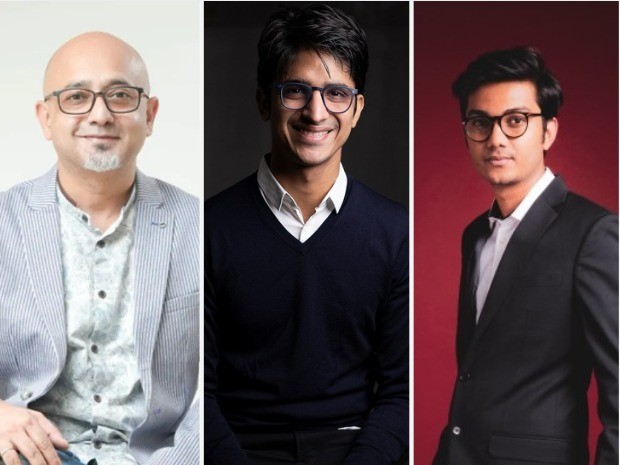
On the content front, creators who thrived also adapted structurally. Viraj Seth, Co-founder of Monk Entertainment, said creators cannot depend on a single platform for visibility. Those who distributed content across platforms, built owned communities through email, WhatsApp or newsletters, and focused on business outcomes were better positioned as long-term partners rather than short-term risks.
Consistency proved to be a defining differentiator. Pranav Panpalia, CEO of OpraahFx, which manages creators like Sourav Joshi, Mythpat and Nischay Malhan, cited Manish Patel’s viral ‘Haan Malik, thodi si galti ho gayi hai’ moment. While the meme exploded, what mattered was sustained output. According to him, the creator’s steady presence turned one viral hit into a reliable audience. “In 2026, that combination of consistency and reliability will define the creators who succeed long-term,” he said.
Micro-dramas and episodic storytelling dominated short-form platforms. Gautam Madhavan, Founder of Xley.ai and Mad Influence, said, “2025 was also about microdramas, scripts. In India, Indonesia, the Middle East, and Latin America, audiences are hooked to short series on platforms like Instagram Reels, YouTube Shorts, and Moj.” He added, “Even in scroll mode, the episodic format thrives, auto-play and recommendation engines keep viewers engaged. People binge 3–5 episodes at once, and cliffhangers fuel community conversations.” According to him, “Most importantly, brands blend seamlessly into the narrative, no force-fit ads, just native storytelling that works.”
Where the Money Flowed
The festive season once again sent influencer marketing budgets soaring. Creator fees rose between 10–30 per cent compared to last year. Shudeep Majumdar, Co-founder & CEO of Zefmo, said micro and mid-tier creators experienced faster fee inflation than celebrities, as brands chased engagement-led festive storytelling. “We are seeing a clear preference for short-form video during the festive rush,” he said. “CPMs are climbing 25–30% in peak weeks, while CPCs have remained relatively stable, supported by sharper hooks, strong CTAs, and offer-led creatives.”
Income levels reflected this shift. According to Avi Chanodia, Co-Founder of CREATE, India’s top-tier creators earned between ₹10–25 crore annually in 2025 through brand endorsements, platform monetisation, IP-led businesses, live events and equity partnerships. Mid-tier creators saw stronger consistency, while niche creators benefited from higher engagement-to-revenue ratios, proving that commercial depth mattered more than follower count.
Consumer-first brands dominated influencer spending. FMCG, beauty, fintech, D2C fashion, edtech and quick commerce emerged as the most aggressive adopters. Brands like Perfora, Farmley, FixMyCurls, Freakins and Gully Labs integrated creators deeply into launches, always-on campaigns and offline activations.
Sayak Mukherjee, Co-founder at Creatorcult, said, “In 2025, influencer marketing in India became less of a ‘viral play’ and more of a structured media + content line item.” While larger numbers emerge when the full value chain is included, he noted that the core influencer market stood at ₹3,600 crore in 2024 and is projected to reach approximately ₹4,500 crore in 2025, driven by strategic adoption and content quality.
Zeba Madni and Supriya Ullengala, Co-Founders of Madhouse Media, who recently launched their talent management agency said success in 2025 was driven by brands that trusted creators to speak in their own voice, focused on repeated exposure, and avoided overly controlled or sales-heavy messaging. The industry moved from experimentation to performance and responsibility, with metrics like relevance, retention and conversion gaining importance.
However, payment gaps remained a concern. Hitarth Dadia from NoFiltr said brands and agencies must work together to address delayed payments, noting that many creators exited the profession due to a lack of financial stability.
As the Ecosystem Scales, So Do the Fault Lines
Despite EY data estimates placing India’s influencer marketing market between ₹3,000–₹4,000 crore, industry insiders argue that the real size is far larger. According to KlugKlug CEO Kalyan Kumar, actual spending has crossed ₹10,000 crore, driven largely by long-tail creators and direct brand deals that fall outside conventional tracking. He noted that more than 20 agencies individually generate over ₹20 crore annually from influencer campaigns, yet these visible agencies represent only a fraction of the ecosystem. Nearly 75 per cent of spending occurs outside organised channels through direct brand-creator relationships, internal brand teams and long-tail deployments.
Beauty, fashion and apparel brands alone spend upwards of ₹20 crore annually via in-house influencer teams. When earned media value is factored in, the market expands further, with multipliers ranging from 1.8–2.5x for beauty and personal care brands to 5–7x for home and kitchen categories. Founder-driven campaigns, barter collaborations and community-led content add further scale but often remain invisible in traditional reporting.
Kunal Ghosh, Chief Strategy Officer at Cheil SWA Group India, whose parent company recently acquired influencer marketing agency Social Beat, explained that the ecosystem has clearly split into two layers. “Some agencies are dominating influencer marketing for rising creators. Big creators like Bhuvan Bam do not need agencies anymore. They run like full businesses,” he said.
He added that newer creators still require structured representation. “It works like old-school celebrity management. Niche creators, such as tech influencers, are largely handled by specialised agencies operating like small ecosystems.” According to him, “Traditional creative and media agencies continue doing what they do best. Influencer-management agencies continue doing what they do best.” Both, he explained, are essential because they solve different problems for brands.
Harikrishnan Pillai, Co-Founder & CEO of TheSmallBigIdea, said the company is expanding into digital-first content featuring cricketers, TV stars and film talent. TSBI plans to produce a slate of original projects targeting audiences across India and the Middle East, while opening up opportunities for co-branded and fully integrated campaigns that allow brands to engage through premium storytelling.
However, as the ecosystem scaled, structural issues became harder to ignore. Multiple influencer marketing agencies often floated the same creator’s name during early-stage discussions. While this seemed harmless initially, it turned problematic when false representation claims entered negotiations. Experts estimate influencers lose nearly 30 per cent of valuable brand deals due to misrepresentation, amounting to approximately ₹450 crore annually.
ral cases, managers made unexpected demands such as vanity vans, personal bodyguards or private cars without consulting the influencer, leading brands to quietly exit discussions. Such instances not only cost creators deals but also damaged their professional image.
Himanshu Arora, Founder and CEO of Creators Network and BookYourCreator, said falsely claiming representation without authority blurred critical boundaries. “There is no universal verification registry that brands can turn to, which means most verification efforts are informal, based on direct networks, old emails, or relationship history that often do not reflect real-time management shifts that occur in fast-moving creator careers,” he said.
Summing up the year, Ankush Vij, Co-Founder & VP-Media at Orange, said, “2025 was the year influencer marketing in India firmly graduated from a ‘nice-to-have experiment’ to a core line item in the media plan. With the industry growing at around 25%, creators have become one of the fastest-growing demand drivers in digital advertising. From a marketer’s standpoint, the conversation has moved from ‘Should we use influencers?’ to design creator-first strategies that drive measurable business impact. That mindset shift is the biggest win of 2025 for this ecosystem.”
Inside the Two-Speed Influencer Economy
Saket Jha Saurabh, Director & Head – Content at Snap Inc., said, “There is a noticeable reframing in how CMOs and CEOs think about influencer marketing, what it can genuinely deliver for the business and how success should be measured. While this varies by category and context, the broader trend is clear: brands are moving beyond pure reach and celebrity-led campaigns to invest in creators who build trust-led communities and influence real decisions, particularly among Gen Z.”
He added, “This shift has moved influencer marketing away from one-off posts toward long-term, immersive storytelling that feels native and authentic. The emphasis on ROI will only grow, especially as emerging, micro and nano creators consistently demonstrate high-quality engagement that brands value.”
Highlighting Snapchat’s growth, he said, “We see this reflected in the rapid growth of creators on Snapchat engaging in influencer marketing — crafting deep, conversational brand narratives that their communities genuinely engage with, in a way that is uniquely native to Snapchat’s vibe.”
According to him, collaborations that worked this year included the AR-first Flipkart Fashion campaign, Maybelline’s Look Studio Lens, and campaigns by Nivea, Domino’s, Swiggy and Nykaa’s Snap Star Beauty Incubator program. He said these initiatives “exemplify how we blend platform innovation with opportunities to nurture talent.” He added that this approach has led to “a 1.5X increase in Snap Stars and 4X growth in Spotlight content.”
He further noted, “As brands recognize creators as the ‘new search’ for omni-channel purchase journeys, affiliate marketing is emerging as a powerful frontier, with creators leveraging platforms like Wishlink and Haulpack to convert highly engaged communities into tangible revenue.”
On creator development, he said, “ Enabling the next wave of digital storytellers by taking creator education and mentorship beyond metros through Creator Connect initiatives across cities like Hyderabad, Kolkata, Chennai, Jaipur, Bhopal and Delhi, while expanding monetization opportunities and local partnerships.”
He concluded, “Ultimately, creators who succeed today are those who stay rooted in authenticity, collaborate with aligned brands, and use technologies like AR and AI to build genuine communities, not just audiences.”
Meta also shared new data showing how deeply its platforms have entered India’s decision-making pipeline. The study found that 81 percent of consumers use Instagram and WhatsApp during the discovery stage of financial products, 79 percent during evaluation and 83 percent at the purchase stage. Instagram is used by 57 percent of respondents for making informed financial choices and Facebook by 53 percent. Creator-led Reels have emerged as a primary awareness engine, with short videos now doubling up as research material for young users.
Read more news about Influence Zone, Marketing, PR and Corporate Communication, Internet Advertising, People Movement
For more updates, be socially connected with us onInstagram, LinkedIn, Twitter, Facebook, YouTube & Google News
