Pinterest CEO Bill Ready urges governments to ban under-16s from social media
With 70% of parents worried about explicit content or excessive screen time, and two-thirds saying parenting is harder than 20 years ago, due to social media.
 by
by
Published: Mar 23, 2026 7:29 PM | 2 min read
 Follow Us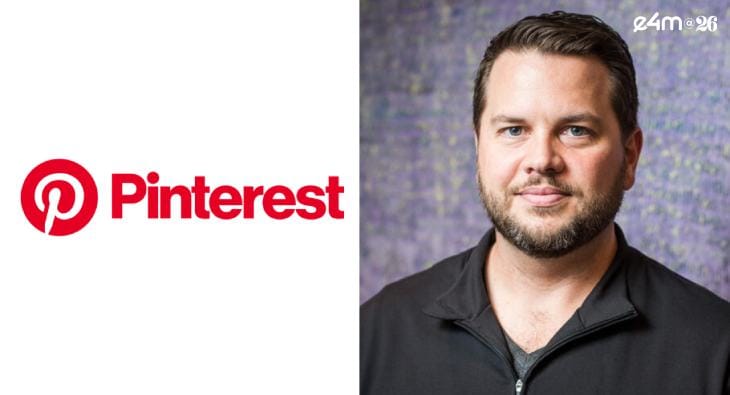

In an op-ed published in TIME magazine, Bill Ready, CEO of Pinterest, has called for a global ban on social media use for teenagers under the age of 16, arguing that current platforms are not designed with young users’ safety as a priority. Framing the issue as both a professional and personal concern, Ready wrote, “social media… is not safe for young people under 16,” adding that existing platforms are built to maximise time spent and engagement, often at the cost of well-being.
A central argument in Ready’s piece is that the tech industry has had sufficient time to address these concerns internally, but progress has been limited. As a result, he suggests that government intervention is now necessary along with accountability for both apps and the operating systems that distribute them.
Ready’s argument focuses heavily on how social media platforms are structured. According to him, these systems are designed to retain attention and increase usage, which can have unintended effects on younger users. He notes that this environment has contributed to “rising anxiety, depression and reduced concentration among young users,” describing the current landscape as a large-scale, ongoing experiment involving adolescents.
He also points to the growing integration of AI tools and chatbots into social platforms, suggesting that these technologies can further influence behaviour and emotional responses among younger audiences.
To support his argument, Ready draws comparisons with other regulated industries, noting that societies have historically introduced age-based restrictions for activities such as driving, smoking and alcohol consumption. The same principle, he suggests, could apply to social media, where restrictions, even if not perfect, can help reduce potential harm.
Ready highlights Australia’s decision to ban social media for users under 16 as a model for other countries to consider. While acknowledging that such policies come with trade-offs, he argues that imperfect protection is better than inaction when it comes to youth safety.
He also refers to similar discussions and policy efforts in countries such as the United Kingdom, Spain and France, where governments are increasingly examining age limits and platform accountability.
These examples, he suggests, indicate that the conversation is no longer limited to one market, but is becoming part of a broader global policy discussion.
He calls on governments to introduce clear, enforceable age-based restrictions on social media access for users under 16, rather than relying on voluntary industry measures. He emphasises that without such coordinated action, existing safeguards are unlikely to be effective.
Read more news about Digital Media, Internet Advertising, Marketing News, Television Media, Radio Media
For more updates, be socially connected with us onInstagram, LinkedIn, Twitter, Facebook, YouTube & Google News