Some Timeless Learnings from Madan Bahal for Young PR Professionals
On Madan Bahal’s 70th birthday, Nandini Chatterjee, Chief Corporate Brand and Communications Officer at Shree Cement, shares timeless learnings from him that every young PR professional should know
 by
by
Published: Feb 4, 2026 1:05 PM | 4 min read
 Follow Us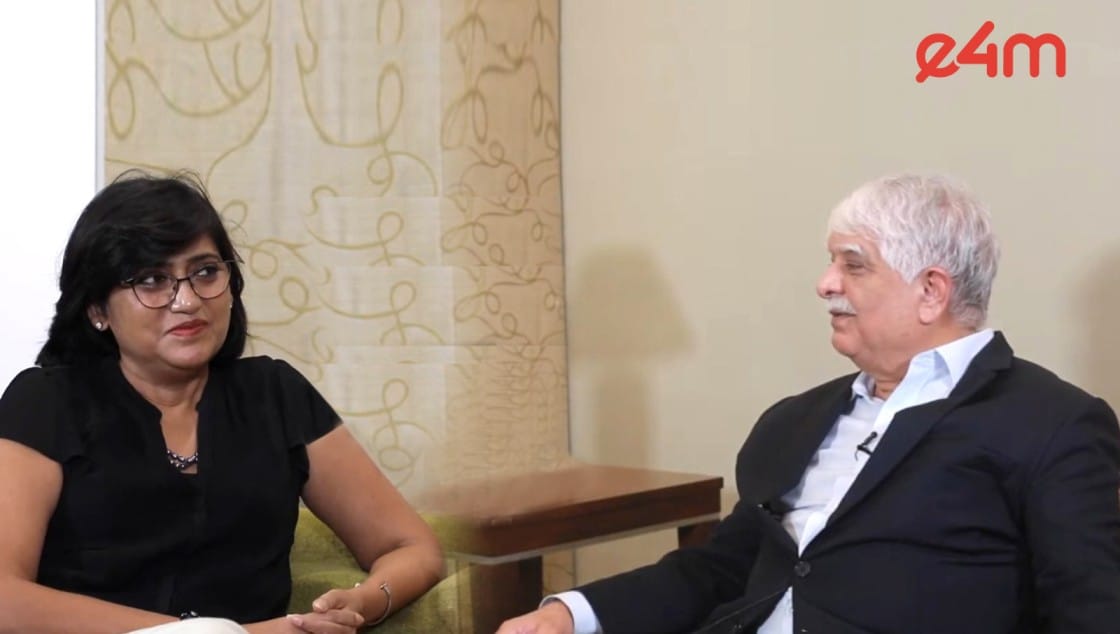

Three years ago, when I launched my vodcast Comms and Conversations, I had the privilege of starting the series with Madan Bahal, Co-Founder & MD of Adfactors PR. I remain deeply grateful to Madan for generously taking the time to be part of that very first conversation and for setting the tone for what the platform aspires to be. He was joined by Michael Stewart, former Global Corporate Affairs & Communications Leader at PwC and now Chief Corporate Affairs & Communications Officer at Unilever. It felt especially meaningful to start with two professionals who have shaped, and continue to shape, the PR and communications profession in their own ways.
Much of what Madan shared in that conversation continues to stay with me even today. As he turns 70, it feels like a fitting moment to revisit that dialogue and share a few of his perspectives which, for me, reflect his visionary outlook, progressive thinking, and deeply grounded, practical approach to the profession.
- A public relations professional has to know everything, from anthropology, sociology, history, culture, politics, economics, law and litigation, to media, social media and digital. It is one of the most complex practices. Maybe a one or two hour commitment every day just to keep up with things. Only then can we truly serve better.
- Sense making is a very important skill. Even when hiring a younger person, I look for basic research orientation and analytical competence. If something is happening, how do you understand it, because you have to interpret it to your own team, to your client, or to the media. In reputation management, advocacy or crisis, the ability to make sense of very complex situations is critical.
- There are many opportunities. You just have to interpret a problem for a client and say, look, maybe you missed this. It is like a doctor showing an X ray or CT scan and saying, I see a small issue here that we need to address. And the patient says ‘Yes’.
- Developing customised solutions to unique client problems is critical. A PR professional needs to make the effort and have the commitment to identify the unique client problem, develop multiple solution options, and then choose the best one. If that commitment is not as high as it should be, we must recognise it early. Those who do this well will have jobs that pay ten times more five years later. Those who do not may not have a job even at half the price.
- One question I often ask when interviewing is, have you read even a single book on public relations since you joined the profession. 99% say ‘No’. Then they say they will learn on the job. Theory has to precede practice. Practice has to enrich theory. If someone in public relations is not well read on the forces and disruptions impacting business, how will they advise clients meaningfully?
- We are dealing with two sides of the same coin, existential threat and exponential opportunity, coexisting at the same time.
- You cannot manage a crisis until you have managed a crisis. So when an opportunity arises to be deeply involved, jump into it. That is how real learning happens.
- People do not work peer-to-peer very well. They work better with juniors. This often leads to a blockage of collaboration, and therefore the best skills of an organisation do not come together to solve a client problem. Collaboration requires humility and generosity. These are more attitudinal than aptitudinal.
- The power that digital now gives us to focus messages exactly where we want, with the intensity we want, is enormous.
- Traditional media will continue to stay relevant. The delivery platform has changed significantly from print and TV to digital and online, but the ability to report in real time with authenticity remains powerful. I will still trust The Times of India or The New York Times for the version they bring. The online and social media reach of traditional media brands like Business Standard, Dainik Bhaskar or Jagran runs into numbers larger than the population of countries like the UK or Germany.
If you would like to hear Madan expand on these and many other perspectives in his own voice, I am sharing the link to that episode of Comms and Conversations here - https://bit.ly/4a6rD3y
Happy 70th, Madan. Thank you for shaping generations of communicators, including many of us who have learned quietly by observing your clarity of thought, courage of conviction, and unwavering commitment to raising the bar for our profession. I wish you continued good health and look forward to many more years of learning from you.
Read more news about PR and Corporate Communication News, Internet Advertising, Marketing News, Digital Media News, People Movement News
For more updates, be socially connected with us onInstagram, LinkedIn, Twitter, Facebook YouTube & Google News
