Love him, debate him, never ignore him: Rajdeep Sardesai turns 61
There are very few journalists in India whose careers mirror the evolution of modern news television the way his does
 by
by
Published: May 24, 2026 11:37 AM | 2 min read
 Follow Us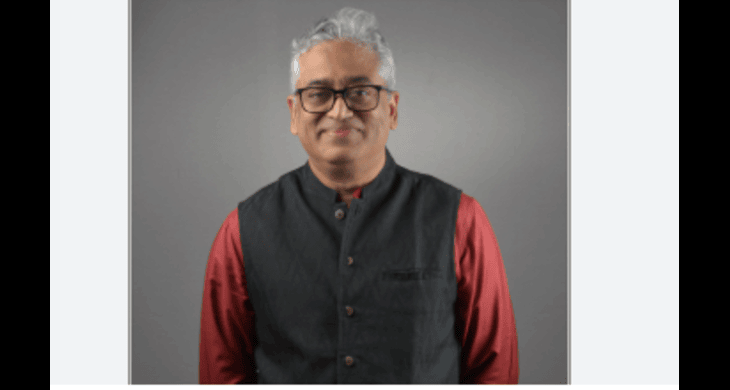

- Rajdeep Sardesai, a prominent Indian journalist, celebrates his birthday and over three decades in the evolving landscape of Indian television journalism.
- He has witnessed significant political and media transitions in India, from coalition politics to the rise of the Modi era, and has adapted to changes in news consumption and technology.
- Sardesai's career includes notable roles at The Times of India, NDTV, and CNN-IBN, where he became known for his election coverage and political reporting.
- Despite the challenges facing modern journalism, including ideological shifts and platform changes, Sardesai remains a relevant figure, embodying traditional political journalism while engaging with contemporary formats.
There was a time when Indian television newsrooms smelled of cigarette smoke, deadline panic and political intrigue. The era of landline calls from power corridors, election maps pinned to walls and reporters chasing stories long before hashtags and algorithms took over.
Rajdeep Sardesai belongs to that generation.
And perhaps that is why, even today, amid the noise, outrage cycles and fragmented media ecosystem, his voice still cuts through.
As Rajdeep Sardesai celebrates his birthday today, he also marks something larger: longevity in one of the world’s toughest and most unforgiving professions.
For over three decades, Sardesai has remained a constant presence through India’s changing political and media landscape. From the rise of coalition politics to the Modi era, from the golden age of television news to the age of reels and ragebait, he has not merely covered history, he has lived through every transition of Indian journalism itself.
There are very few journalists in India whose careers mirror the evolution of modern news television the way his does.
From his early reporting days at The Times of India to becoming one of the defining faces of NDTV’s political journalism in the 1990s, and later launching CNN-IBN at a time when English news television was entering a fiercely competitive phase, Sardesai became synonymous with election coverage, political reportage and primetime journalism.
But what makes his journey remarkable is not just visibility. It is survival.
Indian media has changed dramatically. Newsrooms have become faster, louder and more ideological. Attention spans have collapsed. Audiences have migrated platforms. The business of news itself has been repeatedly disrupted. Yet Sardesai continues to remain relevant across television, digital video, books and social media discourse.
He has been praised, criticised, trolled, admired and debated in equal measure. But rarely ignored.
That, in itself, says something.
At a time when credibility and journalism are constantly being contested in public life, Rajdeep Sardesai continues to represent a certain old-school idea of political journalism: sharp, visible, personality-driven and deeply connected to the pulse of elections and national politics.
His books, public commentary and continuing presence at the India Today Group show a journalist still adapting to newer formats while carrying the instincts of an older newsroom culture.
Perhaps that is why Rajdeep Sardesai’s story is not just about one journalist turning a year older. It is also the story of Indian television journalism growing older with him.
Read more news about Television Media, Digital Media, Advertising India, Marketing News, PR and Corporate Communication News
For more updates, be socially connected with us onInstagram, LinkedIn, Twitter, Facebook YouTube & Google News