‘Women leaders actively reshaping boardrooms and business conversations’
Surabhi Kanjilal, Chief Marketing Officer, Zurich Kotak General Insurance, writes on the structural realities that women leaders still have to navigate through their career journeys
 by
by
Published: Mar 23, 2026 3:09 PM | 6 min read
 Follow Us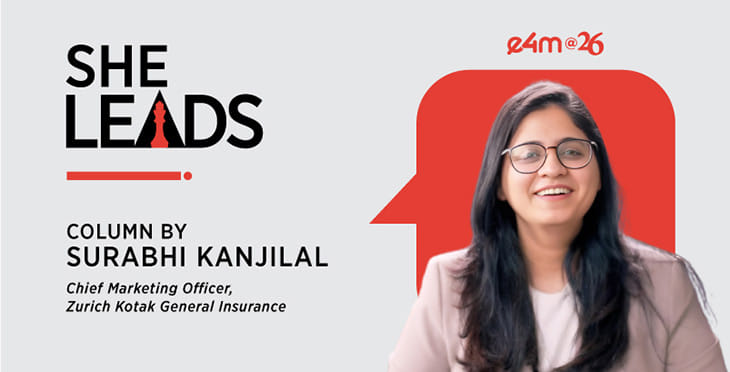

Earlier, leadership was often associated with authority, hierarchy and control. Today, those definitions feel incomplete as organisations expect leaders to guide people through constant change, build trust within teams and make decisions with both conviction and empathy. The next decade will be more demanding in terms of moral clarity in the age of AI, requiring the ability to inspire a generation that questions everything, and the resilience to lead through disruption.
Many women leaders are not looking to simply “fit” into traditional models of authority but are actively reshaping those models across boardrooms and business conversations. One theme remains constant - leadership must become more human, not less, even as technology becomes more powerful. At the same time, it is impossible to talk about the future of leadership without acknowledging the structural realities women still navigate.
Women in leadership and structural challenges
While organisations have made progress in bringing more women into the workforce, representation still thins out as one moves up the hierarchy. Entry-level roles may show encouraging diversity, but the numbers shrink significantly at senior leadership levels. -
Women in management roles aspire to be in leadership roles but face systemic barriers that continue to slow their progress. -
Part of the reason lies in structural realities. Career breaks for caregiving, limited access to mentors or sponsors, and long-held assumptions about what a “typical leader” looks like still influence career progression. Mid-career years also tend to coincide with greater responsibilities at home. When organizations are not flexible enough to recognize these realities, many talented professionals quietly step away from the workforce earlier than they had planned.
Yet the value of women’s leadership is increasingly well recognized. Research from the American Psychological Association notes that teams led by women frequently report stronger collaboration, higher engagement and a greater sense of fairness. These outcomes usually stem from leadership styles that encourage dialogue, participation and long-term thinking—qualities that are becoming increasingly valuable in complex and fast-changing environments.
Leadership in the Age of AI with Conscience
Artificial Intelligence is beginning to influence how businesses hire, serve customers and make decisions. The question is no longer whether AI will influence the workplace — it already does. The real question is how leaders will guide their role within their organisations.
Leadership will require a supportive nature as they indulge in technology. This does not mean leaders need to understand coding, but they do need clarity on how technology is shaping decisions within the organisation. Many women leaders often point out that while technology can improve efficiency, the human element cannot be lost. AI can process large amounts of information and make many processes faster, but qualities such as judgement, empathy and accountability still come from people. The real task for leaders will be to strike the right balance — using technology to support decisions while ensuring that human thinking and responsibility remain at the centre.
Going forward, credibility in leadership will depend on how thoughtfully those tools are used, and whether they ultimately help strengthen trust, transparency and culture within the organisation.
The Gen Z Effect: A New Contract Between Leaders
If technology is changing how we work, Gen Z is changing what people expect from work. As digital natives, they place less emphasis on titles and hierarchy, and more on purpose, transparency and authenticity. They expect leaders to listen as much as they guide.
Studies from various research companies =show that over 80% of Gen Z prioritize diversity, equity and inclusion when choosing where to work. Moreover, 63% expect their workplace to promote inclusive decision-making, and 53% say that they would leave a job if the company lacked diversity or inclusivity efforts. For this generation, inclusion is not a corporate initiative but a baseline expectation.
As Gen Z professionals begin stepping into decision-making roles, leadership may look less hierarchical and more collaborative. Communication will likely be more transparent, feedback loops shorter, and expectations around accountability — particularly on diversity, inclusion and sustainability — far stronger.
Beyond Competence: The Capabilities That Will Define the Next Era
Markets are volatile. Consumer expectations are rapidly evolving. Leaders are often required to make decisions amid ambiguity without losing direction.
Emotional intelligence is becoming a strategic capability. In hybrid workplaces and high-pressure environments, the ability to build trust, resolve conflict and sustain morale will directly influence performance outcomes. Continuous learning is equally critical. Experience matters, but rapid change means leaders must stay adaptable, open to ideas and committed to reskilling their teams.
Women, however, continue to face numerous barriers across societal, personal and organizational levels. Unconscious bias, stereotypes about leadership styles and caregiving expectations still influence hiring, promotion and leadership opportunities. The gap still remains, as women hold just 9% of CEO positions in both the S&P 100 and FTSE 100 companies, according to a report by S&P Global.
Progress cannot depend only on individual determination; organisations also have to build the right support systems. Spotting leadership potential early, creating strong mentoring networks and offering flexible policies can make a meaningful difference. When workplaces allow people to move through different life stages without feeling that their careers will stall, more women are able to stay and grow within leadership tracks. Without these changes, progress tends to remain slower than it should be.
From Authority to Impact
Across boardrooms and business conversations, one theme comes up repeatedly: leadership must become more human, not less, even as technology becomes more powerful. Many women leaders are not looking to simply “fit” into traditional models of authority but are actively reshaping those models — placing empathy, long-term thinking and shared accountability at the centre of performance.
However, leadership potential is still viewed through the lens of career breaks or family responsibilities rather than performance. Even when this is unintentional, it can shift the focus away from what matters most — the work someone delivers. The post-pandemic years have seen boards and promoters scrutinising leadership through the dual lenses of performance and risk agility. Organizations are increasingly seeking leaders with governance expertise, compliance experience and the ability to manage complex boardroom dynamics, and todays organizations are moving away from legacy-driven roles, instead favoring executives with data-led thinking and a proven track record of measurable outcomes.
Many companies are beginning to recognise that diverse leadership teams do not just improve representation, they also lead to better decisions and healthier work cultures.
Women leaders are not trying to create a separate version of leadership. In many ways, they are helping broaden what leadership can look like, combining ambition with empathy, strategic thinking with openness, and collaboration with accountability. Organisations that recognise this shift early will be better prepared for the decade ahead.
Read more news about Marketing News, Advertising News, PR and Corporate Communication News, Digital News, People Movement News
For more updates, be socially connected with us onInstagram, LinkedIn, Twitter, Facebook, YouTube & Google News