The Customer Is the Best CX Teacher, Says IndusInd General’s Gaurav Srivastava
IndusInd General Insurance’s Gaurav Srivastava discusses his career journey, customer-first CX, AI, self-service and the changing expectations of insurance customers.
.png) by
by
Published: Oct 7, 2026 11:46 AM | 6 min read
 Follow Us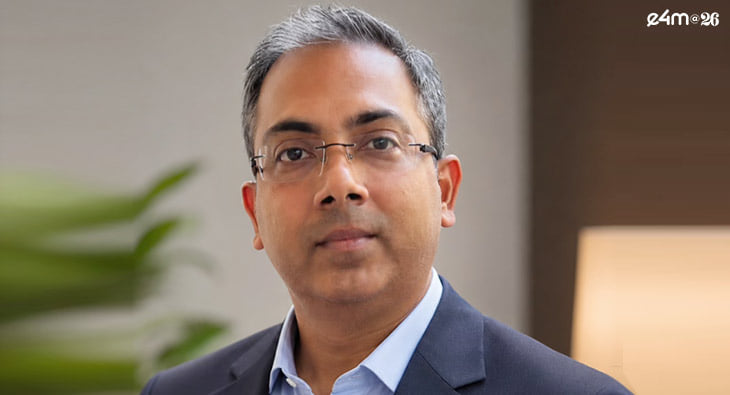

- Gaurav Srivastava, Vice President of Customer Service at IndusInd General Insurance, reflects on his diverse career journey, emphasizing the importance of continuous learning and adapting to new challenges in the insurance industry.
- He credits his experiences as both an analyst and a customer for shaping his approach to customer experience (CX), highlighting the significance of understanding customer expectations and the human element of service.
- Srivastava advocates for leveraging technology, particularly artificial intelligence, to enhance customer interactions while prioritizing their needs and convenience, especially for younger customers seeking self-service options.
- He underscores the importance of a seamless claims experience as a critical aspect of customer loyalty, stressing that every stage of the insurance journey should be attentive to customer needs and expectations.
Mr. Gaurav Srivastava reflects on the experiences that shaped his career and how being a customer himself continues to inform his approach to CX.
Asked what he would call an insurance policy built around his career, Gaurav Srivastava chooses a description familiar to his industry: “Comprehensive coverage, with many add-ons.”
It is a fitting way to describe a professional journey that has expanded through different responsibilities, new challenges and opportunities to learn. Now Vice President - Customer Service at IndusInd General Insurance, Srivastava looks back on that journey with an appreciation for its variety and a continuing desire to develop. In a one-on-one conversation with exchange4media, he speaks about the experiences behind his approach to customer service. His reflections connect career growth with a practical understanding of people: what they value, how they want to interact with a business, and what makes an experience worth returning to.
An analyst’s beginning, a broader journey
Mr. Srivastava began his career as an analyst. At the time, he imagined that his work might retain a similar character as his responsibilities grew. Insurance opened up a wider range of possibilities. His subsequent experience included central operations and government business involving rural obligations. Working across these areas exposed him to different requirements and helped broaden his understanding of the industry.
He credits his organisation with placing confidence in him and giving him opportunities to take on varied responsibilities. Those opportunities also helped him keep moving beyond familiar territory. The ‘add-ons’ in his career description represent that accumulation of experience. Each new responsibility brought another perspective, shaping how he approached the next role.
Growth as a continuing pursuit
Srivastava’s reflections on ambition suggest that he sees professional development as an ongoing pursuit. Asked what he would tell his younger self; he describes the idea of looking towards a future version of himself as a source of inspiration. The aspiration keeps moving as he grows. Experience brings progress, but it also reveals how much more there is to understand.
His career challenged an early expectation that professional life would follow a relatively straightforward course. He recalls new disruptions emerging every two or three years, creating fresh reasons to learn and adapt.
For him, staying relevant requires that willingness to keep developing. His advice to younger professionals combines patience with curiosity: meaningful progress takes time, and learning needs to continue throughout the journey.
The customer who shaped his thinking
When the conversation turns to the customer who taught him his biggest lesson, Srivastava offers a personal answer. “The biggest lesson that I learned was from myself being a customer,” he says.
His own interactions with businesses have given him a useful way to assess customer experience. How is a person treated after giving a company their business? Does the service support the expectations created by the product? Is the experience something he would value himself?
He illustrates this through the example of a desirable phone. Its initial appeal can weaken if the service surrounding it disappoints. The relationship with the customer continues well beyond the purchase.
That observation has shaped his professional perspective. He considers the human element of service alongside the product itself, using his own expectations as a starting point for understanding what might matter to others.
It is here that his personal journey opens into a broader discussion about CX: A customer service leader also brings the experiences, frustrations and expectations of a customer to the role. Understanding insurance through life’s milestones
Srivastava’s understanding of insurance also developed through personal experience.
He recalls growing up in a family with modest means, where his early awareness of insurance largely centred on life insurance. General insurance became more meaningful as he grew older and recognised the importance of protecting assets.
Milestones such as buying a car or a home, alongside taking greater responsibility for family decisions, gave protection a more tangible purpose.
His recollections highlight how people’s relationship with insurance can evolve. A product becomes relevant through the needs and responsibilities of a particular stage of life.
For those designing customer experiences, this offers a useful perspective: understanding the customer includes understanding the circumstances that bring them to the product.
Putting the customer ahead of the technology
That attention to customer needs carries into Srivastava’s view of artificial intelligence.
He sees AI as a useful enabler of simpler work and more convenient interactions. Its role, however, follows the purpose the organisation is trying to serve. His emphasis is on building around what people need to accomplish. Easier navigation and self-service options have value because they can make the customer’s task more straightforward. “So, we wanted to be where the customer is,” he adds.
The principle gives technology a clear direction. Begin with the customer’s requirement, then identify how digital capabilities can support it.
Convenience, choice and the next generation
Srivastava sees younger customers bringing opportunities to rethink how insurance services are accessed. In his view, service speed and the ability to act independently are important considerations.
He advocates greater attention to self-service journeys that allow customers to purchase policies, renew them and explore add-ons at their convenience. The aim is to provide flexibility in how they manage their requirements.
Discussing IndusInd General Insurance, he points to its application and website as channels intended to support access to services around the clock. His focus is on making routine tasks easy to understand and complete, with assistance available when required.
This approach connects digital convenience with a broader service objective: reducing unnecessary effort across the relationship.
Where the insurance experience becomes tangible
For Srivastava, the claims experience remains an important part of that relationship.
When discussing loyalty and his own expectations as a customer, he returns to the importance of a seamless claims journey and the handling of related concerns. This is a significant moment in which customers use the protection they have purchased.
His perspective brings the conversation back to the purpose behind the product. Every stage matter, from buying a policy to accessing support, and the experience should remain attentive to the customer’s needs throughout.
The same willingness to learn that shaped his career informs how he thinks about these interactions. Changing technology and expectations create reasons to keep listening, adapting and improving.
For the analyst who describes his career as coverage with many add-ons, the next addition is still ahead. And the perspective he continues to carry into it is a personal one: Understanding service begins with remembering what it feels like to be the customer.
Read more news about Marketing News, Advertising News, PR and Corporate Communication News, Digital News, People Movement News
For more updates, be socially connected with us onInstagram, LinkedIn, Twitter, Facebook, YouTube & Google News
